en

Search
 English
 日本語
日本語 한국어
한국어 عربى
عربى Español
 русский
Inquiry Now
Content
A well-made bed is one of those quiet pleasures that many people do not appreciate until they have actually experienced it. The mattress is protected, the sheets feel smooth and cool, the duvet sits at just the right weight, and the pillows support your head without forcing your neck into an awkward angle. Achieving that level of comfort is not about buying the most expensive bedding on the market. It is about layering the right pieces in the right order, and making sure each layer is chosen with your climate, sleeping habits, and maintenance routine in mind. This bed layering guide walks through what each layer does, how to assemble them step by step, and how to adjust your setup as temperatures change throughout the year.
Bed layering is often associated with interior design magazines, but its real value goes far beyond appearances. A layered bed gives you control over your sleep environment. When the room temperature drops at night, you can pull up an extra blanket. When you wake up warm, you can push the top layer aside without disturbing the rest of the bed. That kind of flexibility is hard to achieve with a single heavy comforter.
The second benefit is hygiene. Each layer in a properly constructed bed serves as a barrier. A mattress protector blocks dust mites, body oils, and spills from reaching the mattress itself. A flat sheet sits between your body and the duvet, meaning you wash the sheet frequently instead of washing the duvet insert, which is bulkier and slower to dry. This layering system dramatically extends the useful life of your more expensive bedding components.
The third advantage is adaptability. A bed built with separate layers can be adjusted for summer, winter, and everything in between. A lightweight cotton quilt can be used alone in July, stacked under a wool blanket in October, and topped with a down duvet in January. Rather than owning three complete bedding sets, you own a set of interchangeable layers that combine in different ways.
Finally, there is a psychological effect. Coming into a bedroom and seeing a bed with crisp sheets, neatly folded coverlet, and balanced pillows signals that the space is cared for. It makes the bed more inviting and, for many people, helps the mind shift into rest mode more quickly at bedtime. Layering is therefore a low-cost way to upgrade both the comfort and the daily experience of your bedroom.
Before you start arranging the bed, it helps to understand the purpose of each component. A typical layered bed contains between seven and ten layers, depending on how you count pillows and decorative accents. The table below summarizes the standard structure from the mattress upward.
| Layer | Typical Material | Primary Role |
|---|---|---|
| Mattress protector | Cotton, bamboo knit, TPU laminate | Blocks dust mites, spills, and body oils; extends mattress life |
| Mattress topper (optional) | Memory foam, feather bed | Adds cushioning and adjusts mattress firmness |
| Fitted sheet | Cotton percale or sateen, bamboo fiber | Clings to the mattress; first comfort layer against the skin |
| Flat sheet | Cotton, linen | Separates body from duvet; easy to wash frequently |
| Blanket (optional) | Wool, cotton knit, acrylic | Adds warmth between sheet and duvet in cold months |
| Duvet or comforter | Down, feather, synthetic fiber | Primary warmth layer; the one you toggle for temperature |
| Quilt or coverlet | Cotton, bamboo fiber blend, washed linen | Light decorative layer; folds at the foot or covers the bed fully |
| Sleeping pillows | Down, feather, fiber fill | Support the head and neck in a neutral alignment |
| Euro shams and accent pillows | Coordinating fabric covers | Aesthetic layer; adds vertical structure to the headboard area |
| Throw blanket | Knitted cotton, fleece, brushed wool | Finishing accent; provides extra warmth on demand |
Different households will emphasize different layers. A minimal setup might include only a fitted sheet, flat sheet, light blanket, and two sleeping pillows. A designer-style bed adds a coverlet, Euro shams, a lumbar cushion, and a folded throw. The configuration below shows three common levels of layering so you can decide where your own bed falls.
Fitted sheet + flat sheet +
light blanket or summer
quilt + two sleeping pillows.
Best for warm climates and
hot sleepers.
Fitted sheet + flat sheet +
duvet or comforter +
two sleeping pillows +
folded throw at the foot.
A balanced all-season solution.
Fitted sheet + flat sheet +
duvet + coverlet or quilt +
Euro shams + sleeping pillows
+ lumbar pillow + throw.
High visual impact.
Now that the structure is clear, here is the practical sequence for building a layered bed like a professional. Work from the mattress upward, then finish with the pillow arrangement and the throw.
Start with a mattress protector. This layer is the most important one that people skip. A good protector is waterproof or water-resistant while remaining breathable, so body heat and moisture can escape. Cotton and bamboo knit protectors are popular in warm climates because they feel cool against the skin. If your mattress is older or too firm, place a mattress topper on top of the protector. Feather toppers add softness and cushion, while memory foam toppers provide stronger pressure relief. Make sure both pieces fit snugly with elastic corners so they do not shift during the night.
The fitted sheet is the first visible comfort layer. Choose a sheet with deep pockets if your mattress is thicker than 25 centimeters. Pull it over the four corners and smooth out any wrinkles. Percale cotton is the best choice for hot sleepers because of its crisp, breathable weave. Sateen cotton feels smoother and slightly heavier, which suits cooler bedrooms. When selecting a fitted sheet, check the elastic band quality; a weak band causes corners to pop off in the middle of the night. A thread count between 200 and 400 is generally the sweet spot for durability and breathability.
Spread the flat sheet evenly over the fitted sheet. If you prefer a crisp hotel look, tuck the bottom edge tightly underneath the mattress and fold the top edge down about 15 to 20 centimeters over the blanket. Many people skip the flat sheet in summer and sleep directly under a thin quilt, which is acceptable. But in cooler months, the flat sheet adds a useful layer of warmth and protects the duvet from body oils, so washing the sheet is much easier than washing the duvet insert. For a neat finish, fold the top edge of the sheet over the blanket or duvet to create a clean visual line called a fold-over edge.
If the room tends to get cool, add a blanket between the flat sheet and the duvet. Wool blankets provide excellent insulation even when thin, while cotton knit blankets are lighter and more breathable. In summer, you can simply fold the blanket at the foot of the bed as a decorative accent and use it only if the night turns cold. This is the beauty of a layered system: the blanket exists as a separate component, so it can be added, removed, or folded over without changing the rest of the bed.
The duvet is the main warmth layer. If you are using a duvet cover, turn the cover inside out, attach the corner ties to the insert, and shake the cover down over the insert so the fill distributes evenly. Fluff the duvet after dressing it to restore loft. For summer, a lightweight synthetic or low-fill-power duvet is enough. For winter, a down insert with a fill power of 600 to 800 offers the highest warmth-to-weight ratio. Spread the duvet evenly over the bed, leaving an equal margin on both sides. In warm weather, fold the duvet down to the middle of the bed and leave the folded blanket at the foot as the primary cover.
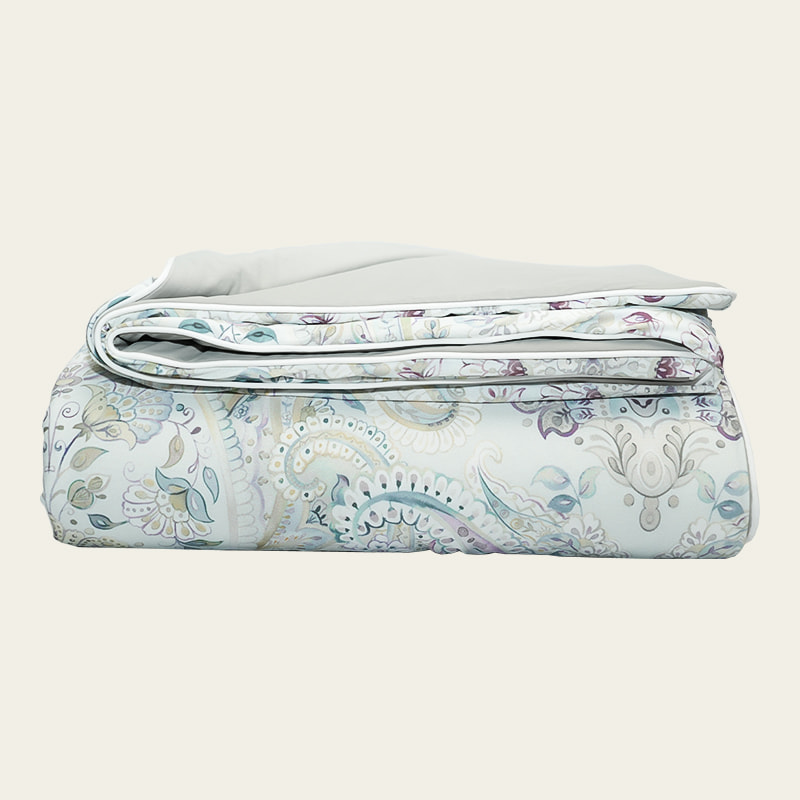
A quilt or coverlet is the layer that gives a bed a designed look. It can cover the entire bed underneath the duvet, or it can be folded at the foot over the duvet. In designer styling, the coverlet is often folded into thirds at the foot of the bed, creating a strong horizontal band of color and texture. This works particularly well when the coverlet contrasts with the duvet fabric. From a practical standpoint, a coverlet adds one more layer of warmth for cold nights and protects the duvet from being kicked off. In summer, you can remove the duvet entirely and sleep under the coverlet alone if it is made from lightweight material.
Pillows are both functional and visual. Start with the sleeping pillows at the front, propped upright at a slight angle. If you sleep on your back, choose a medium-loft pillow; side sleepers need a higher, firmer pillow; stomach sleepers need a very flat and soft pillow. Behind the sleeping pillows, place Euro shams standing vertically. They are not meant for sleeping but create the tall, layered backdrop that makes the bed look complete. If you use a lumbar pillow, position it in front of the sleeping pillows as the final accent. Do not overcrowd a bed with more than six to eight pillows, or the arrangement starts to look cluttered.
The throw is the final whisper of comfort and style. Drape it loosely across the foot of the bed, fold it in a neat rectangle, or let it cascade off one corner. Beyond the visual effect, a throw serves as an instantly reachable extra layer for a cold evening on the sofa or a chilly night in bed. When choosing a throw, consider texture: a chunky knit, a smooth fleece, or a woven cotton throw each gives the bed a distinctly different feel. The throw should be the easiest layer to grab, which is why it belongs on top.
The most common question about bed layering is how to adapt the system across seasons. The answer is not to replace every layer, but to swap the middle and upper layers so the bed stays comfortable without extra maintenance.
In summer, the priority shifts from insulation to breathability and moisture wicking. Use a fitted and flat sheet in light percale cotton or bamboo fiber. Swap the duvet for a very thin blanket or use a quilt specifically designed for cool touch. Cooling fabrics made from nylon and spandex blends with cool-touch finishes are effective because they draw heat away from the skin quickly. For the pillow arrangement, keep two sleeping pillows and drop the Euro shams or replace them with smaller inserts covered in the same sheet fabric. The throw stays folded at the foot but should be a light cotton or linen weave rather than fleece or knit wool.
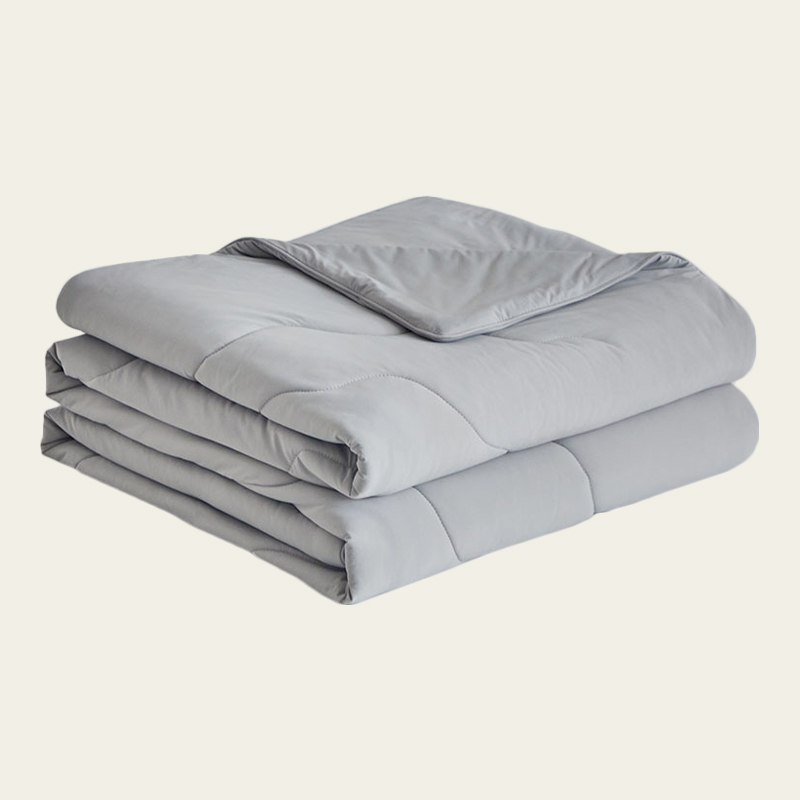
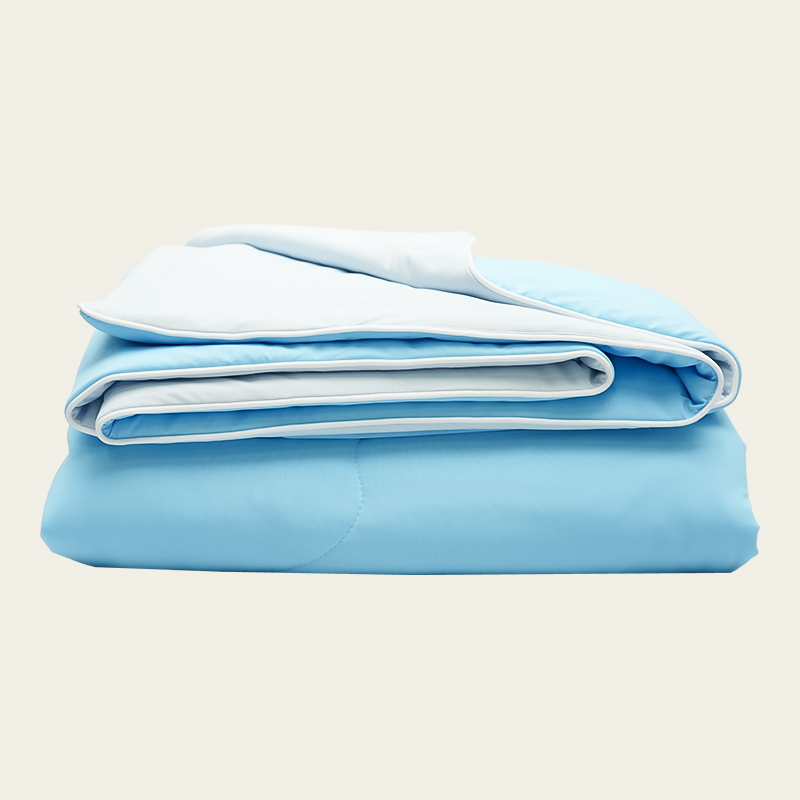
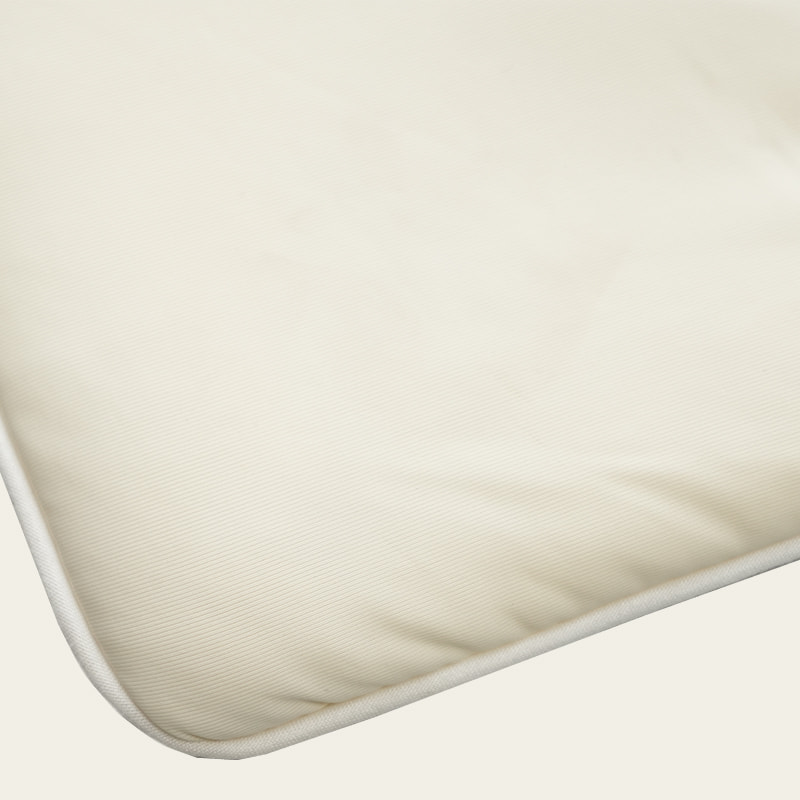 Nylon-Spandex Cooling Quilt with Q-Max 0.4 Cool-Touch FinishThis summer-weight quilt uses a nylon and spandex blend with a Q-Max 0.4 cool-touch coating to draw heat from the skin, making it a breathable top layer when you swap out the duvet.View Product →
A cotton or cooling-fabric coverlet can serve as the sole top layer in summer. Because the coverlet sits closest to the body when the duvet is removed, its fabric hand-feel matters more than its fill weight. Light colors also reflect heat and make the bedroom feel cooler visually.
Winter layering is about trapping still air without creating a heavy, sweaty pile. Start with the same fitted sheet, but switch to a brushed cotton or flannel fitted and flat sheet if your bedroom drops below 18 degrees Celsius. Add a wool blanket between the flat sheet and the duvet; wool absorbs moisture and releases heat slowly. On top, place a down or feather duvet with a cover in cotton sateen or a tighter-weave cotton that prevents feathers from escaping. Add a quilt or coverlet folded at the foot for extra weight if the temperature drops further. The natural resilience of down creates warm air pockets that hold heat for hours. When the duvet is dressed, shake it vigorously to distribute the fill evenly across the baffle boxes.
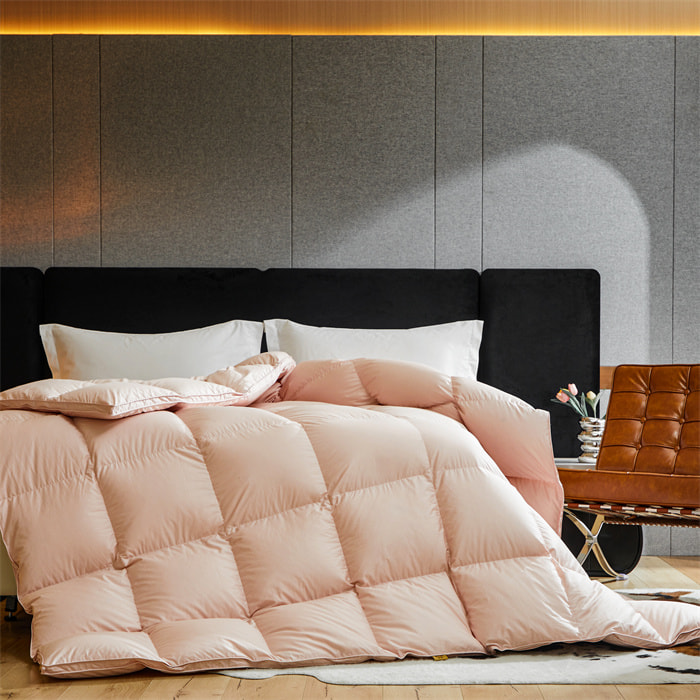 RDS-Certified White Goose Down Quilt with 800+ Fill PowerFeaturing 800+ fill power goose down and a cotton shell, this duvet traps warm air efficiently for winter layering, while its RDS and OEKO-TEX certifications ensure responsible sourcing.View Product →
For winter pillows, a higher-loft down pillow keeps your head level and prevents your shoulders from sinking into cold air gaps. Layer two pillows if you are a side sleeper, and add a thicker throw in a wool or faux-wool blend at the foot of the bed. These two simple adjustments make a significant difference on cold nights.
Spring and autumn call for a modular approach. Keep the duvet on the bed but fold it into a compact band at the foot, and keep a medium-weight quilt or blanket above the flat sheet as the main cover. During the middle of the night, if the room cools down, you can reach down and pull the duvet up. This is one of the most practical layering techniques for homes where central heating or air conditioning causes temperature swings. Another all-season strategy is to choose a duvet with a moderate weight and combine it with a coverlet that has a different thickness, so you can combine or separate the two layers depending on the forecast.
| Season | Main Top Layers | Sheet Choice | Pillow Setup |
|---|---|---|---|
| Summer | Cooling quilt or thin cotton coverlet | Percale cotton, bamboo fiber, cooling fabric | Two sleeping pillows, light shams |
| Spring / Autumn | Mid-weight blanket plus folded duvet | Cotton sateen or cotton knit | Two sleeping pillows plus a lumbar accent |
| Winter | Wool blanket, down duvet, folded coverlet | Brushed cotton or flannel | Higher-loft down pillows, Euro shams, throw |
Whichever configuration you choose, the guiding principle is simple: the bed should have a layer you can add and a layer you can remove, so that a five-minute adjustment gives you the right temperature for the night ahead.
Material selection determines how the bed feels, how long it lasts, and how well it regulates temperature. Below is a practical breakdown of the most common materials used in bedding layers, organized by their position in the bed stack.
Cotton is the default choice for a reason. Percale cotton is crisp, cool, and closely woven, making it ideal for summer and hot sleepers. Sateen cotton has a softer, silkier hand-feel and a subtle luster, which works better in cooler climates. Bamboo fiber sheets are a relatively new standard in breathable bedding; they feel smooth, drape well, and wick moisture faster than standard cotton. Linen is the most breathable of all natural fabrics but requires a willingness to embrace wrinkles. For a bed that needs to appeal to the broadest range of comfort preferences, a 300-thread-count cotton sateen sheet is a safe midpoint. If you are a hotel or bed-and-breakfast operator, percale sheets are easier to wash and maintain their crisp look longer.
Quilts and coverlets are usually made from cotton, bamboo fiber, or a cotton-polyester blend. The outer fabric is more important than the batting in most cases because the batting is thin. A bamboo fiber coverlet feels cool to the touch, which is useful for summer. A cotton coverlet with a dense waffle weave adds texture and warmth without significant weight. Duvets and comforters rely on the filling material. Down fill power of 700 or above offers exceptional warmth and compression resistance. Feather blends are heavier and stiffer but more affordable. Synthetic fiber fills such as hollow polyester or microfiber are hypoallergenic and fast-drying, though they lose loft faster than down. The construction detail matters just as much as the fill: look for baffle box or channel stitching that prevents the fill from shifting, which is a common complaint with poorly made duvets.
Pillows interact with your head and neck longer than any other bedding component. Down pillows are soft and moldable, ideal for back and stomach sleepers. Feather-and-down blends provide more structure while keeping the surface soft. Synthetic fiber pillows are inexpensive and hypoallergenic, but they tend to compress into a dense pancake after months of use. Memory foam pillows contour to the neck but can trap heat, so look for gel-infused or breathable versions if you run warm. When choosing a pillow, test it in the position you actually sleep in: your neck should stay in a straight line with your spine, not bent upward or downward.
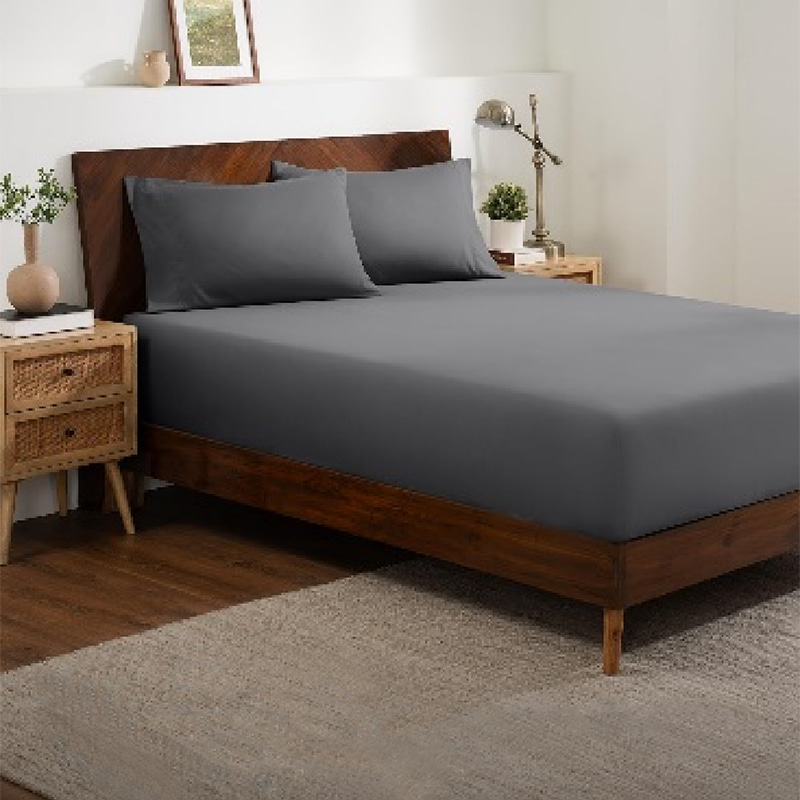
If you buy ready-made bedding sets, the product makeup matters as much as the fabric name. A four-piece bed set typically includes a fitted sheet, a flat sheet, and two pillowcases. In larger sets, you may also receive two pillow shams or an extra pillowcase. The quality difference between a low-cost polyester set and a well-constructed pure cotton set is immediately visible in the seam finish and the way the fabric drapes after the first wash. For long-term service, look for a pure cotton or bamboo fiber set that keeps its shape. The ideal fabric for a four-piece bed set is usually a durable cotton weave with a balanced thread count rather than an ultra-high thread count, which can actually make the fabric weaker through the laundering process.
The quilt core, or the inner batting of a quilt, deserves separate attention. The choice of material inside the quilt affects not only warmth but also weight, loft, and the quilting pattern you can use. Cotton batting is heavy, breathable, and naturally soft, but it clumps after several washing cycles. Bamboo fiber batting is lighter and more moisture-absorbent. Down batting is the warmest and lightest but requires a tightly woven outer shell to prevent feathers from escaping. If you are sourcing quilts for a wholesale or hospitality program, the material of the quilt core changes the insulation properties significantly, and you should always test quilt samples across washing cycles before committing to a large batch.
| Layer | Cotton | Bamboo Fiber | Down / Feather | Synthetic Fiber |
|---|---|---|---|---|
| Sheets | Breathable, durable, easy care | Soft, cool touch, moisture wicking | Not used | Budget-friendly, wrinkle-free, less breathable |
| Duvet insert | Used only as light summer fill | Lightweight, breathable insulative fill | Excellent warmth-to-weight ratio | Hypoallergenic, fast-drying, lower loft |
| Quilt / coverlet | Crisp texture, structured drape | Smooth and cool, good summer weight | Very light, lofty, expensive | Affordable, easy to wash, moderate breathability |
| Pillow | Firm, shrink-prone if not pre-washed | Soft and breathable shell material | Soft, moldable, high comfort | Support varies, good for allergy sufferers |
Understanding how different materials retain heat is essential for building a bed that works in your climate. Fill power and material composition are the two variables that matter most, because they determine the amount of still air trapped within the bedding. In general, animal-based fills such as down and feathers trap air more effectively than plant-based or synthetic batting. The chart below compares the relative warmth retention of six common bedding materials on an index from 1 to 10, based on typical thermal performance characteristics used in textile planning. It is intended as a planning reference rather than a laboratory measurement, but it reflects the broad hierarchy used by bedding manufacturers.
Relative Warmth Retention Index by Bedding Material
Several useful observations emerge from this comparison. First, the gap between the warmest and coolest materials is substantial: luxury goose down provides roughly six times the relative warmth of a typical cooling fabric layer, which explains why all-season bedding systems rely on removable inserts rather than a single fixed layer. Second, plant-based and synthetic fills cluster in the middle of the range, which is why cotton quilts work well in air-conditioned rooms but feel inadequate for cold winter nights. Third, warmth alone does not equal comfort; a 9.0-rated down duvet feels oppressive in a warm bedroom, so the material must always be matched to the ambient temperature of the room. Fourth, the moisture-wicking behavior of cooling fabrics makes them a strong summer choice for hot sleepers, even though they add almost no insulation. Fifth, blending materials shifts the balance: a 50/50 feather-and-down mix sacrifices a little warmth but gains structural resilience and a firmer feel that works well for people who dislike the floating sensation of pure down. Sixth, bamboo fiber balances a modest warmth score with excellent softness and breathability, making it a pleasant transitional-season layer. Seventh, the insulation of stacked layers accumulates very quickly: adding a cotton blanket rated at 4.0 on top of a down duvet rated at 7.5 will leave most sleepers too warm at night, so it is usually better to choose two middle-range layers than one extreme layer. Eighth, the practical takeaway for retailers and consumers alike is to look at the average temperature of the bedroom and the sleeping tendency of the user, then build a combination that can be adjusted by exactly one layer. Ninth, from a manufacturer's perspective, the warmest materials are also the most expensive to source, which is why every bedding factory offers tiered product lines rather than a single insulation level. Finally, this index can guide a brand or wholesaler in deciding which product categories to feature for their target regions and which layers to cross-sell at the point of purchase.
Even people who understand the concept of layering make a few repeatable mistakes. Here are the most common issues observed in both home and hospitality settings, with practical fixes for each.
Bed layering is not only a consumer concept. For brands, wholesalers, and retail buyers, selling a layered bed means selling a system of multiple products: fitted sheets, flat sheets, duvets, quilts, pillows, and throws. Understanding the technical specifications of each layer allows a buyer to build coherent product bundles and avoid quality issues that lead to returns.
When evaluating a bedding manufacturer or supplier, start with the consistency of production. Check the stitch density on the duvet and pillow casings. A standard seam should have at least six to eight stitches per inch, and the edge binding should be double-needle stitched to survive repeated laundering. Inspect the fill distribution: shake the product and feel whether the down or fiber migrates toward the corners, which indicates weak baffle construction. For cotton and bamboo fiber products, ask for the fabric weight in grams per square meter, or GSM, because this number tells you more about durability than thread count alone.
Another layer of scrutiny applies to certifications. A reliable supplier should be able to provide test reports for the filling material, fabric safety, and dimensional change after washing. For down products, request the fill power certificate and the species origin declaration. For synthetic fiber products, verify that the fiber passes the standard flammability and chemical safety benchmarks. A factory that can provide these documents is a much safer partner than one that only offers a low price list.
Customization is another major consideration for brands building a layered bedding assortment. The site of a true source factory should support custom sizes, custom logo packaging, private-label production, and small-batch color development. If you are launching a summer layering collection, you may need a cooling quilt in specific colorways with your brand label. If you are building a winter program, you may need a down duvet with a specific baffle height and fill weight. Supplier responsiveness matters here as much as product quality; a good manufacturer will answer technical questions about fill ratios, fabric sourcing, and wash care within one working day.
Finally, consider the product bundle logic. Wholesalers and retailers are not selling a single quilt or a single sheet; they are selling a layering system. A strong assortment includes a base layer collection, a mid-layer collection, and a top-layer collection, so the customer can buy the full stack in one purchase. This increases average order value while genuinely helping the end user build a better bed. When you work with a manufacturer who already offers coordinated cooling quilts, down duvets, pillow cores, and bedding sets, you can assemble a compelling layered package without negotiating with multiple suppliers.
A standard comfortable bed typically has five functional layers: a mattress protector, fitted sheet, flat sheet, duvet or comforter, and sleeping pillows. Adding a quilt, coverlet, throw, or decorative shams brings the total up to seven or eight layers. The count matters less than the ability to add or remove one layer when the temperature changes. The more fixed layers you have, the harder the bed is to adjust, so avoid layering simply for visual density.
The correct order, from bottom to top, is: mattress protector, mattress topper if needed, fitted sheet, flat sheet, optional blanket, duvet or comforter, optional quilt or coverlet, sleeping pillows, decorative shams or lumbar pillow, and a throw at the foot. This order ensures that the most washable layers sit closest to the body and the more expensive insulation layers stay protected on top.
Yes, for practical reasons. The flat sheet protects the duvet cover and the duvet insert from body oils, dead skin, and spills. It is much easier to wash one flat sheet than to strip, wash, dry, and reassemble a bulky duvet cover plus insert. In very hot climates, some people remove both the flat sheet and duvet cover, sleeping under only a thin quilt. That works in summer, but in cooler months the flat sheet adds meaningful warmth and protects the duvet from frequent laundering.
A quilt is a three-layer stitched fabric consisting of a top fabric, a batting core, and a backing fabric. It is thicker and provides noticeable warmth. A coverlet is a thinner, non-quilted bed covering that usually has a decorative border and is designed to sit on top of the duvet or fold at the foot of the bed. Coverlets are considered the more flexible layer; they add texture and a finished look without significant weight. Quilts are better suited for transitional seasons when you need measurable insulation without a full duvet.
Use cooling materials and reduce the number of layers. Switch the fitted and flat sheets to percale cotton or bamboo fiber, remove the duvet, and place a cooling quilt made from nylon-spandex cool-touch fabric or a thin cotton coverlet as the top layer. Keep a lightweight throw folded at the foot for the rare cool night. You can also keep the duvet on the bed but folded into a neat rectangle at the foot, so it is available without trapping heat against your body.
Fitted sheets, flat sheets, and pillowcases should be washed weekly, or every two weeks if you shower before bed and use a pajama set. Duvet covers can be washed every one to two months, depending on whether a flat sheet sits underneath. Quilts and coverlets should be washed every two to three months. Duvet inserts and down pillows should be washed only when visibly stained or when you notice an odor, generally twice a year at most. Mattress protectors can be washed every two months. Always check the care label and use gentle cycles for down and feather products.
Fill power measures the loft, or fluffiness, of down in cubic inches per ounce. A fill power of 500 to 600 is good for everyday comforters and pillow cores. A fill power of 650 to 750 offers a noticeably lighter and warmer feel, ideal for winter duvets. Above 800, you are in luxury territory, where the down is sourced from larger, mature birds and delivers maximum warmth with minimal weight. For hospitality use, a fill power around 600 is a strong balance of comfort and durability, because higher fill power products require more careful laundering and are more expensive to replace.
 Zhihao Industrial Park, Chuanjiang Town, Tongzhou District, Nantong, Jiangsu Province
 +86-13814711705
 yueluo800@163.com
Copyright © Nantong Yueluo Home Furnishings Co., Ltd
Rights Reserved.