en

Search
 English
 日本語
日本語 한국어
한국어 عربى
عربى Español
 русский
Inquiry Now
Content
Imagine opening a brand-new set of sheets and discovering that the fitted corners pop off your mattress every single night. Or, as a wholesale buyer, receiving a whole batch of "double bed" bedding and only later realizing that the dimensions on the label do not match the bed frames in your target market. These are the most common reasons people turn to a bed sheet size chart in the first place. The good news is that the entire subject comes down to just three numbers: mattress width, mattress length, and mattress thickness. Master those three figures, and every sheet order, whether retail or wholesale, becomes far more predictable. This guide walks through standard US sizes, inch and centimeter conversions, pocket depth, fitted versus flat sheet dimensions, international variations, and the specific checks that matter when you buy from a bedding manufacturer or supplier.
A bed sheet size chart is not a decorative reference table; it is a quality-control tool for both consumers and procurement teams. When a fitted sheet is too small, the elastic strains, the fabric pulls away from the mattress corners, and the sheet slowly works loose during the night. When it is too large, wrinkles form quickly, the fabric bunches under the sleeper, and the bed looks untidy even after careful making. Both situations shorten the useful life of the product because the fabric is repeatedly stretched, folded, and rubbed in places it was never designed to bear.
The practical goal is simple: a sheet should wrap the mattress with a snug, smooth fit, leaving enough allowance for natural fabric movement without sagging. The most reliable way to achieve that is to begin with a clear size chart, then verify the actual dimensions of the mattress you are covering. This guide covers the complete picture, including standard US mattress sizes, common sheet dimensions, pocket depth recommendations, how to measure a mattress correctly, and what to verify before placing a large order with a supplier.
Most people assume that bedding sizes are standardized everywhere, so any "queen" sheet should fit any queen mattress. In reality, the queen label only tells you the nominal mattress footprint. The actual fit depends on the mattress thickness, the depth of the fitted sheet pocket, the amount of shrinkage after washing, and even the manufacturing tolerance of the factory that produced the sheet. A bed sheet size chart becomes useful the moment you understand that it is a starting point, not a guarantee.
For consumers, the cost of a sizing mistake is usually small but annoying: a wasted trip, a return package, or an uncomfortable night. For hotels, rental properties, and bedding wholesalers, the same mistake multiplies across dozens or hundreds of units. A housekeeping team that has to wrestle with loose fitted sheets loses minutes on every room. A wholesaler that orders the wrong size assortment can end up with slow-moving inventory that has to be discounted or re-exported. These are not hypothetical problems; they are the most frequent complaints found in bedding reviews and supplier feedback.
Consider the consequences of a poor fit in more detail:
Because the cost of a mistake is disproportionate to the effort of checking, professional buyers always confirm three variables before ordering: mattress width, mattress length, and mattress height. Consumers should do exactly the same. The few minutes spent measuring a mattress will save far more time than any size chart explanation can.
In the US and Canadian markets, six mattress sizes cover the vast majority of residential and hospitality installations: Twin, Twin XL, Full, Queen, King, and California King. Each size has a defined mattress width and length, and each expects a corresponding fitted sheet and flat sheet. The table below summarizes the most widely accepted dimensions used by bedding suppliers, including the typical sheet measurements sold by our own factory.
| Mattress Size | Mattress Width x Length (in) | Fitted Sheet Size (in) | Flat Sheet Size (in) | Suggested Pocket Depth (in) |
|---|---|---|---|---|
| Twin | 38 x 75 | 39 x 75 | 66 x 96 | 7 - 9 |
| Twin XL | 38 x 80 | 39 x 80 | 66 x 102 | 7 - 9 |
| Full / Double | 54 x 75 | 54 x 75 | 81 x 96 | 7 - 9 |
| Queen | 60 x 80 | 60 x 80 | 90 x 102 | 7 - 10 |
| King | 76 x 80 | 78 x 80 | 108 x 102 | 7 - 10 |
| California King | 72 x 84 | 72 x 84 | 102 x 108 | 7 - 10 |
Read the table carefully and you will notice a few details that are easy to miss. First, a king fitted sheet is often listed as 78 inches wide even though the mattress is 76 inches wide; the extra allowance gives the elastic something to grip. Second, a California King is longer than a standard King but narrower, which is exactly why a regular King sheet will not fit a California King mattress. Third, Twin and Twin XL share the same width, so the only real difference is the extra 5 inches of length in the XL version. A standard Twin fitted sheet can be stretched onto a Twin XL, but it will ride up at the head or foot because the corners are not positioned correctly.
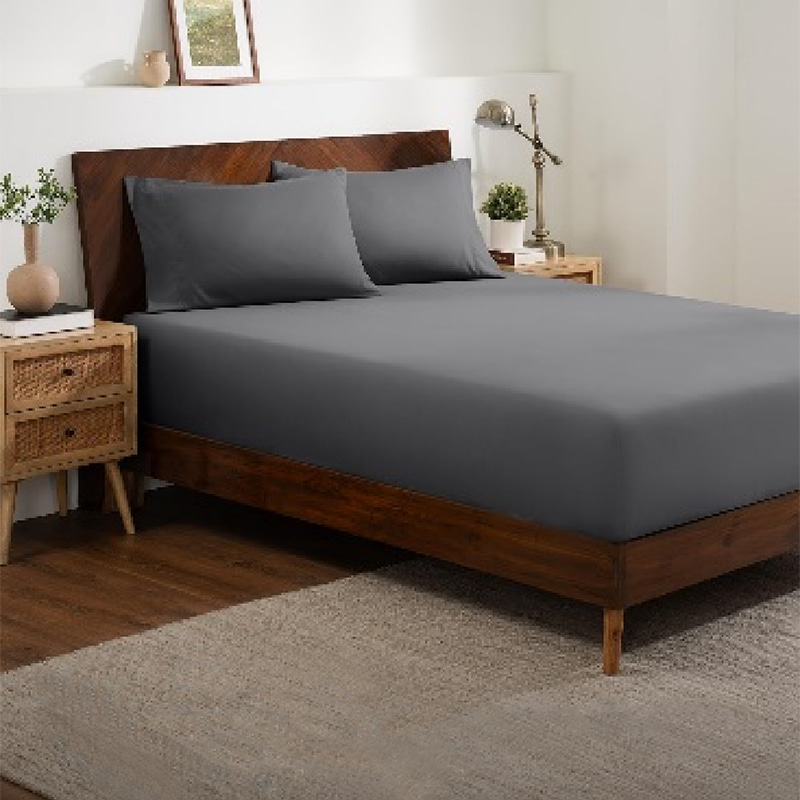
When you order a complete bedding set, the piece count usually determines what is included. A two-piece set typically contains one fitted sheet and one flat sheet, or one fitted sheet and one pillowcase, depending on the supplier. A four-piece set normally adds two pillowcases, while a three-piece set may combine a fitted sheet, a flat sheet, and one pillowcase for a single bed. If you are purchasing for a queen bed, a four-piece queen-size cooling sheet set is a good example of a complete package that covers the mattress, the top layer, and the pillows in one order.
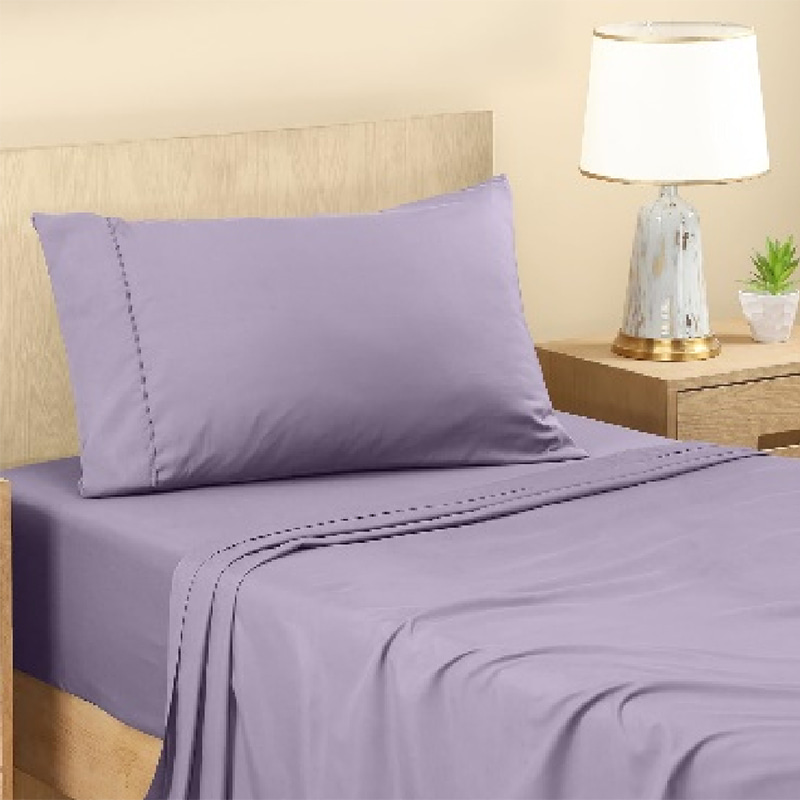 4-Piece Queen-Size Cooling Sheet Set with Microfiber PolyesterThis complete queen bedding package includes one flat sheet, one fitted sheet, and two pillowcases. The solid-colored microfiber polyester fabric offers breathable comfort and easy care, making it a practical choice for warm-weather sleep and mattress fit verification.View Product →
The important habit to develop is checking the sheet dimensions against the mattress dimensions, not just the label. A manufacturer with complete production lines will normally supply a detailed size specification for every product, because the factory knows that a 0.5-inch difference in the fitted sheet corner can decide whether the sheet stays on the bed or not. Always ask for the exact cut size and finished size when you request a quotation.
International buyers often need both imperial and metric measurements because the same mattress may be sold with different labels in different regions. Shopping for sheets becomes much easier once you compare mattress widths side by side. In the North American market, mattress width is the first number that determines which sheet size you need. Length matters too, but width is where most sizing mistakes happen. The chart below arranges the most common US mattress widths from narrowest to widest, which makes the visual comparison much clearer than a column of numbers.
US Mattress Width Comparison
Typical mattress width in inches
The chart shows why Twin and Twin XL use the same fitted sheet width of 38 inches. The difference between them is length, not width, which is why a standard Twin sheet will not stay on a Twin XL mattress. A Full mattress jumps to 54 inches, a gain of 16 inches over a Twin, which is enough to make a significant visual and practical difference in how a room feels. A Queen, at 60 inches wide, is the most popular size for couples in North America because it fits most master bedrooms while still allowing two people to sleep without constant contact. The jump from Queen to King is also 16 inches, bringing the total width to 76 inches, the widest of the standard sizes. Interestingly, a California King is 72 inches wide, narrower than a standard King, but it is 84 inches long, which is 4 inches longer than a regular King mattress. This trade-off explains why taller sleepers often prefer a California King even though it is narrower. When you combine width and length, the fit of a sheet depends on both numbers, not just one. A 60-inch mattress might seem close to a 54-inch one, but a fitted sheet made for a Full bed will stretch and tear on a Queen. Retail buyers should keep this visual scale in mind when they build size assortments for store shelves or online catalogs. Offering only Queen and King ignores the substantial Twin and Full demand in children's rooms, dormitories, and hospitality projects. Wholesale buyers should also note that King and California King are not interchangeable, no matter how similar the names sound.
For international communication, here is the same set of standard US mattress dimensions converted into centimeters. This table is especially useful when you are comparing a US specification with a European or Asian product list.
| Mattress Size | Width (in / cm) | Length (in / cm) | Fitted Sheet Pocket (in / cm) |
|---|---|---|---|
| Twin | 38 / 96.5 | 75 / 190.5 | 7-9 / 17.8-22.9 |
| Twin XL | 38 / 96.5 | 80 / 203.2 | 7-9 / 17.8-22.9 |
| Full | 54 / 137.2 | 75 / 190.5 | 7-9 / 17.8-22.9 |
| Queen | 60 / 152.4 | 80 / 203.2 | 7-10 / 17.8-25.4 |
| King | 76 / 193.0 | 80 / 203.2 | 7-10 / 17.8-25.4 |
| California King | 72 / 182.9 | 84 / 213.4 | 7-10 / 17.8-25.4 |
When a buyer and a supplier use different measurement systems, the safest practice is to write both values in the purchase order. In our own factory documentation, we list inches and centimeters side by side for every bedding set we produce, because that eliminates the most common source of translation errors in international trade. A simple rounding difference, such as converting 60 inches to 152 or 153 centimeters, can change the cutting pattern of the fabric and affect the final fit.
Measuring a mattress is a straightforward task, but there are a few details that people frequently overlook. You will need a flexible measuring tape, a flat floor, and about five minutes of time. The goal is to capture three numbers: the width, the length, and the height of the mattress, with the mattress in its normal position on the bed frame. Always measure from seam to seam, not from the edge of the padding, because the outer fabric seam is the reference point that sheet manufacturers use.
The height measurement is the one most consumers skip, yet it is the most common reason a fitted sheet fails. A mattress that is 10 inches thick needs a fitted sheet with a pocket depth of at least 9 to 12 inches; the elastic must wrap fully under the mattress corners. If the pocket is only 7 inches deep, the sheet will not stay anchored. Conversely, a very deep pocket on a thin mattress will leave excess fabric that wrinkles and slides. This is why a good bed sheet size chart always includes a recommended pocket depth range rather than a single number.
| Mattress Thickness | Recommended Fitted Sheet Pocket Depth | Typical Product Type |
|---|---|---|
| 6 - 8 inches | 7 - 9 inches | Standard fitted sheets |
| 9 - 11 inches | 9 - 12 inches | Deep pocket fitted sheets |
| 12 - 16 inches | 14 - 18 inches | Extra deep pocket fitted sheets |
| More than 16 inches | 18 inches or custom | Custom-made fitted sheets |
Bedding factories measure pocket depth from the top of the fitted sheet fabric to the start of the elastic hem. When you receive a sample, you can check this by turning the sheet inside out and measuring the vertical distance of the corner pocket. If you are evaluating a supplier, ask for the pocket depth specification in writing and compare it with the mattress height data from your own market. Pillow-top mattresses and mattress toppers add extra height that must be included in the measurement; a standard 7-inch pocket will not hold a 14-inch pillow-top mattress.
The two main elements of any bedding set are built to different rules. A fitted sheet has sewn elastic corners and is designed to hug the mattress exactly, so its measurements must be close to the mattress dimensions. A flat sheet, on the other hand, is a rectangular piece of fabric that is meant to drape over the mattress and be tucked in, so it must be considerably larger than the mattress in both directions. Confusing these two sizing logics is another common source of error.
For a Queen mattress of 60 by 80 inches, a fitted sheet will typically be cut at 60 by 80 inches plus a seam allowance, while a flat sheet will be around 90 by 102 inches. The flat sheet needs that extra length and width so that it can cover the sleeper, tuck under the foot of the mattress, and still have enough fabric to fold neatly at the head. The same relationship applies to every size: the fitted sheet tracks the mattress, the flat sheet overhangs it.
Fitted SheetExactly matches mattress width and length with a small allowance for elastic grip. Pocket depth must match mattress thickness. Has four elasticized corners; some versions use full elastic around the perimeter. The key measurement is the pocket depth, which is why the same "queen" label can fit very differently on different mattresses. |
Flat SheetMuch larger than the mattress to allow for tucking and draping. The key measurements are the overall width and length of the fabric rectangle. A flat sheet for the same Queen mattress is roughly 90 by 102 inches. Flat sheets are also used as top sheets, light blankets, or even standalone summer covers in warm climates. |
Some markets sell only fitted sheets and pillowcases, while others expect a full set with a flat sheet. If you are buying for a market where flat sheets are not commonly used, you can request a set configuration without the flat sheet. Our factory regularly adjusts the piece count of a set to match regional habits, which is an important customization point for wholesalers and brand clients. When a set includes a flat sheet, always confirm the finished flat sheet dimensions, because suppliers sometimes reduce the size to save fabric, and the resulting sheet becomes too small to tuck properly.
As soon as a bedding product crosses a border, the size labels change meaning. A "Double" bed in the UK is 135 by 190 centimeters, while a US Full mattress, also called a Double, is 54 by 75 inches, which converts to roughly 137 by 190 centimeters. They are close but not identical, so a sheet made for one will not fit the other perfectly. This is why international buyers must always convert dimensions rather than rely on translated names.
| US / Canada Size | UK Size | European Metric Size | Approx. Width x Length (cm) |
|---|---|---|---|
| Twin | Single | Single | 90 x 190 or 90 x 200 |
| Twin XL | Single XL (limited) | Single Long | 90 x 200 or 97 x 200 |
| Full / Double | Double | Double | 135 x 190 or 140 x 200 |
| Queen | King | King | 150 x 200 or 160 x 200 |
| King | Super King | Super King | 180 x 200 |
| California King | Emperor (oversized) | Guest Bed (varies) | 183 x 213 or larger |
One frequently asked question in online bedding communities is about the Emperor mattress. In the UK market, an Emperor mattress is a very large bed, typically wider and longer than a Super King, with dimensions that can reach approximately 213 by 213 centimeters. Because there is no universal Emperor standard, sheets for such beds are almost always custom-made. If you see a reference to an "Emperor flat sheet" with dimensions around 108 inches by 120 inches, that product simply reflects one manufacturer's interpretation of the size. The practical advice is to measure the mattress directly and order a flat sheet that is at least 20 inches longer and 20 inches wider than the mattress, or ask the manufacturer for a bespoke cut.
The broader lesson is that a bed sheet size chart should always be paired with a unit of measure and a clear source country. A Japanese "Double" mattress, a UK "Double," and a US "Full" are different products sold under overlapping names. Export-oriented suppliers in China, including our factory in Nantong, routinely mark packaging with both inch and centimeter measurements precisely to avoid this confusion. When you compare quotations from different suppliers, convert every dimension into the same unit before making a decision.
Size determines whether a sheet fits the bed, but fabric determines whether it stays comfortable through the night. The two decisions should be made together, because the same dimensions can feel completely different in pure cotton, bamboo fiber, or cooling synthetic blends. A thread count that feels pleasant in winter may be too warm for summer use, and a lightweight cooling fabric may be too thin for a cold climate. The right approach is to decide the sheet size first, then choose the material that suits the season and the sleep environment.
Pure cotton bedding sets are the most common choice for year-round home use because cotton breathes well, absorbs moisture, and softens with washing. A solid color pure cotton set in the correct double bed size gives a neat, classic look that suits hotels and residential master bedrooms alike. If you are working on a project where the fabric composition is the decisive factor, our detailed explanation of what fabric is good for a four-piece bed set covers the practical trade-offs between cotton, bamboo, polyester blends, and functional fabrics.
Bamboo fiber bedding has grown in popularity for its silky feel, natural moisture absorption, and temperature-regulating properties. A queen-size bamboo fiber set offers the same generous 60 by 80 inch footprint as any other queen set, but with a notably softer hand feel that many sleepers prefer in warm weather. When comparing samples, check how the fabric behaves after the first wash: some bamboo blends shrink more than cotton, so the finished size of the sheet can change even though the label claims the same dimensions.
 Queen-Size Bamboo Fiber Bedding Set with Deep Pocket Fitted SheetThis four-piece set uses organically grown bamboo viscose certified to OEKO-TEX Standard 100, with a 300-thread-count sateen weave and fully elastic edges fitting mattresses up to 16 inches. It suits hot sleepers seeking moisture-wicking, temperature-regulating softness.View Product →
Cooling bedding is designed for hot sleepers and summer use, and it is often made with nylon, ammonia, or polyester stretch fabrics that actively conduct heat away from the body. These fabrics typically have a smooth, cool touch and a slightly elastic structure, which means they need a precise fitted sheet pocket depth to stay in place. A 2-piece double bed cooling set can be an economical way to test the cooling effect on a single bed, while larger configurations such as a 3-piece super cool quilt set or a 4-piece queen-size cooling sheet set provide a full package for warmer months.
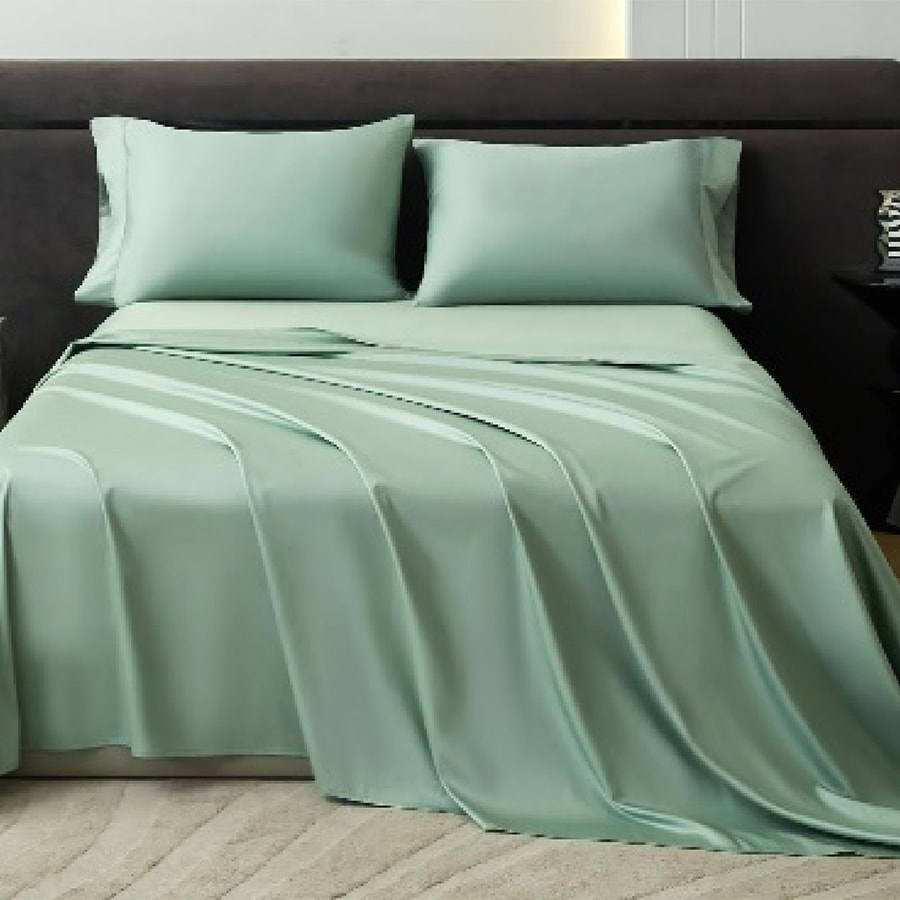 Pure Cotton Solid Color Double Bed Sheet Set for Everyday UseThis simple double bed sheet set in solid colors is presented in a bedding context focused on seasonal layering and quilt compatibility. It offers a straightforward cotton option for buyers looking to coordinate with different quilt cores and mattress dimensions.View Product →
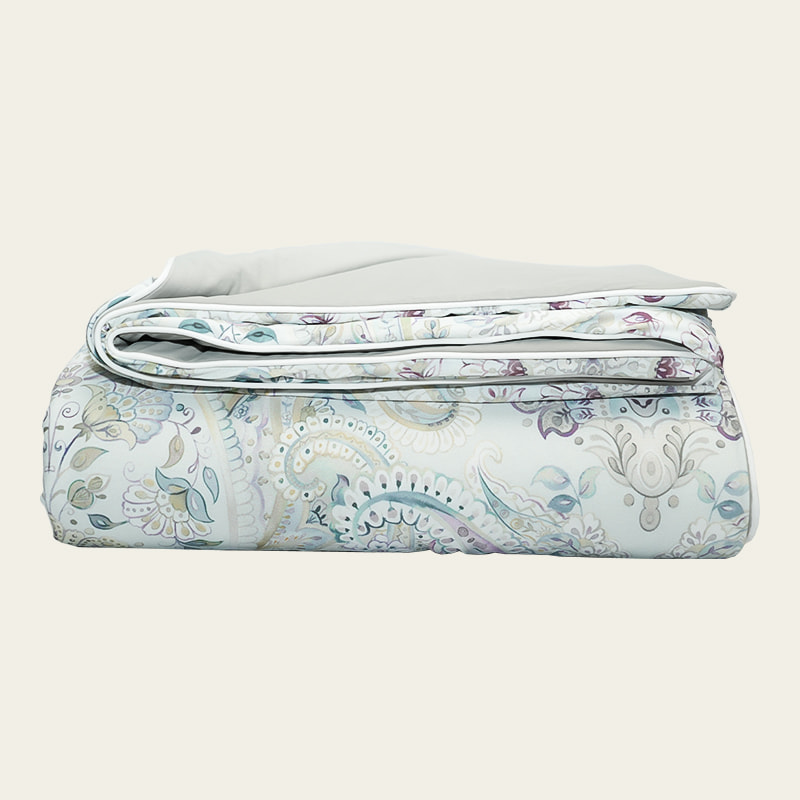
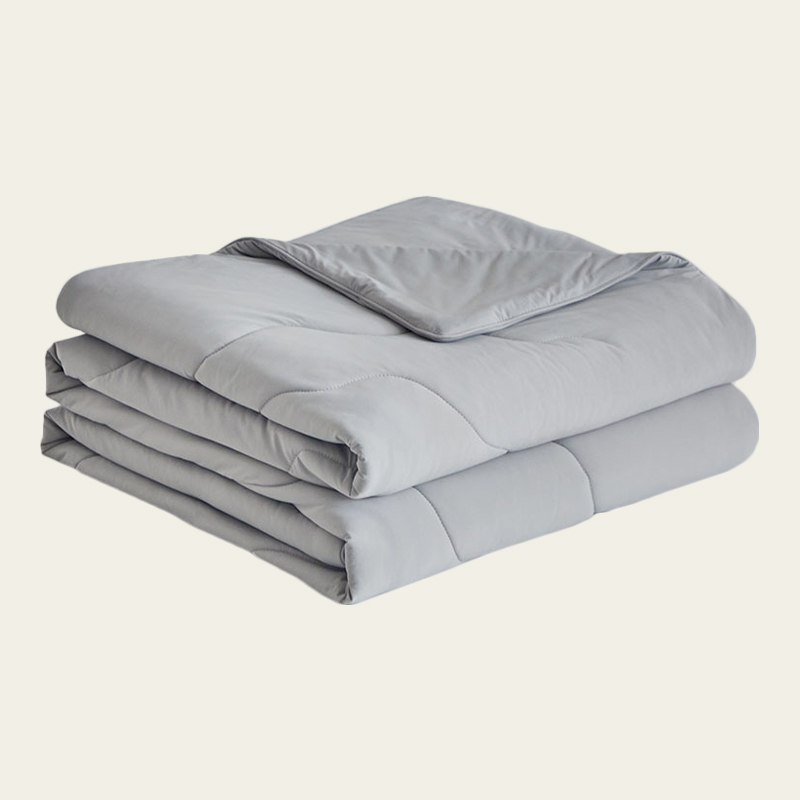
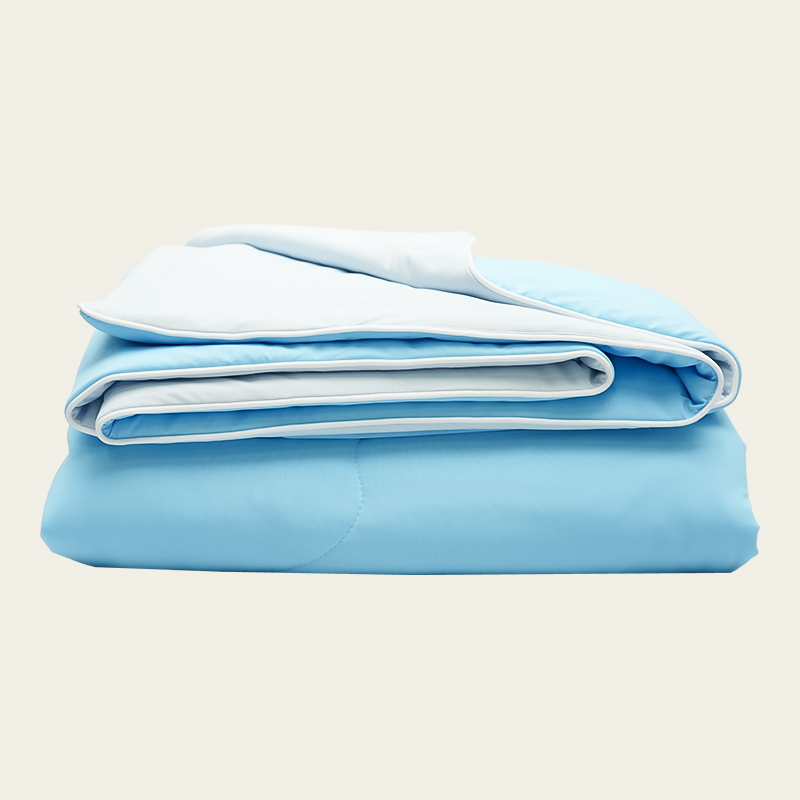
For those who also want to understand how the inner layer affects the overall sleep experience, the relationship between material and warmth is not limited to sheets. A quilt core with good insulating properties will change how warm the bed feels regardless of the sheet fabric, which is why some buyers combine summer sheets with lightweight quilt cores and winter sheets with heavier down cores. Seasonality is the clearest guide when building a bedding assortment:
Size and fabric also interact in one practical way: elasticized fitted sheets in stretchy cooling fabrics tolerate slightly deeper mattresses than rigid woven cottons, because the fabric itself gives. A cotton fitted sheet with a 7-inch pocket will not stretch over a 10-inch mattress, whereas a cooling fabric with elastane may still manage, although the tension will reduce the lifespan of the elastic. This is another reason to verify the pocket depth specification on the product page before purchasing.
When purchasing in bulk from a bedding supplier, the bed sheet size chart takes on a new role: it becomes part of the contract. A residential customer can return a wrong-sized sheet, but a wholesale order that arrives with the wrong dimensions creates a serious commercial problem. This is why professional buyers treat the size specification as a mandatory line item in every purchase order, along with fabric composition, stitch density, and packaging requirements.
Working directly with a manufacturer gives you the flexibility to adjust sizes to your market. For example, a bed sheet size chart prepared by our own factory can be adapted to accommodate a non-standard mattress depth, a different pillow count, or a regional flat sheet preference. The factory can cut fitted sheets with deeper pockets, add extra length to flat sheets, or produce a set configuration that is not listed on the standard product page. These adjustments are common in private label and OEM programs for bedding brands.
Here are the sizing checks we recommend for every wholesale buyer before placing an order:
Because our company is a source bedding manufacturer with in-house production and testing equipment, we can provide cutting specifications and finished-size certificates for each batch. This level of documentation is essential when a brand client needs to audit the supply chain or when a wholesaler wants to prove consistent quality across multiple orders. A reliable factory will always tell you the tolerance range of its cutting and sewing process, for example plus or minus 0.5 inch on the fitted sheet width, so that you know exactly what to expect.
Another advantage of factory-direct sourcing is the ability to build the size assortment around real market demand. Instead of forcing a standard chart onto your customers, you can order Twin and Twin XL for school dormitories, Queen and King for residential retail, and custom Emperor or deep-pocket sizes for premium projects. The production line handles such variety without difficulty, as long as the specifications are clear at the quotation stage. That is the practical meaning of a "full solution" from a bedding manufacturer: the chart becomes a starting point for customization rather than a fixed limitation.
Below are the most common questions buyers ask when they are reading a bed sheet size chart or preparing a bedding order. The answers reflect standard US sizing practice and the manufacturing experience of a bedding factory that supplies both domestic and international clients.
What size is a queen fitted sheet in inches?A standard queen fitted sheet for the US market measures approximately 60 inches wide by 80 inches long, which is 152 by 203 centimeters. The pocket depth depends on the mattress thickness, typically 7 to 10 inches for a standard queen mattress. If your queen mattress is thicker than 10 inches, you need a deep-pocket queen fitted sheet with a pocket depth of at least 12 inches. |
How do I know if I need deep pocket sheets?Measure the height of your mattress from the top surface to the bottom edge. If the mattress height is 9 inches or more, choose a deep pocket sheet with a pocket depth of at least 12 inches. If you add a pillow-top or mattress topper, add that extra height to your measurement. When in doubt, choose the deeper pocket, because a slightly loose pocket still stays on the bed, while a shallow pocket will definitely pop off. |
Can I use full sheets on a queen mattress?No. A full mattress is 54 by 75 inches, while a queen mattress is 60 by 80 inches. A full fitted sheet is 6 inches shorter in width and 5 inches shorter in length, so it cannot wrap a queen mattress properly. In an emergency, you might stretch a full flat sheet over a queen bed, but the fit will be poor and the sheet will not stay tucked. Always buy the correctly sized sheet for the mattress. |
Do European bed sheets fit US mattresses?Usually not, unless the inches and centimeters happen to match exactly. European mattresses are measured in centimeters, and their standard sizes differ from US sizes. For example, a UK King mattress is about 150 by 200 centimeters, which falls between a US Queen and a US King. If you want to use European sheets on a US mattress, compare the actual dimensions and the pocket depth, not the name of the size. |
What is the difference between flat sheet and fitted sheet dimensions?A fitted sheet is cut close to the mattress dimensions and has elastic corners, so it stays directly on the mattress. A flat sheet is a plain rectangle that is much larger than the mattress, allowing it to be tucked in and draped over the sleeper. For a queen bed, the fitted sheet is about 60 by 80 inches, while the flat sheet is typically 90 by 102 inches. |
How much bigger should a flat sheet be than the mattress?As a general rule, a flat sheet should be at least 20 inches longer and 20 inches wider than the mattress. This allowance provides enough fabric to tuck securely under the foot and sides while still covering the sleeper. A queen flat sheet of 90 by 102 inches on a queen mattress of 60 by 80 inches meets this rule comfortably. |
Why does my fitted sheet keep slipping off?The most common reasons are a shallow pocket depth, weak elastic, or a mattress that is taller than the sheet was designed for. Check the pocket depth measurement first. If the mattress is 12 inches thick and the sheet pocket is only 7 inches, the elastic cannot reach under the corner. Replacing the sheet with a deep-pocket version usually solves the problem. Additionally, low-quality elastic loses its tension after repeated washing, so the quality of the elastic matters as much as the depth. |
Do you offer custom bed sheet sizes for wholesale orders?Yes. As a manufacturer, we produce custom bed sheet sizes according to client specifications, including non-standard pocket depths, unusual mattress widths, Emperor-size flat sheets, and private label set configurations. For a custom order, please send the exact mattress dimensions or a reference sample, and our development team will confirm the cutting size and finished size before mass production. |
If you need to refresh your knowledge about bedding construction and material behavior, the following resources from our website complement the sizing information in this guide. Each article focuses on a specific decision point that arises after you have confirmed the correct sheet dimensions.
Remember that a bed sheet size chart is the foundation, but the final decision always depends on the specific mattress, the fabric behavior, and the expectations of the end user. Whether you are buying one set for your home or a thousand sets for a hotel project, the same logic applies: measure twice, confirm the specification once, and order with confidence.
 Zhihao Industrial Park, Chuanjiang Town, Tongzhou District, Nantong, Jiangsu Province
 +86-13814711705
 yueluo800@163.com
Copyright © Nantong Yueluo Home Furnishings Co., Ltd
Rights Reserved.