en

Search
 English
 日本語
 한국어
 عربى
 Español
 русский
Inquiry Now
Content
A queen size bed is 80 inches long. That is 6 feet 8 inches, or roughly 203 centimeters, and it is the number most people are actually after when they type this question into a search bar. The width is 60 inches, or about 152 centimeters, but width answers a different problem. Length is what decides whether a flat sheet tucks in with enough margin, whether a quilt hangs evenly at the foot, and whether a frame will sit against the wall you had in mind.
In the bedding trade, 80 inches is rarely the end of the conversation. It is the starting point. Once you know the mattress is 80 inches long, the next questions are about mattress depth, frame overhang, shrinkage after washing, and how much allowance a duvet cover needs before it starts looking short at the corners. Those are the details that separate a set that fits from a set that comes back.
This guide walks through the queen length from every angle a buyer, product developer, or sourcing manager is likely to need: the raw numbers in inches, feet and centimeters, how the 80-inch figure compares with other standard sizes, what it means for sheet and quilt patterns, and where custom sizes start to drift away from the standard.
A standard queen mattress measures 60 inches wide by 80 inches long. Converted, that is 5 feet wide by 6 feet 8 inches long, or 152 centimeters by 203 centimeters. The surface area works out to 4,800 square inches, which is roughly 33 square feet of sleeping space.
The length is the part that surprises people least but matters most in production. A queen is 5 inches longer than a full and identical in length to a standard king. That single fact explains why so many sheet patterns can be shared between queen and king beds in one direction, and why a full-size flat sheet will never work on a queen no matter how generously it is cut in width.
Here is how the queen sits next to the other common sizes sold in North America:
| Bed size | Width (in / cm) | Length (in / cm) | Length vs queen |
|---|---|---|---|
| Twin | 38 / 97 | 75 / 191 | 5 in shorter |
| Twin XL | 38 / 97 | 80 / 203 | Same |
| Full | 54 / 137 | 75 / 191 | 5 in shorter |
| Queen | 60 / 152 | 80 / 203 | Reference |
| King | 76 / 193 | 80 / 203 | Same |
| California King | 72 / 183 | 84 / 213 | 4 in longer |
Notice that the queen shares its length with both the Twin XL and the king. For a bedding factory, that overlap is useful. A single length-based cutting plan can serve several width variants, which reduces waste on wide fabric rolls and simplifies pattern grading across a product line.
Numbers in a table are easy to read but hard to feel. The chart below places the queen length next to the other common mattress sizes so the gaps become visible at a glance. The bars are scaled from 70 inches upward rather than from zero, purely so the differences between sizes show up clearly instead of collapsing into near-identical blocks.
Three things stand out. First, the queen and the king are level, so a family that upgrades from queen to king usually keeps the same flat sheet length and the same duvet length. Second, the full sits a full 5 inches behind, which is enough to make a queen quilt look baggy at the foot of a full bed but not short enough to be unusable. Third, the California king stretches the length to 84 inches, and that extra 4 inches is exactly where most off-the-shelf queen bedding starts to look under-sized.
For a bedding manufacturer working across a full catalogue, this chart is a reminder that length tolerance is not a detail to be settled at the end of sampling. A quilt cut to 96 inches covers a queen with 8 inches of drop at the foot; the same quilt on a California king leaves only 6 inches, which many buyers will read as a fit failure rather than a size difference.
Ask a pattern maker which dimension causes the most rework and the answer is almost always length. Width errors are forgiven because there is usually extra fabric at the sides. Length errors are not, because the foot of the bed is where a sheet either stays tucked or springs loose in the night.
Take a typical queen flat sheet. It is usually cut around 90 inches wide by 102 inches long. The width gives roughly 15 inches of drop on each side of a 60-inch mattress, which is comfortable. The length gives about 11 inches of tuck at the head and 11 inches at the foot, before shrinkage. If the same sheet is woven from a cotton that shrinks 4 percent after the first wash, that 11 inches becomes closer to 10.5 inches, and on a deep mattress with a topper the margin gets tighter still.
Fitted sheets have the same problem in a different form. A queen fitted sheet is built around a 60 by 80 inch pocket, and the pocket depth is measured separately. Mattresses between 10 and 12 inches are routine; 14 to 16 inches is common on pillow-top and hybrid builds. A fitted sheet cut for a 14-inch pocket on an 8-inch mattress will wrinkle, and the same sheet on an 18-inch mattress will pop off the corners.
Quilts and duvet covers follow a similar logic. A queen duvet cover is often specified around 88 to 90 inches wide by 92 to 100 inches long. The width controls side drop; the length controls how much hangs past the foot and whether the cover can be folded back at the top. Cut too short and the duvet insert bunches at the bottom; cut too long and the cover looks sloppy on a platform frame.
The mattress is 80 inches. The bed is usually longer. Most queen bed frames run 84 to 86 inches front to back once a headboard and footboard are included, and upholstered frames can push past 88 inches. If you are planning a room layout, measure the frame, not the mattress.
Height matters too, though it is often left out of the conversation. A bare queen mattress sits somewhere between 8 and 14 inches thick. Add a box spring or slatted base and the sleeping surface climbs to roughly 24 to 26 inches from the floor, which is the range most people find easy to get in and out of. A platform bed with a low profile may put the surface closer to 18 inches, which changes both the visual weight of the room and the way a quilt hangs.
Room requirements are more forgiving than people expect. A queen fits in a 10 by 10 foot bedroom, but only just. Once you account for a 30-inch walking path on two sides and a dresser, a 10 by 12 or 10 by 14 foot room feels considerably better. The length of the bed is the constraint along the wall, so a room that is 11 feet deep leaves about 50 inches at the foot, which is enough for a wardrobe door to open without hitting the frame.
For hospitality and rental projects, this is worth modelling before the furniture order goes out. A 10-foot wall that fits a queen mattress with 40 inches to spare will not necessarily fit the same queen inside an upholstered frame with a rolled footboard.
Moving from a full to a queen adds 6 inches of width and 5 inches of length. That sounds modest, but the length gain is the one that changes how a tall sleeper feels. Anyone around 6 feet 2 inches or taller will notice the difference between a 75-inch and an 80-inch mattress within a night or two, because the extra 5 inches sits exactly where the feet land.
Width is the other half of the story. A queen gives two adults 30 inches each, which is the figure the industry usually quotes. A full gives 27 inches each, which is why couples who move from full to queen rarely go back. A king gives 38 inches each and the same 80-inch length as the queen, so it solves the width problem without touching the length problem.
That is where the California king earns its place. At 72 inches wide by 84 inches long, it trades width for length. For a tall couple in a narrow room, it can be the better answer. For a couple who simply want more shoulder room, the standard king is usually the right call.
Not every queen is 60 by 80. Several variants exist, and they matter enormously to anyone sourcing bedding for a specific market or property.
An Olympic queen measures 66 by 80 inches. It keeps the standard length and adds 6 inches of width. Standard queen sheets will not fit properly; the flat sheet will be too narrow and the fitted sheet will not stretch across the corners.
The California queen, sometimes called a waterbed queen, measures 60 by 84 inches. The width matches a standard queen but the length is 4 inches greater. This is one of the most common sources of returns in online bedding sales, because a shopper sees the word queen and assumes a standard fit.
A split queen is two mattresses of 30 by 80 inches each, used on adjustable bases. Bedding is usually sold as two separate half-sets or as a single set with a split-top sheet, and the length remains the familiar 80 inches.
Outside North America, the numbers shift. A European double is commonly 160 by 200 centimeters, which converts to roughly 63 by 79 inches, so it is wider and slightly shorter than a U.S. queen. An Australian queen is 153 by 203 centimeters, which lands very close to the U.S. figure. Japanese and Korean queens tend to be shorter again. For a manufacturer quoting on an export order, the safest practice is to confirm the mattress dimensions in millimeters rather than relying on the size name.
Once the mattress length is settled, the bedding specification becomes a set of allowances rather than a single number. A practical queen specification usually looks something like this:
Some buyers prefer a shorter duvet that sits neatly inside the frame, while others want a longer one that drapes closer to the floor. Neither is wrong, but the choice has to be made early, because it determines the fabric consumption per set and therefore the quoted price.
A four-piece queen set built around these numbers is one of the most reliable volume sellers in the category, simply because the size is so widely used. Sets that include a fitted sheet, flat sheet and two pillowcases cover the majority of retail demand, while three-piece and two-piece configurations serve smaller households, guest rooms and rental properties.
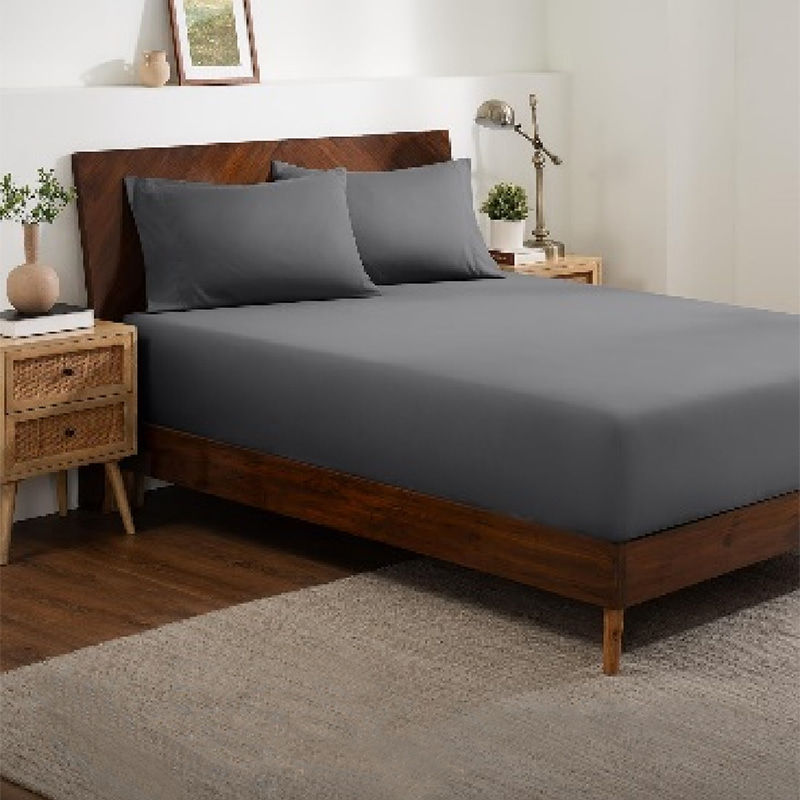
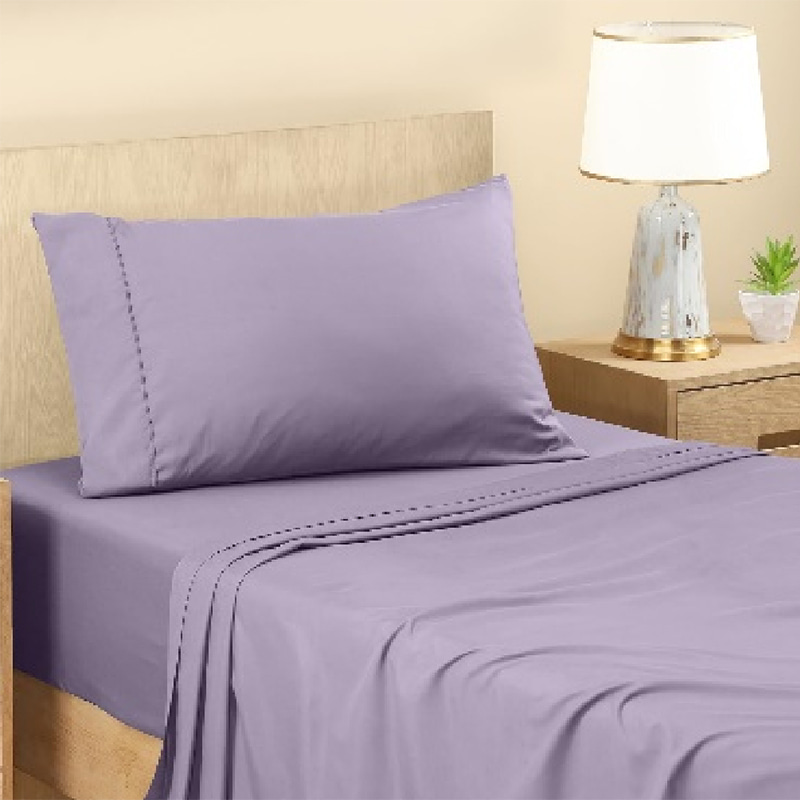 4-Piece Queen-Size Cooling Sheet SetComplete queen set with flat sheet, fitted sheet and two pillowcases in soft, breathable solid-color fabric; a practical volume-selling size for everyday bedrooms.View Product →
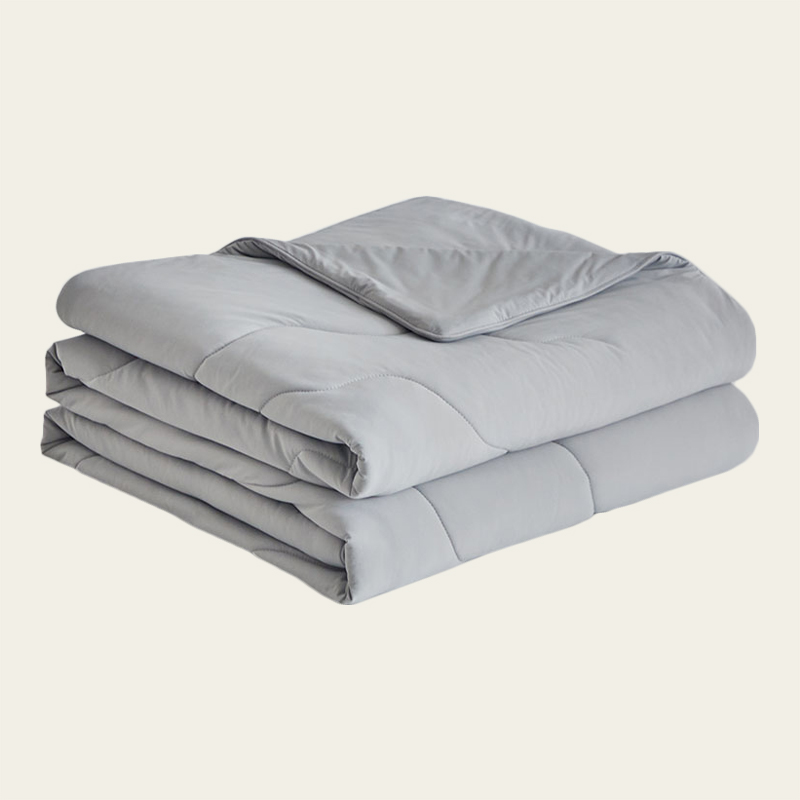
Filling performance deserves equal attention. A down or feather quilt that is compressed in storage will look short at the foot of the bed until it recovers its loft, and buyers sometimes mistake that for a sizing fault. Knowing how to bring a quilt back to its full volume is part of selling the product honestly, and the same principle applies to restoring loft in down quilts before a fit is judged.
Most sourcing problems on queen bedding are not manufacturing problems. They are specification problems that were never resolved in writing. A short checklist before the purchase order goes out will prevent most of them.
Brands sourcing through a bedding manufacturer or supplier usually find that the sampling stage is where these points get resolved, provided the questions are asked before the sample is sewn rather than after it arrives. A wholesaler buying stock lots has less room to adjust, which makes reading the specification sheet carefully even more important.
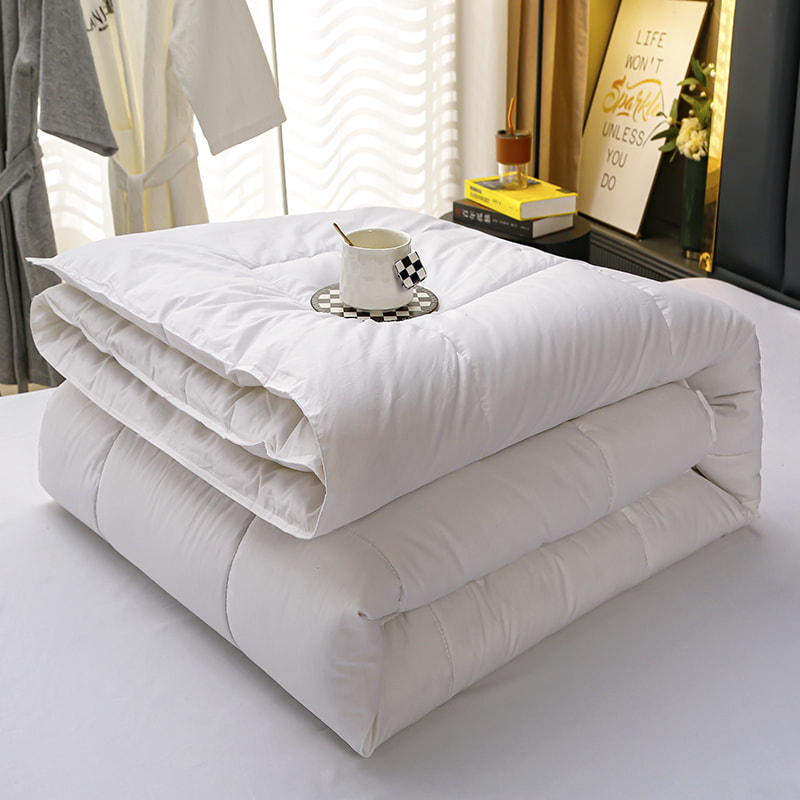 4-Piece Bamboo Fiber Bedding SetFour-piece bamboo fiber bedding set with envelope pillowcases and deep-fit elastic edges, presented for ODM sourcing; review specification details carefully before sampling.View Product →
Material choice interacts with sizing as well. Bamboo fibre and cotton blends behave differently in the wash, and a set that is cut generously in raw fabric can end up tight after finishing if the shrinkage allowance was set by habit rather than by test data.
The quilt is where the queen length becomes visible to the customer. A duvet or quilted cover cut at 90 by 100 inches gives a queen mattress 15 inches of drop on each side and 10 inches past the foot, which reads as a full, generous drape. Cut the same product at 86 by 92 inches and it will look correct on a full but skimpy on a queen.
Fill weight and loft change the perception of length as well. A high-loft quilt stands away from the mattress and appears to cover more of the frame, while a flat, lightly filled quilt shows every inch of the gap at the foot. Neither is better in absolute terms, but the two need different cut lengths to look right in a photograph, and photography is often what sells the set online.
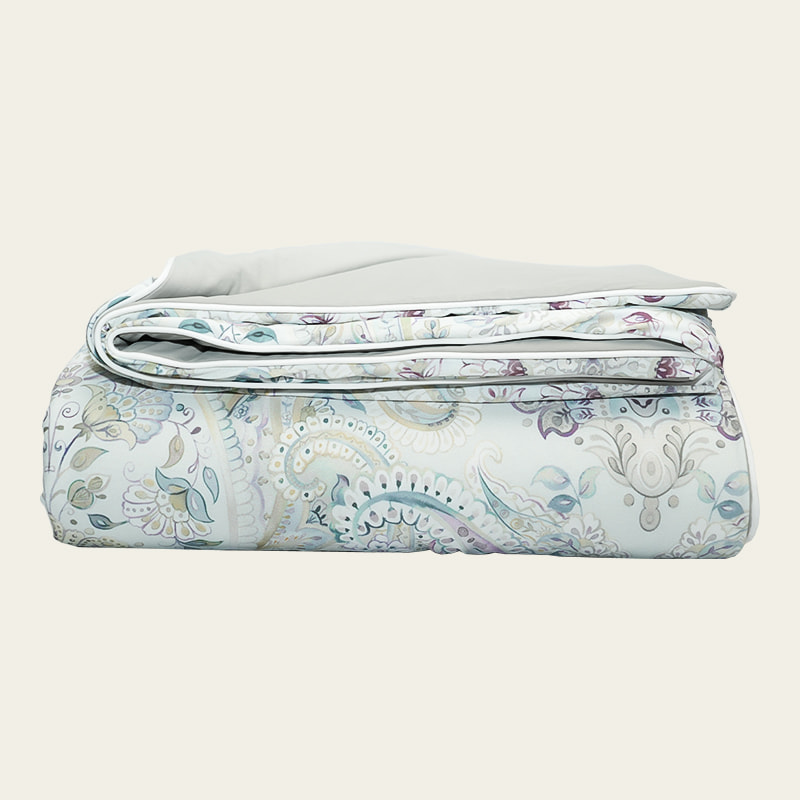
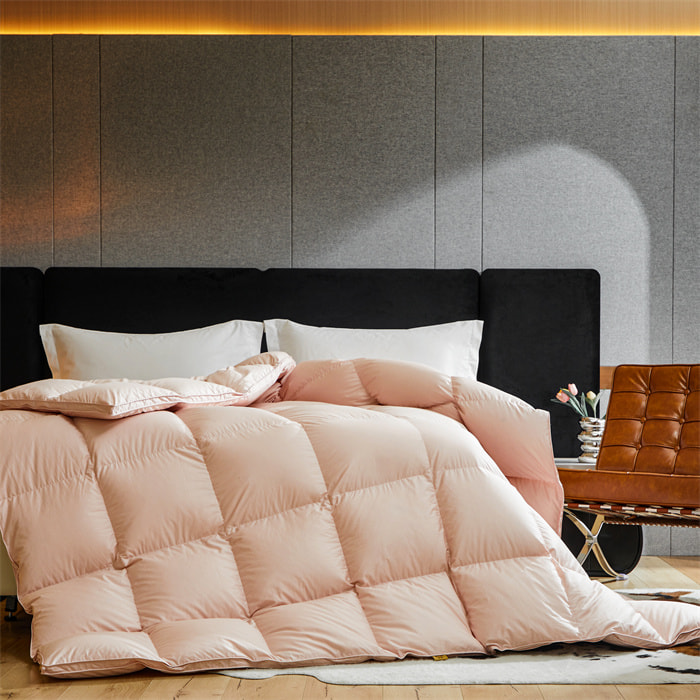 Luxury Soft Goose Down QuiltHigh-loft goose down quilt with cotton shell, 800+ fill power and RDS/OEKO-Tex certification, designed for warm, quiet and luxurious sleep.View Product →
Pillows are the other half of the pairing. A standard queen pillow of 20 by 30 inches covers most of the headboard width when two are placed side by side on a 60-inch mattress. King pillows at 20 by 36 inches are increasingly used on queen beds for a fuller look, and brands should decide which configuration they are photographing before the styling sheet is finalised.
Most queen bedding returns are avoidable, and the reasons repeat across markets.
A frame that is 86 inches long does not mean the bedding should be cut for 86 inches. Bedding is sized to the mattress, with drop added separately.
Mattresses compress over time. A ten-year-old queen may measure 78 inches against a nominal 80, which leads to an undersized order that then fails on new stock.
Length and width are fixed, but depth is not. A fitted sheet built for an 8-inch mattress will not stay on a 16-inch pillow-top.
A 200 cm specification is about 78.7 inches, not 80. On a queen-length quilt that difference shows up at the foot.
Cut length plus shrinkage is the real finished length. A fabric that shrinks 4 percent loses more than 3 inches across an 80-inch quilt, which is enough to change the drape entirely.
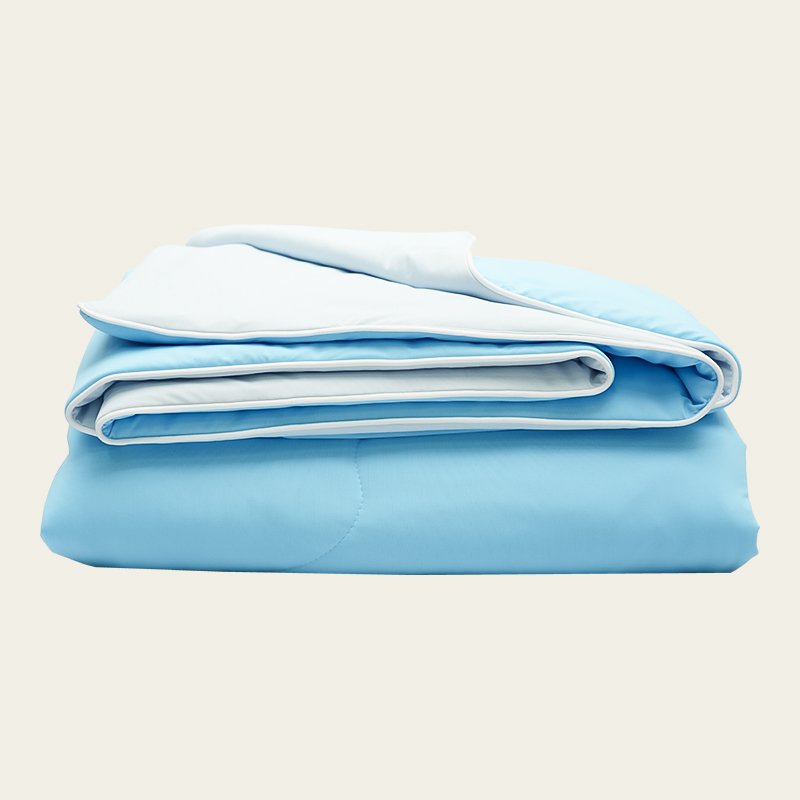
Nantong Yueluo Home Furnishings has been producing quilt cores, pillow cores and bedding sets from its Nantong base since 2008, working with brand clients who need both standard queen programmes and custom development against their own drawings and samples. If you are building a queen-size range and want to compare constructions, the most direct place to start is our quilt core collection, which covers cooling quilts and down quilts in the fills and weights that most commonly sit on an 80-inch bed.
A standard queen bed is 6 feet 8 inches long and 5 feet wide. In centimeters that is about 203 by 152.
In North America, yes, the standard is 80 inches. Variants exist, including the California queen at 84 inches and European doubles that measure closer to 79 inches, so the label alone is not a guarantee.
Most frames run 84 to 86 inches front to back once the headboard and footboard are included, and upholstered designs can reach 88 inches. Allow the frame length when planning a room layout.
It fits, but the room will feel full. A 10 by 12 or 10 by 14 foot room leaves a comfortable walking path at the foot of the bed and room for a dresser.
Around 100 inches is a practical length for a queen, giving roughly 10 inches of drape past the foot of an 80-inch mattress. Shorter cuts of 92 to 96 inches are also common and read as a more tailored look.
An Olympic queen is 66 inches wide rather than 60, with the same 80-inch length. Standard queen sheets will not fit it correctly.
No. A California queen is 84 inches long, so a standard queen flat sheet will leave only about 9 inches of tuck at each end and a fitted sheet will not reach the corners.
For sleepers up to about 6 feet 2 inches, a queen is usually comfortable. Above that, the 84-inch California king length is often the more practical choice.
A queen mattress typically weighs between 60 and 120 pounds depending on construction, with latex and hybrid builds at the heavier end. A queen bedding set adds little by comparison, usually a few pounds per set.
Yes. Custom development against a buyer's drawings or samples is routine in the bedding manufacturing sector, and confirming dimensions in millimeters at the sampling stage avoids most of the mismatch risk on export orders.
The number itself is simple: 80 inches, 6 feet 8 inches, 203 centimeters. What takes experience is everything layered on top of it, from pocket depth and tuck allowance to shrinkage and the difference between an Olympic queen and a California queen. Get those details onto the specification sheet early and the 80-inch length stops being a source of returns and starts being the foundation of a range that fits the first time.
 Zhihao Industrial Park, Chuanjiang Town, Tongzhou District, Nantong, Jiangsu Province
 +86-13814711705
 yueluo800@163.com
Copyright © Nantong Yueluo Home Furnishings Co., Ltd
Rights Reserved.