en

Search
 English
 日本語
 한국어
 عربى
 Español
 русский
Inquiry Now
Content
A bed that looks untidy after ten minutes usually has less to do with decorative styling and more to do with fit. If the fitted sheet is loose at one corner, the flat sheet has too little drop, or the duvet is centered but not squared, the whole bed reads as messy even when the linen itself is clean. So how do you properly make a bed? The short answer is to build from the mattress up, keep every layer under even tension, and stop adding layers once the bed is clean, comfortable, and easy to remake.
That answer works for a spare bedroom, a rental apartment, a hotel room, or a showroom display. The details change with the setting. A household may care most about speed and comfort. A hospitality buyer may care about repeatability across dozens of rooms and hundreds of laundry cycles. A private-label bedding program may care about whether a fitted sheet still sits square after the fifth wash, or whether a duvet cover keeps its shape when housekeeping works quickly. The method below is practical for all three, with fit checks that matter to anyone who buys bedding in volume.
Key point: A properly made bed is not the one with the most layers. It is the one where each layer fits, sits square, and can be repeated without fuss.
Start with a clean mattress, add protection, fit the bottom sheet snugly, place the flat sheet with enough drop, add the duvet or quilt, dress the pillows, and finish only if the setting calls for it. That sequence is simple, but the order matters because each step affects the next. A mattress protector that is wrinkled will show through a tight fitted sheet. A fitted sheet that is too large will bunch under the sleeper. A duvet that is not shaken out will hang lower on one side.
The best bed-making routine is the one you can repeat without correcting the same problem twice. In a home, that may mean a two-minute routine with a fitted sheet, duvet, and two pillows. In a hotel or guesthouse, it may mean a five-minute routine with a mattress protector, fitted sheet, flat sheet, duvet cover, pillow covers, and a final inspection. In a bedding showroom, it may mean a display that can be reset quickly after customers touch the fabric.
| Layer | Main purpose | Fit check | Common failure |
|---|---|---|---|
| Mattress protector | Protects the mattress and adds a clean base | Corners are fully seated and the surface is smooth | Wrinkles or loose elastic create lumps under the sheet |
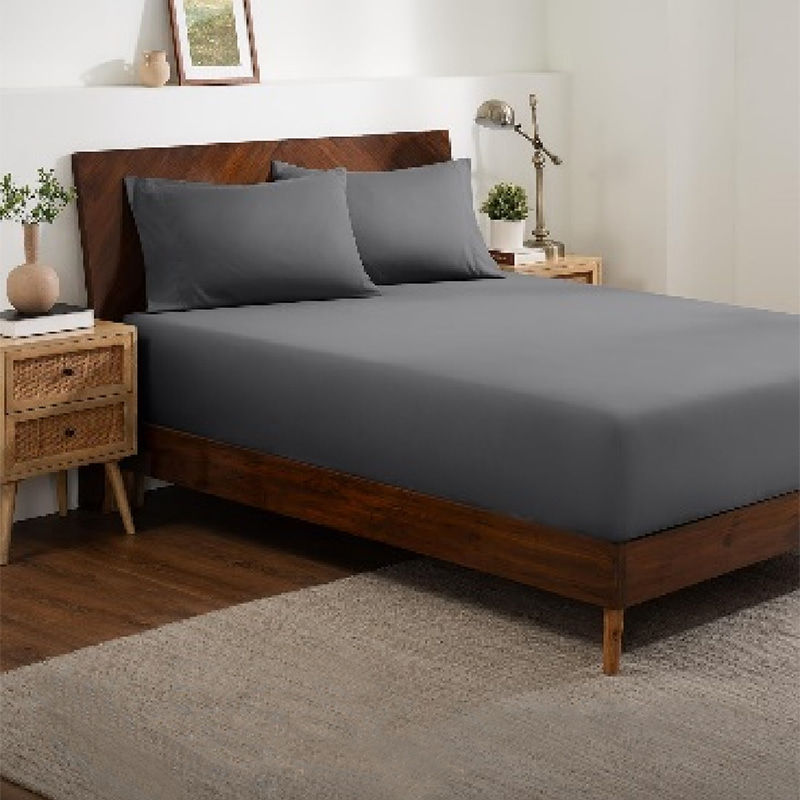
| Fitted sheet | Creates the first sleep surface | Pockets match mattress depth and all four corners stay down | Too much fabric in the middle or popping corners |
| Flat sheet | Adds a removable top layer and a crisp finish | Drop is even on both sides and long enough to tuck | Short drop, uneven hem, or a loose foot end |
| Duvet or quilt | Provides warmth and the main visual finish | Seams run parallel to the bed and the fill is evenly distributed | One side hangs lower or the insert bunches inside the cover |
| Pillows and cases | Supports the head and frames the bed | Pillow fills the case without straining seams | Overstuffed cases, twisted covers, or uneven pillow heights |
Key point: Proper bed-making follows a fixed order. The base must be smooth before the sheet goes on, and the sheet must be square before the duvet goes over it.
A clean mattress is the foundation of a well-made bed. Strip the old linen, check for crumbs, hair, or damp spots, and let the mattress surface air for a few minutes if the room allows it. A mattress protector is worth using in almost every setting because it reduces stains and gives the fitted sheet a more stable surface. The protector should be fully seated at the corners. If it has a skirt or elastic band, check that the band is not twisted.
This step matters in commercial bedding because housekeeping time is limited. If the protector is wrinkled, the fitted sheet will not sit flat, and the room will look less crisp even after a careful make-up. For a bedding supplier, the same principle applies to product development: a fitted sheet that depends on perfect mattress conditions is harder to sell than one with a generous pocket and stable elastic. A small tolerance issue at the factory becomes a daily complaint at the hotel.
Use a mattress protector that matches the mattress depth. A deep mattress with a shallow protector will pull at the corners. A thin mattress with a deep protector will leave extra fabric under the sheet. If you are buying for a guesthouse or rental property, standardize protector depth by bed type. Mixed mattress depths in the same building create avoidable bed-making inconsistency.
Key point: A smooth, correctly fitted mattress protector is not an optional extra. It is the layer that makes the fitted sheet behave.
The fitted sheet is where most bed-making problems show up. Put the sheet on the mattress with the short side at the head or foot as designed, then seat one corner fully before moving to the opposite diagonal corner. This diagonal method gives you more control than stretching all four corners at once. Once the corners are down, run your hand from the center to the edges to remove trapped air and small folds.
Fit is not only about size. Pocket depth, elastic recovery, and fabric stretch all affect how the sheet sits. A cotton fitted sheet with a firm weave may feel crisp, while a stretchier fabric may be easier to pull over a deep mattress. Neither is automatically better. The right choice depends on the mattress, the laundry process, and the finish the buyer wants. For a bedding manufacturer, fitted sheet tolerance is a practical quality issue: a pocket that is too shallow will pop; a pocket that is too deep will wrinkle.
In a home setting, a fitted sheet that pops at one corner can be corrected by re-seating the corner and smoothing the surface. In a hotel or showroom, a popped corner is a visual failure. Housekeeping teams often check the foot of the bed first because that is where guests notice looseness. A good bed-making standard should include a quick corner test after the sheet is fitted: press down at each corner, then run a hand along the side seam to confirm the sheet is not twisted.
Key point: Fit the fitted sheet diagonally, smooth from the center outward, and check the corners before adding any top layer.
There is no single bed-making style that suits every market. A flat sheet can be tucked under the mattress for a traditional hotel finish, folded back over the duvet for a layered look, or left loose for a more casual bed. The key is to choose one method and apply it consistently. A flat sheet needs enough drop to tuck. On many standard beds, a drop of about 30 to 40 cm on each side gives housekeeping enough fabric to work with, but mattress depth and bed size change the exact requirement.
For a crisp hotel-style finish, tuck the flat sheet along the sides and foot, then make hospital corners at the foot end. To make a hospital corner, lift the side of the sheet near the foot corner, tuck the excess under the mattress, fold the triangular flap down over the mattress, and tuck the remaining tail underneath. The corner should look neat from the doorway and feel smooth when the guest gets into bed. If the sheet is too short, the corner will pull out as soon as the bed is used.
The duvet or quilt is the main visual layer. Shake it out before placing it on the bed. If it has a cover, check that the insert is evenly distributed and that the cover seams run parallel to the bed edges. A duvet that is longer on one side will make the whole bed look off-center. For a quilt core product, fill distribution matters as much as the outer fabric. A quilt that feels lumpy in one area will not hang cleanly, no matter how carefully it is folded.
If the duvet cover uses a tie closure, check that the insert is tied at all corners before shaking it out. If it uses a zipper or button closure, close it before the final shake so the insert does not escape. A simple burrito method works well for duvet covers: turn the cover inside out, lay it over the duvet, tie or fasten the corners, roll the cover and duvet together from the closed end, then turn the cover right side out over the duvet. This method reduces twisting and keeps the insert aligned.
 Yueluo Luxury Goose Down QuiltWith a cotton shell, 95% goose down, eight loops, and 800+ fill power, this quilt offers warm, even loft for duvet-cover finishing.View Product →
Key point: Choose a tuck style, keep the drop even, and make sure the duvet insert is squared inside the cover before you judge the finish.
A repeatable bed-making routine is easier to manage when you know which steps take the most time. The chart below shows a typical time profile for a five-minute hotel-style make-up, from mattress inspection to the final pillow check. It is not a strict stopwatch record, but it helps housekeeping supervisors and bedding buyers see where small product improvements can save time.
The fitted sheet and flat sheet usually take the largest share of time because they involve corners, tension, and alignment. A bedding supplier can reduce that time by improving pocket depth consistency, elastic recovery, and hem straightness. A duvet that is cut square and filled evenly also takes less time to align. For a wholesale bedding program, these are not small details. They affect how many rooms a housekeeping team can complete and how often a supervisor has to redo a bed.
Pillow work looks quick, but it is often where the final impression is made. A pillow that is too firm for its case will strain the seams; a pillow that is too soft will look flat. The chart also explains why mattress protection deserves a fixed step. If housekeeping skips the protector check, the fitted sheet may go on over a wrinkle, and the error will show through the finished bed. A bedding manufacturer that understands this time profile can design products around real housekeeping routines rather than showroom looks alone.
Key point: Most bed-making time is spent on sheet fit and edge alignment, so those are the first places to improve bedding specifications.
Pillows are handled more than almost any other part of the bed. A guest may not notice a perfectly squared duvet, but they will notice a pillow that feels lumpy, looks flat, or is difficult to get into the case. Start with a clean pillow, fluff it from the center outward, and slide it into the case rather than stuffing it from one end. The case should fit the pillow without straining the seams. If the pillow is too large for the case, the corners will pull; if it is too small, the case will look empty.
For a classic hotel look, use two pillows per sleeper as the base, then add a decorative cushion only if the setting calls for it. In a home, one or two pillows per person is enough for most sleepers. The open end of the pillowcase usually faces away from the headboard in hotel-style bed-making so that the folded edge presents cleanly. Some housekeeping teams prefer the open end toward the center to hide it under the next pillow. Either method can work, but the standard should be written down and applied consistently.
Pillow core choice affects the finished look. A high down ratio pillow core can feel soft and compressible, while a feather and synthetic fiber pillow may hold a fuller shape. A double-layer anti-down design can help reduce feather penetration, which matters in hospitality because a pillow that leaks small feathers looks poorly made even when the case is clean. For a bedding supplier, pillow fit is a specification issue: case size, seam allowance, fill weight, and fabric density all need to work together.
A quick pillow check before leaving the room: stand at the foot of the bed and look at the pillow line. The pillows should sit at a similar height, the cases should be smooth, and no insert should be visible at the opening. If one pillow looks lower, fluff it again or swap it with another pillow from the same bed. In a wholesale bedding program, this is the kind of check that helps buyers compare samples fairly.
 High Down Ratio Goose Feather Pillow InsertsThese 12-by-20-inch pillow inserts use a 95% goose feather and 5% down blend for a softer feel and fuller pillow line.View Product →
Key point: A pillow looks properly made when the insert fills the case without strain and the finished pillow line is even across the bed.
Hospital corners are a useful bed-making skill, but they are not mandatory in every setting. They help when you want a flat sheet to stay secure, when the bed is on display, or when a hotel standard calls for a crisp tuck. They are less useful when the sleeper prefers a loose top layer, when the flat sheet is too short for the mattress, or when the bedding design is intended to be casual. The technique should serve comfort and presentation, not the other way around.
To make a hospital corner, pull the flat sheet down over the side of the mattress near the foot corner. Tuck the excess fabric under the mattress along the side. Lift the remaining corner of the sheet and fold it back toward the head of the bed, forming a triangle. Tuck the triangular flap under the mattress, then tuck the tail end that hangs at the foot. Smooth the corner with your hand. The result should be a clean diagonal line, not a tight knot of fabric.
For hospitality buyers, hospital corners are also a test of sheet size. If the flat sheet is too short, the corner will not stay tucked after the first turn. If the sheet is too wide, the fold will be bulky. A bedding manufacturer or wholesaler should be able to advise on flat sheet dimensions by mattress size and expected tuck style. This is where a general retail sheet set and a contract bedding program can differ: the contract buyer needs consistent dimensions across repeated orders, not just a good first sample.
At home, you can skip hospital corners if you use a duvet that covers the top of the bed and you prefer a simpler routine. The important thing is that the sheet does not bunch under the sleeper and that the bed looks intentional. A neat fold at the foot of the bed can be enough. If you do use hospital corners, practice on one corner until the fold is smooth, then repeat the same sequence on the other side.
Key point: Hospital corners work best when the flat sheet has enough drop. If the sheet is short or the mattress is deep, a simpler tuck will look better and last longer.
A hotel bed and a home bed may use the same sheets, but they are judged differently. A home bed can be adjusted by the person who sleeps in it. A hotel bed is judged before the guest touches it, and then again after housekeeping has remade it. That is why hospitality bed-making standards usually include a fixed sequence, a final inspection, and a defined tolerance for fit. A showroom has a similar need: the bed must look good after many customers have sat on it, lifted the duvet, and checked the pillowcases.
For a private-label bedding program, the bed-making standard should be written into the product brief. Does the fitted sheet need a deep pocket for a pillow-top mattress? Should the flat sheet be wide enough for hospital corners? Is the duvet cover sized to the insert with a small allowance for shrinkage? Will the pillowcase use an envelope closure or a simple open end? These questions are easier to answer before production than after a container has shipped.
A practical hotel standard might include four checks. First, the mattress protector is smooth and fully seated. Second, the fitted sheet has no loose folds and all corners are down. Third, the flat sheet is tucked evenly or folded back to a consistent depth. Fourth, the duvet and pillows are centered and inspected from the doorway. In a showroom, add a fifth check: the fabric surface should look clean after handling, and the duvet should recover its shape after being pressed.
For buyers comparing bedding suppliers, ask for a sample make-up on a mattress of the same depth as the target property. Do not judge a fitted sheet on a flat table. Do not judge a duvet cover without an insert. Do not judge a pillowcase with the wrong pillow. A bedding manufacturer with contract experience should understand these variables and provide specifications that match the real bed, not just the catalog photo.
Key point: Commercial bed-making quality depends on written fit standards. Test bedding on the actual mattress depth, not on a display table.
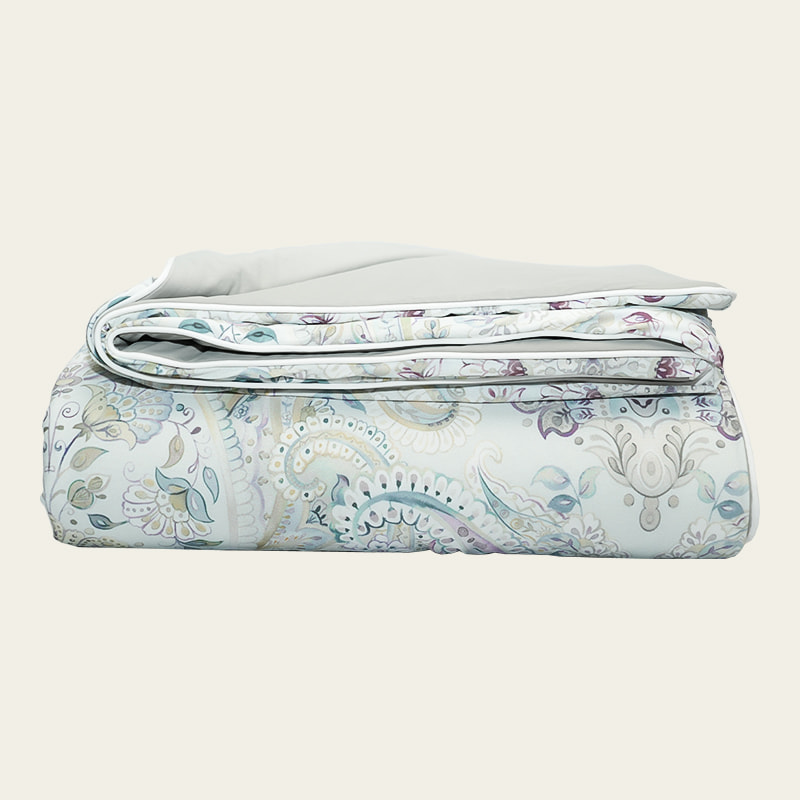
The way a bed looks after making is shaped by the materials underneath. A crisp cotton bedding set may hold a fold well, while a bamboo fiber set may drape more softly. A cooling quilt may feel smooth and cool in summer, while a down quilt may look loftier and warmer in winter. None of these is universally better. The right choice depends on the season, the market, the laundry process, and the look the buyer wants to achieve.
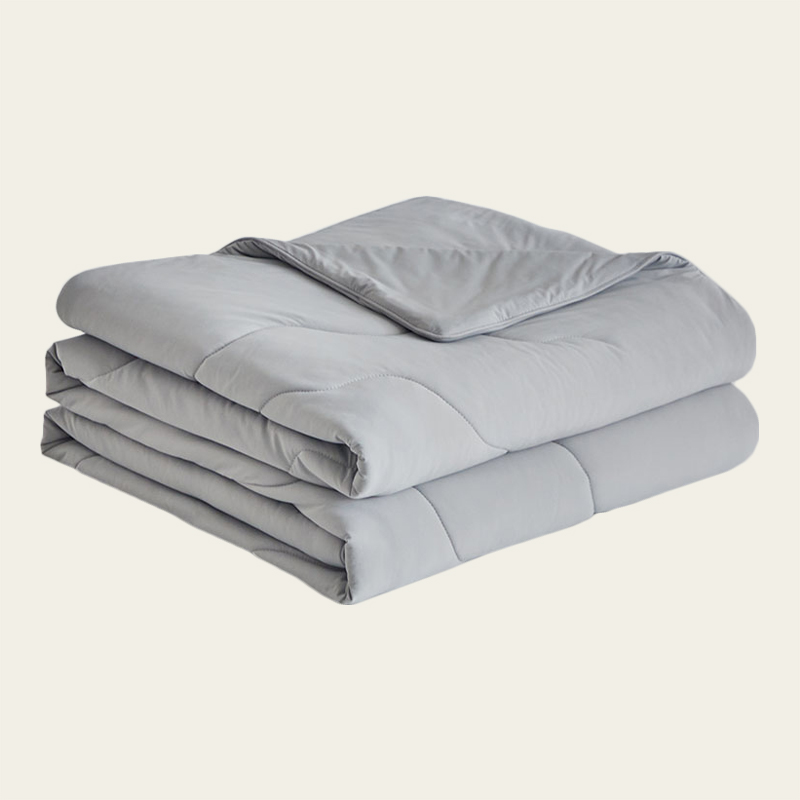
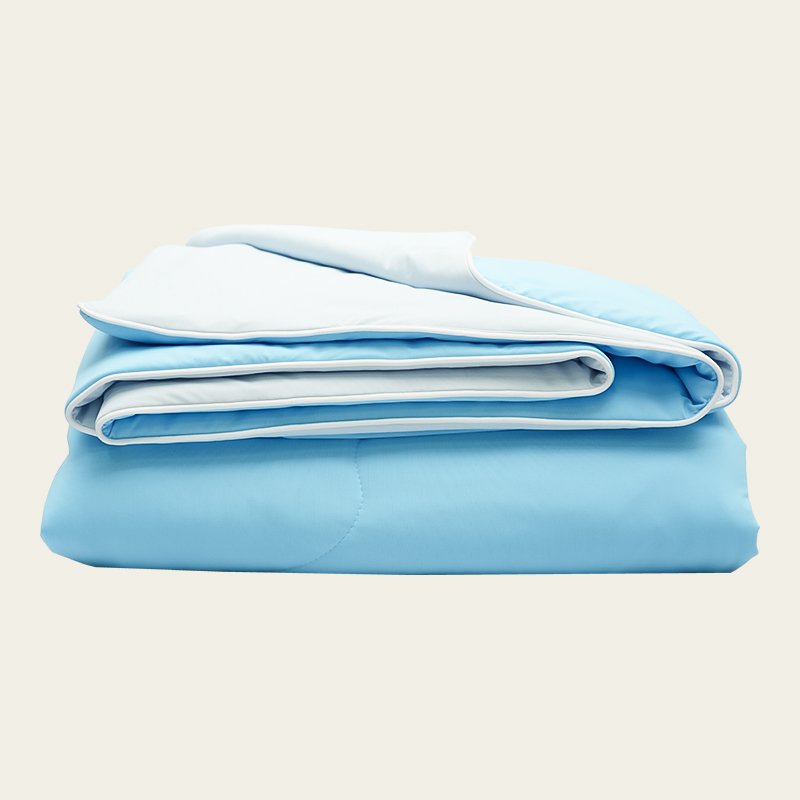
Quilt core choice affects how the top layer hangs. A quilt with uneven fill will look lumpy at the edges. A down quilt with good loft may need more shaking to distribute the fill before it sits squarely. A cooling quilt may be lighter and easier to align, but it may also show wrinkles more readily if the fabric does not recover after washing. Buyers should test how each product behaves after a full make-up, not only how it feels in the hand. The relationship between quilt-core material and insulation is also worth reviewing when selecting a product for a climate or season, and this site covers that topic in more detail through its quilt-core material and insulation guide.
Pillow core choice affects the head of the bed. A high loft pillow may look generous but can overpower a low headboard. A softer pillow may look flat unless it is fluffed and fitted with the right case. For a bedding supplier, the goal is to match fill weight, case size, and fabric so the finished pillow looks balanced. A wholesaler serving hotels may prefer a pillow that recovers quickly after handling; a retailer may prefer a pillow that feels soft in the showroom.
Fabric also affects the final press. Pure cotton bedding sets are often chosen for a clean, familiar look. Bamboo fiber bedding sets may appeal to buyers looking for a different hand feel. Cooling bed kits may suit summer-focused programs or warm-climate markets. The key is to make the bed with the product's behavior in mind. A soft drape needs a different fold from a crisp weave. A lofty quilt needs a different shake from a lightweight cool quilt.
Key point: The finished bed reflects the fabric and fill inside it. Choose bedding that fits the climate, laundry routine, and bed-making style, not just the catalog color.
If you make beds every day, the best bedding is the bedding that reduces correction time. For a hotel, that may mean fitted sheets with consistent pocket depth, duvet covers with secure corner ties, and pillowcases with enough seam allowance to fit the insert without strain. For a retailer or wholesale buyer, it may mean a bedding set that holds its shape after washing and looks good in a display. For a private-label brand, it may mean a supplier that can adjust dimensions, fill weight, and packaging to match the target market.
A bedding manufacturer with control over quilt cores, pillow cores, and bedding sets can often solve fit problems at the source. Instead of buying a standard sheet set and hoping it fits a deep mattress, a buyer can specify pocket depth, elastic type, and flat sheet drop. Instead of accepting a duvet cover that twists, a buyer can check insert sizing and corner ties. Instead of guessing how a pillow will look in a case, a buyer can request a sample make-up on a representative bed.
When comparing suppliers, ask practical questions. What mattress depth is the fitted sheet designed for? What is the shrinkage allowance after washing? Are the flat sheet dimensions based on tuck style or drop? Does the duvet cover have corner ties or a zipper? Can the pillowcase be sized to the pillow core? A supplier that answers these questions clearly is easier to work with than one that only sends fabric swatches. This is especially important for wholesalers and brand buyers who need repeatable quality across multiple orders.
This site's bedding sets are organized by material and use case, which makes it easier to match a bed-making standard to a product family. A pure cotton set may suit a classic guest room, a cooling set may suit a summer rental, and a bamboo fiber set may suit a buyer looking for a different hand feel. The point is not to add more products to the bed. The point is to choose the product that makes the bed easier to fit, finish, and maintain.
 Dyed Pure Cotton Four-Piece Bed SetThis pre-washed pure cotton four-piece set offers a subtle yarn-dyed look, eight duvet ties, and a zipper closure for easier bed-making.View Product →
Key point: The best sourcing decision is the one that removes a repeated bed-making problem, whether that is pocket depth, duvet alignment, or pillow fit.
Most bed-making mistakes are small, but they are visible from the doorway. The fitted sheet is not fully seated at one corner. The flat sheet is tucked on one side and left loose on the other. The duvet is centered at the head but off at the foot. The pillows are stacked without fluffing. The throw is added to hide a wrinkle rather than to improve the bed. These problems are easy to correct once you know where to look.
A quick final check solves many of these issues. Stand at the foot of the bed and look across the surface. The sheet should be smooth, the duvet should hang evenly, and the pillows should sit at a similar height. Then look from the side. The layers should be centered, and the drop should be consistent. If something looks off, correct it before adding any decorative item. A simple bed made well looks better than a complicated bed made in a hurry.
Key point: Fix the base layers before you decorate. A throw or cushion cannot hide a loose fitted sheet or an off-center duvet.
Explore related bedding options: review bedding sets for different bed-making styles and compare quilt-core material guidance before choosing a wholesale or private-label program. These links are useful starting points for buyers who need to match product specifications to real bed dimensions and housekeeping routines.
For a bedding manufacturer, supplier, or wholesaler, the bed-making question is also a product question. A sheet set that fits well reduces complaints. A duvet cover that stays square reduces housekeeping time. A pillow core that holds its shape improves the guest impression. The right product specification should be based on the bed, the laundry process, and the finish standard, not on a single showroom sample.
Key point: Buy bedding by fit and repeatability. The bed-making result is only as good as the dimensions and fill inside the product.
Clear the mattress, fit a smooth mattress protector, seat the fitted sheet corner by corner, add the flat sheet with even drop, shake out the duvet or quilt, fit and fluff the pillows, and inspect the bed from the doorway. The exact layers depend on the setting, but the order should stay the same: base, sheet, top layer, pillows, final check.
Either can be correct. Tuck the flat sheet when you want a crisp hotel finish, a secure top layer, or hospital corners. Leave it loose when the duvet is the main cover and the bed is meant to feel casual. The important point is to keep the drop even and avoid a short sheet that pulls out during sleep.
Start with a smooth mattress protector and a fitted sheet that is fully seated. Use a flat sheet with enough drop for a clean tuck, add a well-shaken duvet with seams parallel to the bed, and fit the pillows without overstuffing the cases. A hotel look comes from alignment and tension, not from adding more decorative layers.
In a home, change the sheets at least once a week, and more often if someone is sick, sweats heavily, or sleeps without nightwear. In hospitality, follow the property standard, which is usually daily or every guest change. Remake the bed whenever the linen is changed, and smooth the layers daily if the bed is visible during the day.
The flat sheet needs enough drop to tuck under the mattress on both sides and at the foot. Mattress depth, bed size, and desired tuck depth all matter. As a practical check, the sheet should reach well below the mattress edge on both sides. If it barely reaches the bottom edge, it is too short for a secure hospital corner.
Use a cover with corner ties or a secure closure, tie the insert at all corners, and shake the duvet from the top and bottom before placing it on the bed. If the cover is too large for the insert, the insert will move more. If the cover is too small, the duvet will feel compressed and may not hang evenly.
Standardize by bed size and mattress depth first, then choose fabric and fill based on climate and laundry capacity. Fitted sheet pocket depth, flat sheet drop, duvet cover sizing, and pillowcase fit should be written into the purchase specification. Consistency across rooms reduces housekeeping errors and makes replacement orders easier.
Ask for a sample make-up on a mattress with the same depth as the target property. Check the fitted sheet corners, flat sheet drop, duvet alignment, and pillow fit. Wash the sample according to the intended laundry process, then make the bed again. A product that still fits after washing is a safer choice for a wholesale or private-label program.
Key point: Proper bed-making is a repeatable fit process. When the bedding dimensions are right, the routine becomes faster and the finished bed looks more consistent.
 Zhihao Industrial Park, Chuanjiang Town, Tongzhou District, Nantong, Jiangsu Province
 +86-13814711705
 yueluo800@163.com
Copyright © Nantong Yueluo Home Furnishings Co., Ltd
Rights Reserved.