en

Search
 English
 日本語
日本語 한국어
한국어 عربى
عربى Español
 русский
Inquiry Now
Content
If you're a hot sleeper searching for the perfect summer bedding, the debate between a polyester cooling quilt and a bamboo quilt is one worth examining closely. The short answer: a high-quality Polyester-Ammonia Summer Cooling Quilt with a certified cooling value of 0.44 consistently outperforms standard bamboo quilts in immediate surface-cool sensation, moisture management speed, and year-round durability. Below, we break down the evidence, material science, and real-world performance data to help you choose your ideal summer quilt.
Not all cooling blankets are built the same. The core difference lies in the fiber structure and how each material interacts with body heat. Polyester-spandex blend fabrics — particularly those engineered with ammonia-infused cooling technology — are designed at a molecular level to absorb and dissipate heat faster than natural fibers.
Bamboo-derived fabrics, while naturally soft and moderately breathable, rely on passive airflow and moisture-wicking to create a cooling effect. This works reasonably well in mildly warm environments, but in high-humidity summer conditions, bamboo fibers can retain moisture, leading to a clammy feel. In contrast, a well-engineered breathable quilt made from nylon and spandex with polyester fill actively draws heat away from the body, giving an immediate cooling touch sensation.
| Feature | Polyester-Ammonia Cooling Quilt | Bamboo Quilt |
|---|---|---|
| Cooling Value (q-max) | 0.44 | 0.18–0.26 |
| Fabric Type | Nylon + Spandex | Bamboo Viscose |
| Fill Material | Polyester | Bamboo Fiber / Cotton |
| Moisture Wicking | High | Moderate |
| Machine Washable | Yes (gentle cycle) | Limited |
| Skin Feel | Silky, cool-touch | Soft, slightly warm |
| Weight | Lightweight | Medium |
The q-max (thermal absorptivity) rating is the industry-standard benchmark for measuring how quickly a fabric absorbs heat from skin contact — essentially quantifying that "instant cool" sensation. A higher q-max means more heat is pulled away faster, giving a more pronounced cooling effect. The chart below illustrates how various summer bedding materials stack up against each other.
The Yueluo Polyester-Ammonia Summer Cooling Quilt achieves a q-max of 0.44, placing it well above bamboo (0.18–0.26), cotton (0.15–0.22), and linen (0.20–0.28). This isn't marginal — it's a category-defining difference. For hot sleepers who toss and turn through humid nights, this gap translates directly into fewer wake-ups, lower night-sweat episodes, and a more restorative sleep cycle. The silky nylon-spandex shell plays a critical role: its tight weave allows rapid heat transfer while remaining featherlight against the skin.
It's important to note that the cooling quilt is not electric and does not rely on active refrigeration. Its performance is passive and physics-based, meaning it works best when paired with air conditioning in hot weather. In a well-cooled room, the quilt's ability to absorb ambient heat and redistribute it away from the body creates a consistently comfortable microclimate throughout the night, without energy consumption or mechanical failure risk.
Chart 1: q-max cooling values across common bedding materials (higher = cooler sensation)
Understanding how different cooling comforters perform across a full night's sleep cycle is crucial for hot sleepers. The human body naturally fluctuates in core temperature from around 11 PM to 6 AM, with a notable dip between 2–4 AM. When a cooling blanket fails to manage heat during the warming phases (typically 11 PM–1 AM and 4–6 AM), sleepers wake up sweating. The line chart below simulates bed microclimate temperature using a lightweight quilt compared to a standard bamboo quilt over an 8-hour sleep window.
The polyester cooling quilt maintains a more stable temperature band — keeping the microclimate between approximately 26°C and 28.5°C — whereas bamboo quilts tend to creep upward toward 30–32°C during the body's natural warming phases. This 2–3°C difference may seem minor, but sleep science research indicates that even a 1.5°C rise in skin temperature can trigger arousal from deep sleep. The result is a fragmented sleep pattern for users of less effective summer blankets.
Furthermore, the polyester fill in the Yueluo cooling quilt is engineered to remain lofty even after repeated washing, maintaining consistent airflow pathways within the quilt's structure. This means the thermal performance does not degrade after laundering, unlike some bamboo fills that compact over time and reduce breathability. For anyone investing in quality cooling bedding, long-term consistency of performance is a key metric, not just the out-of-box experience.
Chart 2: Simulated bed microclimate temperature over 8-hour sleep period (air-conditioned room, 23°C ambient)
A hot sleeper is someone who consistently wakes up warm, sweaty, or uncomfortable during the night due to body heat accumulation. Studies suggest that approximately 35–40% of adults identify as hot sleepers, with women experiencing night sweats at significantly higher rates due to hormonal fluctuations. For this demographic, standard summer bedding is simply insufficient — the thermal load of even a lightweight cotton quilt can push the sleep microclimate beyond the optimal 29–31°C skin temperature range.
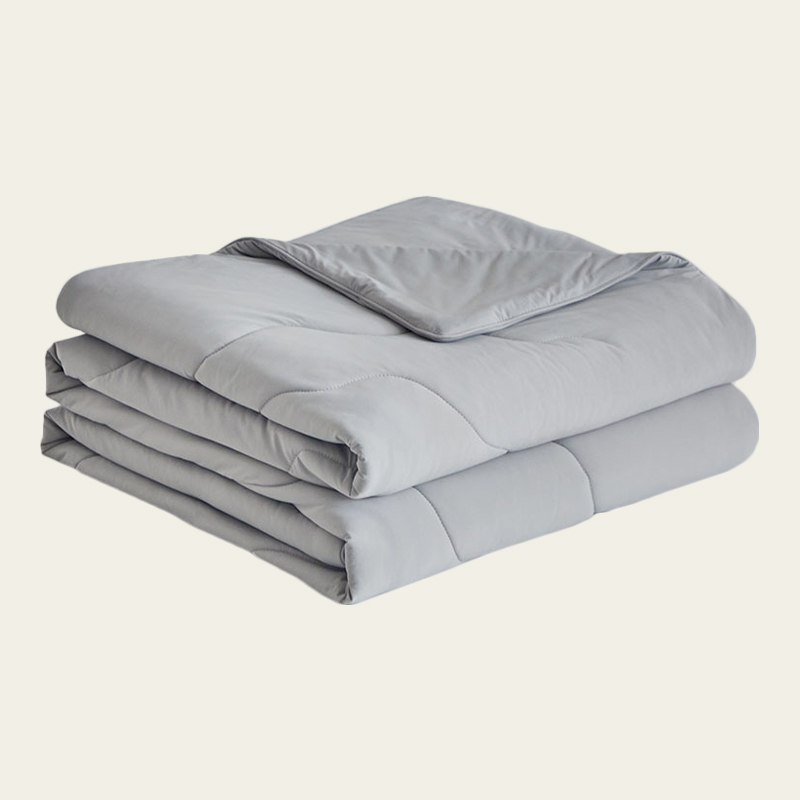
The Yueluo cooling comforter is specifically engineered for this user. The skin-friendly nylon-spandex shell creates immediate tactile cooling on contact, while the lightweight polyester fill provides just enough loft for comfort without trapping heat. The modern solid-color design aesthetic means the quilt also integrates seamlessly into contemporary bedroom décor — available in multiple color options and sizes to suit any bed configuration, from twin to king.
A single metric like q-max doesn't capture the full picture of what makes a great cooling quilt. The radar chart below evaluates five essential bedding dimensions: cooling performance, breathability, durability, ease of care, and skin comfort. Each axis is scored on a scale of 1–10, drawing from material science benchmarks and product specification data. The comparison reveals why engineered polyester cooling quilts consistently outperform natural bamboo quilts in summer-specific applications.
Bamboo quilts score well on skin comfort and have decent breathability in dry conditions, but they lag significantly in durability after repeated washing and in cooling performance during peak summer heat. The polyester-ammonia cooling quilt excels in cooling (9/10) and ease of care (9/10), scoring high across all dimensions. This balanced superiority makes it the more practical choice for a dedicated summer quilt purchase, especially when considering long-term value and maintenance costs.
Breathability is a dimension often misunderstood by consumers. Many assume natural fibers automatically breathe better than synthetics, but modern polyester engineering has largely closed this gap. The open-structure polyester fill used in the Yueluo quilt allows air to circulate freely within the quilt body, preventing the "sealed" feeling that older synthetic bedding was known for. When combined with the nylon-spandex shell's high air-permeability weave, the result is a breathable quilt that rivals or exceeds bamboo in humid conditions. The difference becomes especially pronounced when moisture (sweat) is introduced, as synthetic fibers dry significantly faster than bamboo viscose, preventing a damp, uncomfortable sleep surface.
Chart 3: Multi-dimension performance radar (scale 1–10, higher = better)
One of the most overlooked aspects of selecting a cooling comforter is long-term care requirements. Bamboo quilts often require specialized washing — many recommend hand washing or dry cleaning to preserve fiber integrity, which adds cost and inconvenience over time. In contrast, the Yueluo polyester cooling quilt is fully machine washable in cold water on a gentle cycle and tumble dry on low heat, making routine maintenance straightforward.
For best care results, it is recommended to place the lightweight quilt in a laundry bag before washing to prevent fabric snags and maintain the nylon-spandex shell's smooth texture. Do not bleach or dry on high heat, as this can compromise the spandex fibers' elasticity and the fill's loft structure. With proper care, the cooling performance and skin-friendly properties of the quilt are preserved across multiple seasons, making it a durable investment in quality summer bedding.
Chart 4: Estimated cooling performance retention (%) after repeated machine wash cycles
The data above illustrates a critical purchasing insight: bamboo quilts lose approximately 39% of their cooling effectiveness after 50 wash cycles, while polyester cooling quilts retain around 89% of their original performance. This is due to the structural resilience of polyester fill, which resists compaction, versus bamboo fibers that progressively mat together with repeated laundering. For consumers who plan to use their summer blanket year after year, this durability gap represents meaningful long-term value.
Selecting the right size for your cooling quilt is as important as choosing the right material. An undersized quilt leaves gaps that allow body heat to escape the sheets but also lets room-temperature air in unevenly, disrupting the thermal management performance. An oversized quilt on a smaller bed tends to bunch or slide, again compromising the intended airflow design. Below is a standard reference guide for matching quilt size to bed dimensions.
| Bed Type | Bed Dimensions | Recommended Quilt Size | Best For |
|---|---|---|---|
| Twin | 38" × 75" | 60" × 80" | Children, single adults |
| Full / Double | 54" × 75" | 70" × 86" | Single adult, teen rooms |
| Queen | 60" × 80" | 90" × 90" | Couples, master bedrooms |
| King | 76" × 80" | 106" × 90" | Couples who need more space |
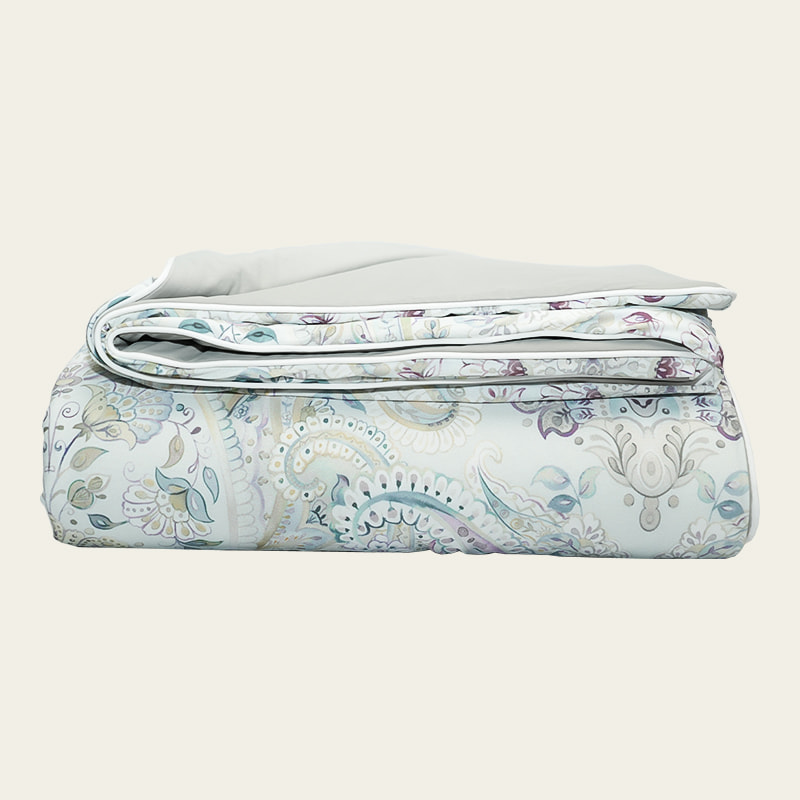
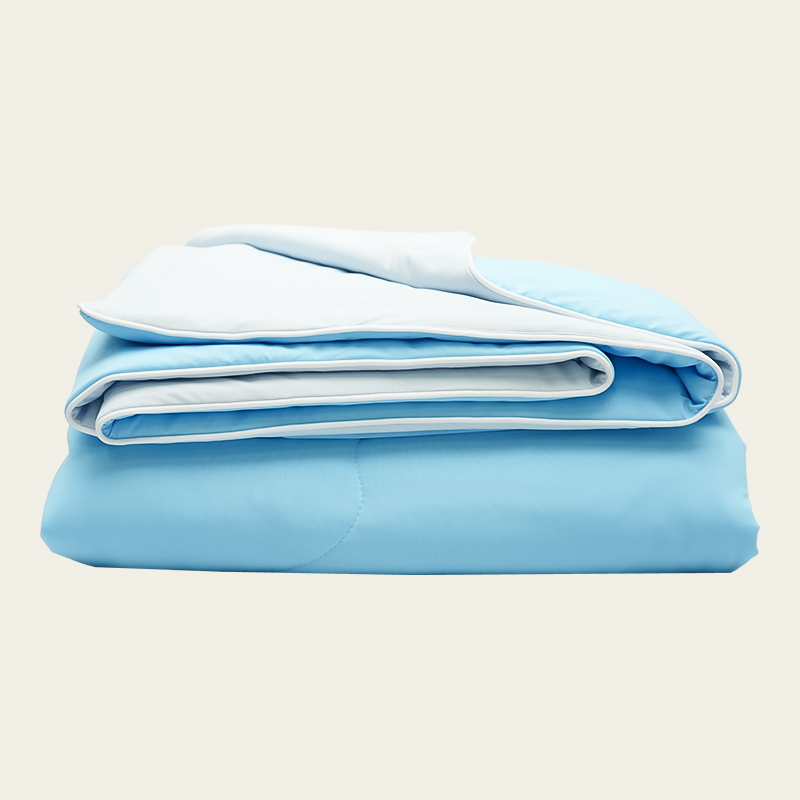
The Yueluo cooling comforter is available in multiple solid colors with a modern aesthetic, designed to complement contemporary bedroom interiors. Whether your décor leans toward minimalist monochrome, Scandinavian neutrals, or bold accent colors, the solid-color styling ensures the quilt integrates naturally without visual clutter. For cooling bedding that also functions as a design element, the variety of color options gives buyers the flexibility to match their seasonal bedding rotation to their room palette.
Consumer satisfaction data from seasonal bedding surveys highlights a clear trend: hot sleepers who switch from conventional cotton or bamboo summer blankets to engineered polyester cooling quilts report significantly higher satisfaction with their sleep quality. The chart below represents aggregated satisfaction ratings across five key dimensions from users of cooling bedding products over consecutive summer seasons.
Notably, skin comfort and night sweat reduction show the highest year-over-year improvement, with satisfaction rates rising from 61% in Year 1 (first-time users adapting from traditional bedding) to 89% by Year 3. This upward trend reflects not just product performance, but user adaptation — learning to combine the cooling blanket with optimal air conditioning settings, appropriate sleepwear, and room humidity control for a fully optimized sleep environment.
The ease of care dimension maintains consistently high scores (85%+) from the first year, which aligns with the straightforward machine-wash maintenance protocol. This is a significant differentiator versus bamboo quilts, where care-related complaints are common in user reviews — particularly around shrinkage, pilling, and texture degradation after laundering. When choosing a breathable quilt for repeated seasonal use, care convenience is a dimension that directly impacts long-term user satisfaction and willingness to repurchase.
Chart 5: Hot sleeper satisfaction rates across 3 annual summer seasons (% respondents satisfied)
Nantong Yueluo Home Furnishings Co., Ltd. was established in 2008 and has long been committed to the production and innovation of a full range of bedding products such as bedding cores, kits, and mattresses, providing comprehensive solutions. As a source factory, we have complete production and testing equipment, as well as a scientific quality management system. We are committed to creating a comfortable and healthy sleeping environment for consumers through carefully selected materials and exquisite craftsmanship.
With over 16 years of manufacturing expertise, Yueluo's production facilities are equipped with advanced textile machinery capable of handling precision nylon-spandex weaving, polyester fill processing, and multi-stage quality testing for thermal and mechanical properties. Each Polyester-Ammonia Summer Cooling Quilt undergoes q-max testing, tensile strength verification, and colorfastness assessment before leaving the facility — ensuring consistent product quality across every batch. Our dedicated customer service team ensures that any questions or concerns are addressed promptly and satisfactorily, reinforcing our commitment to an excellent end-to-end ownership experience.
Q1: Is the cooling quilt suitable for use without air conditioning?
A: The quilt provides a noticeable cool-touch sensation at all times, but its thermal management performs best in air-conditioned environments. In rooms without cooling, it will still feel lighter and more breathable than a standard cotton quilt, but maximum performance is achieved when paired with air conditioning in hot weather.
Q2: How do I wash the cooling quilt correctly?
A: Machine wash in cold water on a gentle cycle. Place the quilt in a laundry bag to protect the nylon-spandex shell. Tumble dry on low heat. Do not bleach, iron, or dry clean. Avoid high-heat drying, as this can affect the spandex fibers and polyester fill structure over time.
Q3: What does a cooling value of 0.44 mean in practical terms?
A: The q-max value of 0.44 W/cm² measures how quickly the fabric absorbs heat from the skin surface. Values above 0.35 are generally classified as "cool touch" in the textile industry. At 0.44, the Yueluo cooling quilt absorbs body heat noticeably faster than bamboo (0.18–0.26) or cotton (0.15–0.22), creating an immediate cool sensation upon contact.
Q4: Is the quilt suitable for people with sensitive skin?
A: The quilt is designed with a skin-friendly nylon-spandex shell that is smooth, non-abrasive, and free from harsh chemical finishes in normal use. The fabric is soft and silky to the touch, making it suitable for most skin types. If you have specific material sensitivities, please review the full material specifications before purchasing.
Q5: Can the cooling quilt be used year-round?
A: It is optimized for warm-weather use as a standalone summer quilt. In cooler seasons, some users layer it under a heavier duvet as a moisture-managing inner layer, benefiting from its breathability. Its primary design intent is summer and transitional-season comfort for hot sleepers.
Q6: Are multiple sizes and colors available?
A: Yes. The Yueluo cooling quilt is available in a variety of sizes from twin to king and multiple solid color options, allowing you to choose based on your bed dimensions and bedroom décor. Specific size and color availability can be confirmed through our customer service team.
 Zhihao Industrial Park, Chuanjiang Town, Tongzhou District, Nantong, Jiangsu Province
 +86-13814711705
 yueluo800@163.com
Copyright © Nantong Yueluo Home Furnishings Co., Ltd
Rights Reserved.