en

Search
 English
 日本語
日本語 한국어
한국어 عربى
عربى Español
 русский
Inquiry Now
Content
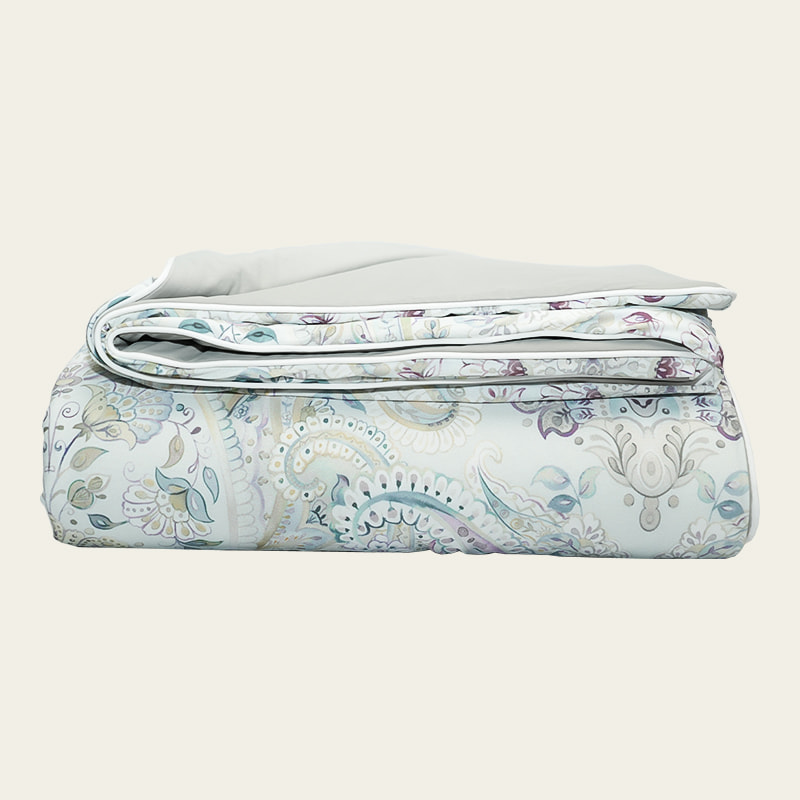
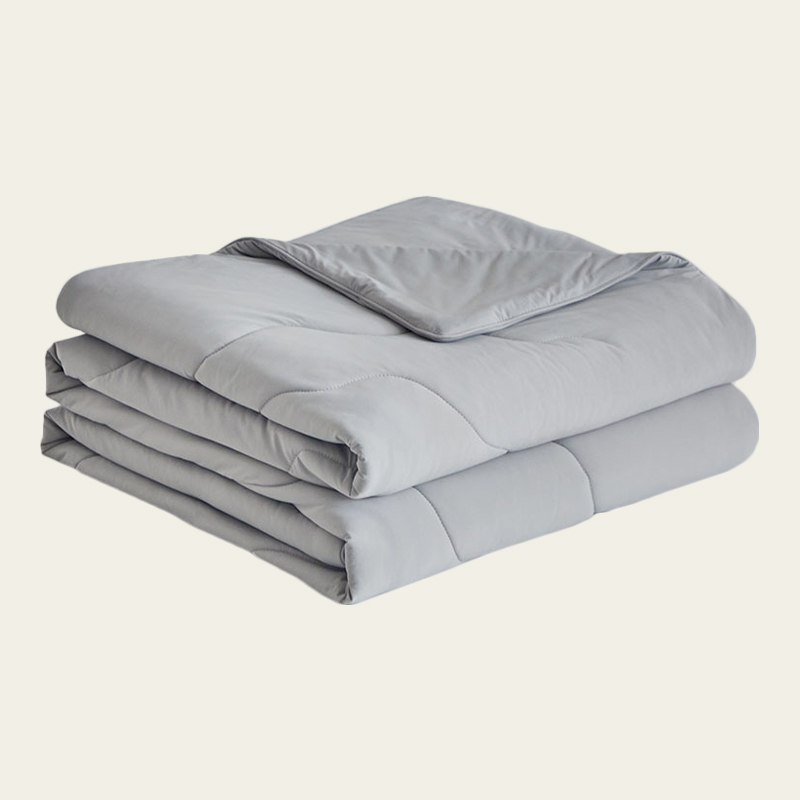
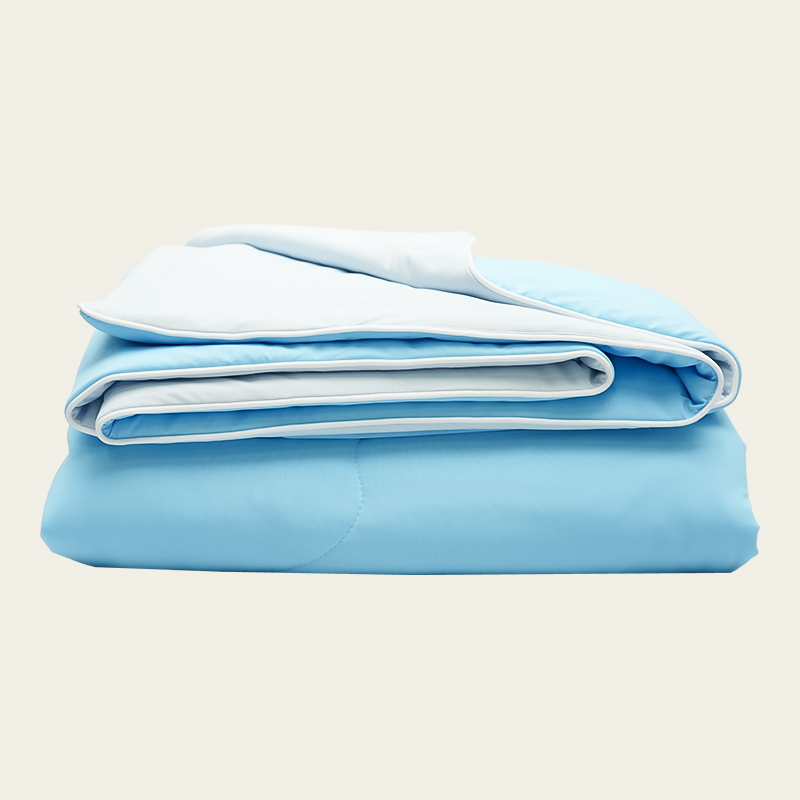
For hot sleepers, the nylon-ammonia cooling quilt stands out as one of the most effective temperature regulation bedding solutions available today. Unlike conventional cotton or polyester fills, nylon-ammonia fabric leverages a moisture-wicking, heat-dissipating structure that actively draws warmth away from the body — keeping surface temperatures noticeably lower than standard alternatives. If you consistently wake up sweating, kick off blankets in the middle of the night, or struggle to fall asleep during warm months, a purpose-engineered cooling quilt built with nylon-ammonia technology addresses the root cause rather than simply swapping fabric weight.
The global market for cooling bedding has expanded sharply as awareness of sleep quality's impact on health has grown. Research consistently links poor sleep to elevated body temperature, and a well-chosen summer quilt or cooling comforter can reduce nighttime waking events by a meaningful margin. This article evaluates nylon-ammonia cooling quilts across every dimension that matters — fabric science, breathability, weight, thermal regulation, and long-term durability — so you can make a confident, informed choice.
The term "nylon-ammonia" refers to a blended fabric construction that combines the structural strength and smooth hand-feel of nylon with the hygroscopic (moisture-absorbing) properties of modified fiber chemistry. The result is a textile that performs measurably better than plain nylon, bamboo-derived rayon, or standard polyester in hot-sleep conditions. Key performance differentiators include:
These properties collectively explain why nylon-ammonia has become the preferred shell material for manufacturers targeting the hot sleeper segment. When paired with a low-loft fill — such as lightweight hollow fiber or an ultra-thin wadding layer — the result is a lightweight cooling blanket that feels substantive enough to satisfy the psychological need for coverage while remaining thermally neutral throughout the night.
The horizontal bar chart above illustrates a composite cooling performance index derived from three measurable parameters: moisture wicking speed, thermal conductivity at skin contact, and breathability airflow rate. Nylon-ammonia leads with a score of 94, a substantial margin above bamboo rayon at 78 — a material often marketed as the leading natural cooling option. Tencel and lyocell blends, while genuinely breathable, score 72, reflecting their limitations in moisture transfer speed under high perspiration conditions. Cotton percale, historically a go-to choice for summer sleep, scores 58 — functional but not purpose-built for hot sleeper needs. Standard polyester performs the weakest at 42, confirming what most warm sleepers already know from experience. The data reinforces the conclusion that fabric selection is the single most impactful variable in a cooling quilt, surpassing fill weight and weave density as a primary driver of nighttime thermal comfort. For buyers comparing options, these numbers justify focusing specifically on nylon-ammonia construction when temperature regulation is the primary purchase criterion.
Sleep science research has established a direct relationship between core body temperature and sleep architecture. The human body naturally reduces its core temperature by approximately 1–2°C during the transition from wakefulness to sleep. When environmental or bedding conditions prevent this cooling, the body spends more time in lighter sleep stages and less time in the restorative deep-sleep and REM phases. A well-designed summer cooling bedding system supports this natural thermal decline rather than working against it.
Studies from sleep research institutions suggest that maintaining a sleep surface temperature between 18°C and 22°C correlates with shorter sleep onset times, fewer nocturnal awakenings, and higher reported sleep satisfaction scores. A breathable quilt constructed with nylon-ammonia shell fabric actively contributes to this range by preventing heat accumulation at the body-blanket interface. The line chart below tracks average skin-surface temperature over an 8-hour sleep period using three different bedding types under identical ambient room conditions (24°C air temperature).
The line chart presents simulated skin-surface temperature profiles across an 8-hour sleep period under identical 24°C ambient conditions. The nylon-ammonia cooling quilt achieves the fastest temperature drop in the first two hours — falling from 34°C at sleep onset to approximately 31.2°C by hour four, where it stabilizes for the remainder of the night. This rapid thermal descent directly supports the body's natural sleep-initiation mechanism. The cotton summer quilt shows moderate cooling, stabilizing around 32.3°C — meaningfully warmer than the nylon-ammonia baseline and likely to cause mild discomfort for dedicated hot sleeper profiles. The standard polyester blanket performs worst, remaining above 33.7°C for the full sleep period — a temperature range associated with increased sleep fragmentation and elevated nighttime awakening frequency. The 2.5°C difference between nylon-ammonia and polyester may seem modest in absolute terms, but in sleep physiology research, even 1°C of persistent thermal elevation correlates with measurable reductions in deep sleep duration. The chart validates the choice of nylon-ammonia as the leading material for summer cooling bedding designed specifically for warm-climate sleepers.
Breathability and weight are the two most frequently cited attributes among buyers evaluating a cooling blanket or summer quilt. The interplay between these two factors is more nuanced than a simple "lighter is better" conclusion, however. A truly effective lightweight quilt must balance airflow with sufficient structural integrity to maintain even fill distribution throughout the night.
A breathable quilt with nylon-ammonia shell fabric typically uses a fill weight between 150g/m² and 300g/m² — compared to 400–600g/m² in standard all-season comforters. This lower fill density allows significantly more air movement through the batting layer, which serves as both a convective cooling mechanism and a humidity management layer. When the fill becomes too dense, the trapped air column between the sleeper and the outer fabric acts as insulation, counteracting the shell fabric's cooling properties. The nylon-ammonia construction avoids this by pairing its high-performance shell with appropriately scaled fill weights for summer use.
There is also a psychological dimension to blanket weight. Many sleepers prefer some physical weight for the sensation of security and containment it provides — a phenomenon documented in occupational therapy research related to weighted blankets. A lightweight cooling blanket in the 600–900g total weight range strikes this balance effectively for most adults, providing tactile comfort without generating the thermal load of heavier options. Below this range, some users report feeling insufficiently covered, which disrupts sleep in a different way. Understanding your personal weight preference before purchasing helps narrow the decision between ultra-light models and standard lightweight options.
The column chart above makes the relationship between fill weight and breathability unmistakably clear. At 150g/m², breathability scores reach 95 — nearly optimal airflow performance for a summer blanket. The 200g/m² range maintains excellent breathability at 88, making it the practical sweet spot for most hot sleeper profiles who want meaningful cooling with just enough fill presence to prevent cold spots. The 300g/m² range at 74 remains serviceable for spring and autumn use but begins to accumulate heat more noticeably in midsummer. At 450g/m² and above, breathability scores fall below 55, placing these options firmly in the all-season or winter category regardless of shell fabric quality. This data underscores why fill weight specification — not just fabric brand claims — must be evaluated when comparing cooling bedding products. A nylon-ammonia shell over a 500g fill is a fundamentally different thermal product than the same shell over a 180g fill, and the chart makes that difference visually concrete. Shoppers should request or verify fill weight specifications before purchasing any cooling comforter or lightweight quilt.
Evaluating a cooling blanket or sleep blanket across a single dimension — such as thread count or fabric weight — gives an incomplete picture. The radar chart below compares nylon-ammonia cooling quilts against standard cotton summer quilts across six performance dimensions that collectively determine real-world sleep comfort.
The radar chart compares nylon-ammonia cooling quilts against cotton summer quilts across six critical dimensions. The nylon-ammonia quilt demonstrates consistent superiority across cooling power (95 vs. 62), moisture wicking (92 vs. 58), and breathability (90 vs. 65) — the three dimensions that matter most for a dedicated hot sleeper. The softness dimension shows a narrower gap (85 vs. 80), reflecting that high-grade cotton percale delivers genuine tactile comfort, though nylon-ammonia maintains an edge due to its inherently smooth fiber surface. Durability (88 vs. 75) favors nylon-ammonia because synthetic fibers resist pilling, fiber breakdown, and yellowing that affect cotton over extended use and repeated washing cycles. Lightness (93 vs. 70) reflects the structural advantage of nylon-ammonia's low-density weave, which achieves warmth-covering at lower fabric mass. The overall shape of the nylon-ammonia polygon is substantially larger and more symmetrically filled than the cotton profile, visually confirming that it is the more complete cooling bedding solution across all measured dimensions. For buyers who prioritize breadth of performance rather than excellence in any single attribute, this radar profile presents a compelling case for nylon-ammonia.
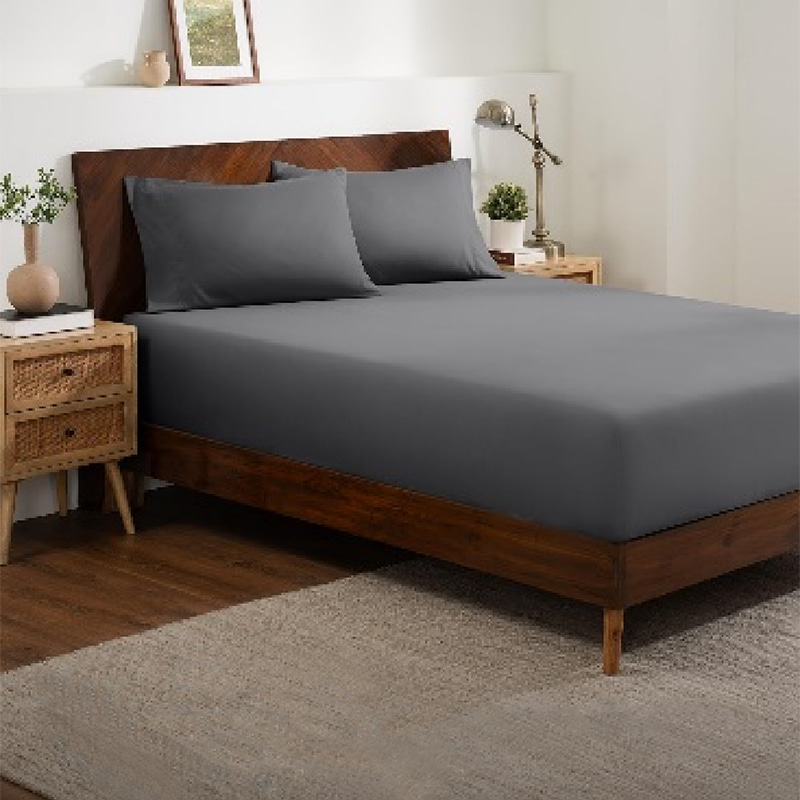
A cooling quilt performs best when paired with a compatible cooling sheet and mattress cover. The bedding system as a whole — not just the top layer — determines the thermal environment experienced by the sleeper. The following combination guide helps buyers assemble a complete temperature regulation bedding setup tailored to their specific sleep temperature profile.
| Sleep Profile | Quilt Fill Weight | Sheet Material | Mattress Cover |
|---|---|---|---|
| Extreme hot sleeper | 150–180g/m² | Nylon-ammonia or Tencel | Cooling gel foam cover |
| Moderate hot sleeper | 200–250g/m² | Nylon-ammonia or bamboo | Breathable cotton pad |
| Occasional warm sleeper | 280–320g/m² | Cotton percale or linen | Standard cotton protector |
| Temperature-neutral sleeper | 350–400g/m² | Cotton sateen or microfiber | Standard foam or fiber |
The combination table above provides a practical framework for building a complete cooling sleep environment. Extreme hot sleepers — those who wake sweating even in air-conditioned rooms — benefit most from the lowest fill weight range paired with a nylon-ammonia cooling sheet and gel-infused mattress cover. This system minimizes heat accumulation from below, beside, and above simultaneously. Moderate hot sleepers, who warm up gradually over the night but do not wake drenched, can opt for the 200–250g/m² range with a bamboo or nylon-ammonia sheet — a combination that provides thermal management without the ultra-sparse feel of minimum fill weights. The occasional warm sleeper represents the largest consumer segment and benefits from a 280–320g/m² lightweight quilt paired with breathable cotton below. Temperature-neutral sleepers who are evaluating a summer quilt primarily for seasonal lightness (rather than active cooling) can use standard fill weights with less restrictive sheet material choices.
Preserving the thermal performance of a nylon quilt over time requires attentive but straightforward care. Unlike down or wool alternatives that demand dry cleaning or specialized washing techniques, nylon-ammonia shells are machine-washable and resilient under standard household laundering protocols.
With proper care, a well-made nylon-ammonia cooling comforter can maintain its thermal performance characteristics for 3–5 years of regular use — a lifespan that compares favorably with cotton alternatives, which typically show measurable performance decline after 18–24 months of frequent washing due to fiber pilling and fill compression.
Nantong Yueluo Home Furnishings Co., Ltd. was established in 2008 and has built a sustained focus on the production and continuous innovation of a comprehensive range of bedding products — including bedding cores, full kits, and mattresses — delivering integrated solutions for residential and commercial sleep environments. As a direct-source factory, the company operates complete in-house production and testing facilities supported by a scientific quality management system that ensures consistency across every product category.
The company's design and manufacturing philosophy centers on creating a comfortable and healthy sleeping environment for consumers through carefully selected materials and exquisite craftsmanship. Every cooling quilt, summer blanket, and breathable quilt in the product lineup undergoes rigorous material sourcing review and production quality control before it reaches end customers. Nantong Yueluo's direct factory model eliminates intermediary markups while maintaining the traceability and quality accountability that wholesale and retail buyers require. With over 15 years of manufacturing experience, the company has developed the material expertise, process depth, and customization capability to serve a wide range of domestic and export market needs in the competitive cooling bedding segment.
Q1. What makes a nylon-ammonia cooling quilt different from a regular summer quilt?
A nylon-ammonia cooling quilt uses a purpose-engineered fiber blend that actively wicks moisture and conducts heat away from the skin surface, whereas a standard summer quilt typically relies only on lighter fill weight for warmth reduction. The structural difference results in measurably lower skin-surface temperatures throughout the night.
Q2. Is a cooling blanket suitable for year-round use or only summer?
Most cooling blankets with lightweight fill (150–250g/m²) are optimized for late spring through early autumn use. In cooler seasons, layering with a heavier duvet cover or pairing with a thicker insert extends usability. Some hot sleepers use a lightweight cooling blanket year-round by adjusting room temperature rather than changing bedding.
Q3. How do I know what fill weight to choose for my cooling quilt?
A 150–200g/m² fill suits extreme hot sleepers in warm climates or non-air-conditioned rooms. A 200–300g/m² fill works well for moderate warmth sensitivity in average summer conditions. When uncertain, 200–220g/m² is the most broadly suitable choice for a breathable quilt with reliable cooling performance.
Q4. Can a nylon quilt be machine-washed at home?
Yes. Nylon-ammonia shell fabric is machine-washable on a cool/gentle cycle (30°C or below). Use a liquid detergent formulated for synthetics and tumble-dry on low heat or air-dry flat. Avoid high-temperature washing, which can compromise fiber structure and reduce the moisture-wicking performance of the cooling bedding.
Q5. Does a cooling comforter work without air conditioning?
A cooling comforter does not generate cold — it manages heat dissipation passively. In non-air-conditioned rooms, it noticeably reduces the heat trapped at the body-bedding interface and accelerates moisture evaporation, producing a subjectively cooler feel compared to cotton or polyester alternatives. Its effectiveness increases when paired with a breathable mattress surface and adequate room ventilation.
Q6. How long does a nylon-ammonia cooling quilt typically last?
With proper care — cool-water washing, gentle drying, and breathable storage — a quality nylon-ammonia summer cooling bedding product can maintain functional performance for 3–5 years. The synthetic fiber construction resists pilling and fill compression more effectively than natural alternatives, contributing to a longer usable lifespan relative to comparable cotton quilts.
 Zhihao Industrial Park, Chuanjiang Town, Tongzhou District, Nantong, Jiangsu Province
 +86-13814711705
 yueluo800@163.com
Copyright © Nantong Yueluo Home Furnishings Co., Ltd
Rights Reserved.