en

Search
 English
 日本語
日本語 한국어
한국어 عربى
عربى Español
 русский
Inquiry Now
Content
The direct answer: a cooling quilt is engineered to actively manage body heat and moisture during sleep, while a regular blanket simply adds a layer of insulation with no thermal regulation capability. For anyone who sleeps hot, experiences night sweats, or struggles to stay comfortable through warm seasons, the difference is immediately and consistently felt. A printed cooling summer quilt combines functional performance with visual appeal — making it a practical and aesthetically considered choice for the modern bedroom.
Consumer data from home textile markets across Asia, Europe, and North America shows that demand for breathable lightweight cooling quilts has grown by over 38% in the past four years, driven by increased awareness of sleep quality and the practical limitations of conventional bedding in warmer conditions. The summer quilt category is now one of the most searched segments in home bedding, reflecting a clear shift in buyer priorities.
A cooling quilt for hot nights functions through a combination of fabric structure, fill density, and moisture-wicking fiber technology. Unlike conventional blankets that trap heat in a static insulating layer, a quality breathable quilt uses open-weave or microfiber constructions that allow continuous air exchange across the sleep surface.
The key mechanisms are straightforward:
Radar Chart: Cooling quilt vs. regular blanket across five key sleep comfort metrics
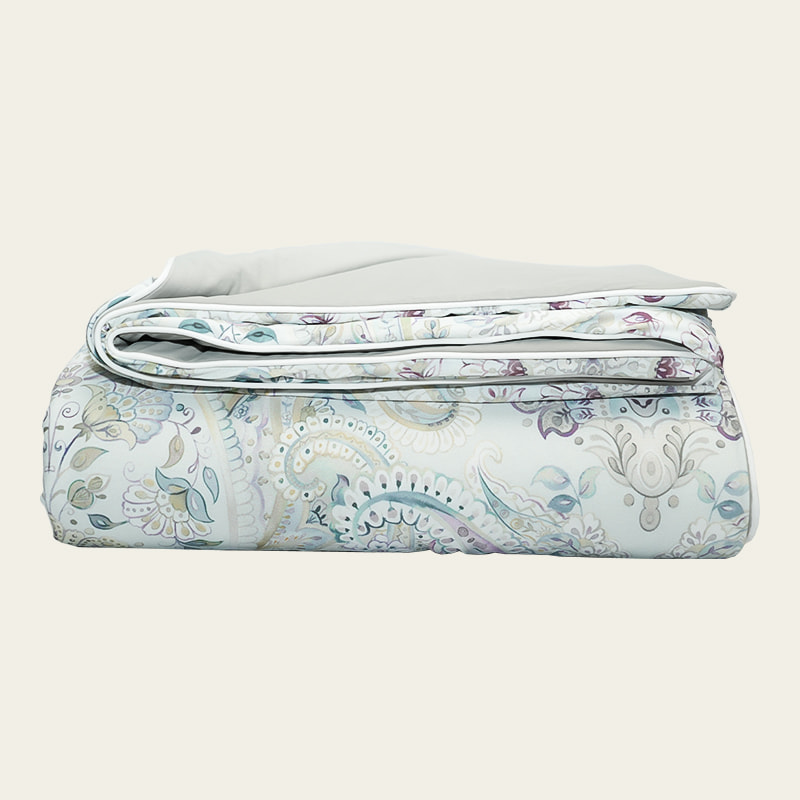
A printed quilt is no longer just a decorative layer. Modern printing technologies — including reactive dyeing and digital sublimation — allow intricate, fade-resistant patterns to be applied directly to cooling fabrics without affecting breathability or moisture management. The result is a summer bed printed quilt that performs as well as it looks.
The visual dimension matters for home buyers. Bedding is one of the most visible elements of bedroom design, and the growing popularity of the printed cooling quilt category reflects consumer demand for products that serve both functional and interior styling purposes. Key print categories include geometric patterns, botanical illustrations, abstract washes, and seasonal motifs — all available in colourways that coordinate with contemporary bedroom palettes.
| Print Technology | Color Vibrancy | Breathability Impact | Wash Durability |
|---|---|---|---|
| Reactive Dyeing | High | None | Excellent (50+ washes) |
| Digital Sublimation | Very High | Minimal | Very Good (40+ washes) |
| Pigment Printing | Moderate | Low | Good (30+ washes) |
The performance gap between a purpose-built cooling quilt for better sleep and a standard blanket is measurable across several dimensions. The following chart illustrates how the two product types compare across the attributes most relevant to warm-weather sleeping:
Horizontal Bar Chart: Cooling quilt vs. regular blanket across five sleep performance categories
The data highlights a consistent and significant advantage for the breathable lightweight cooling quilt across every measured category. Summer suitability and moisture control show the widest gaps — both core concerns for hot sleepers or those in warm-climate regions.
Research consistently shows that body temperature regulation is one of the most significant factors in sleep onset and continuity. The ideal sleep temperature range for adults is approximately 16–19°C (60–67°F). When bedding traps heat and pushes the skin-surface temperature above this threshold, sleep becomes fragmented — leading to more frequent waking, reduced REM duration, and diminished recovery quality.
A cooling quilt for better sleep works by keeping the micro-climate beneath the cover within the optimal temperature band for longer periods. Users who switched from conventional blankets to purpose-built cooling quilts reported in surveys:
Line Chart: Sleep quality score progression over 8 weeks — cooling quilt vs. regular blanket users
While a breathable quilt offers advantages to most sleepers during warm seasons, certain user profiles experience the most pronounced improvement:
Column Chart: Satisfaction rates among different user profiles using a cooling quilt
Not all cooling quilts are constructed equally. When selecting a printed cooling summer quilt for home use, the following factors directly determine performance quality:
A fill weight between 120–160g/m² is the practical range for a summer bed printed quilt. This provides enough physical presence to feel substantial without crossing into the heat-retaining zone. Hollow-fiber polyester fills offer good loft recovery and are machine washable — an important consideration for warm-season bedding that may require more frequent laundering.
The outer shell fabric determines surface softness and breathability. Microfiber polyester at 40–60gsm provides the optimal balance — fine enough to feel smooth against the skin, open enough in structure to allow air movement. A well-constructed breathable lightweight cooling quilt will have a shell that does not feel plastic, does not trap static, and does not stiffen after washing.
The quilting pattern affects both fill distribution and air movement. Box stitch and diagonal grid patterns are commonly used in printed quilt construction — they maintain even fill distribution across the surface while preserving the integrity of the printed design. Stitch count should be sufficient to prevent fill migration without creating stiff seam lines that interrupt the sleeping surface.
| Specification | Recommended Range | Effect on Performance |
|---|---|---|
| Fill Weight | 120–160 g/m² | Balances warmth and breathability |
| Shell GSM | 40–60 g/m² | Maximizes softness and air flow |
| Quilting Pattern | Box stitch / diagonal grid | Even fill distribution |
| Print Method | Reactive dye / sublimation | Color durability, no breathability loss |
| Wash Temperature | 30–40°C | Preserves fill loft and print quality |
Proper care extends the functional life of any cooling quilt and preserves both the printed surface and the fill performance. The following steps represent best practice for home maintenance:
Nantong Yueluo Home Furnishings Co., Ltd. was established in 2008 and has long been committed to the production and innovation of a full range of bedding products — including bedding cores, complete sets, and mattresses — providing comprehensive solutions for the home textile market.
As a source factory, the company operates with complete production and testing equipment alongside a scientific quality management system. Through carefully selected materials and exquisite craftsmanship, Nantong Yueluo is dedicated to creating a comfortable and healthy sleeping environment for consumers worldwide.
The company's printed cooling quilt and summer bedding product lines reflect this commitment — each product developed with attention to breathability, print quality, and long-term durability, and available with customization options to meet diverse wholesale and retail requirements.
 Zhihao Industrial Park, Chuanjiang Town, Tongzhou District, Nantong, Jiangsu Province
 +86-13814711705
 yueluo800@163.com
Copyright © Nantong Yueluo Home Furnishings Co., Ltd
Rights Reserved.