en

Search
 English
 日本語
日本語 한국어
한국어 عربى
عربى Español
 русский
Inquiry Now
Content
A cooling quilt feels cool on first contact because its outer fabric and quilt core are engineered to pull heat away from the skin faster than an ordinary fabric does, producing a brief, measurable drop in surface temperature at the point of contact. This effect, generally described as an instant cool feeling, is recognized in the Chinese national standard GB/T 35263, which sets out a method for testing and evaluating the instantaneous cool sensation of textiles based on how quickly heat transfers from skin to fabric through temperature-sensitive nerve endings. The sections below explain how this cooling mechanism works, how different quilt core materials such as nylon-ammonia and polyester-ammonia blends compare, and what buyers commonly look for when selecting a Cooling Quilt for warm-weather sleep.
The sensation of coolness that a person feels when touching a cooling quilt is a physical heat transfer effect rather than an active temperature change in the fabric itself. When skin, which is generally warmer than the surrounding fabric surface, comes into contact with a textile engineered for high thermal conductivity, heat moves quickly from the skin into the fabric. This rapid, brief heat loss is sensed by temperature-receptive nerve endings in the skin and interpreted by the brain as a cool feeling, a mechanism described in the GB/T 35263 national standard for testing instantaneous cool sensation in textiles. Because this effect depends on the rate of heat transfer rather than a permanent temperature difference, the cool sensation is strongest in the first seconds of contact and gradually equalizes as the fabric warms toward body temperature.
The choice of quilt core material has a direct effect on how strong and how long-lasting this cool sensation feels during actual use. Fiber blends that combine a smooth, tightly structured synthetic fiber with a small proportion of elastic fiber tend to create a denser, flatter fabric surface, which generally improves contact-based heat transfer compared with a looser, more textured weave. This is one reason manufacturers pay close attention to fiber blend ratios and fabric construction when developing a quilt core intended for warm-weather use rather than relying on the print pattern or color of the quilt cover alone.
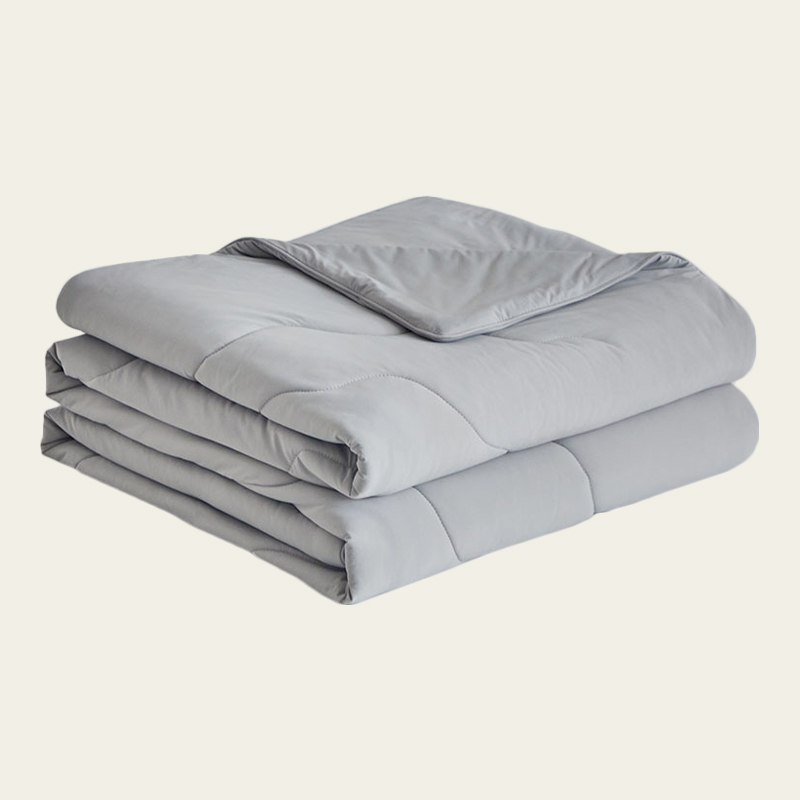
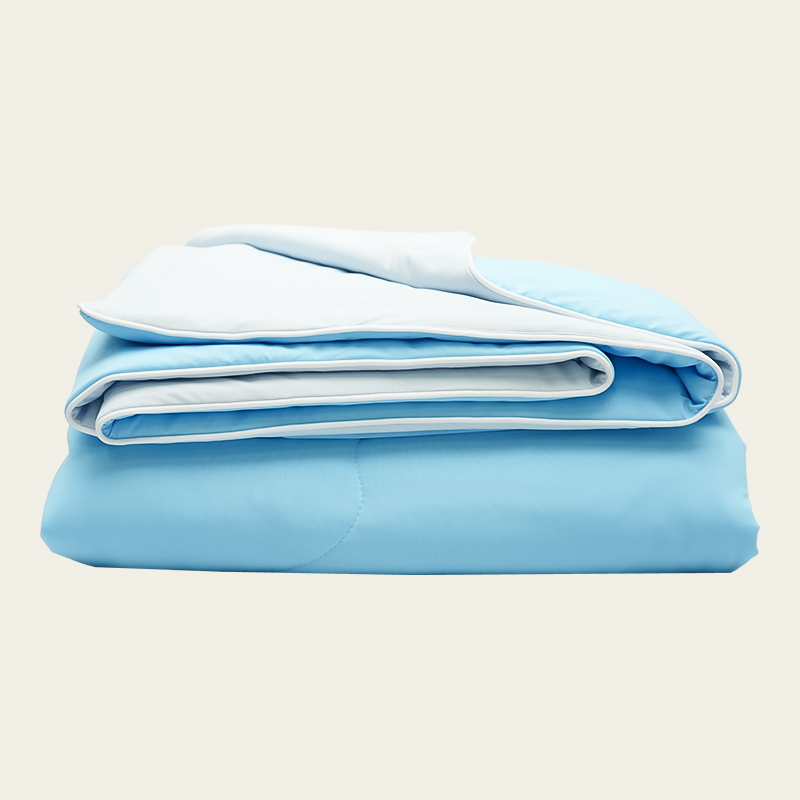
Two common quilt core constructions used in summer bedding are the Nylon-Ammonia Cooling Quilt and the Polyester-Ammonia Summer Cooling Quilt. In both cases, "ammonia fiber" refers to a small proportion of elastic spandex-type fiber blended with the primary fiber, either nylon or polyester, to add stretch and a smoother hand feel while the primary fiber contributes strength, moisture handling, and structure. Nylon-based blends are generally valued for a silky, lightweight surface texture and good elasticity, which can make the quilt feel closer and more form-fitting during sleep. Polyester-based blends are generally valued for dimensional stability and durability across repeated washing, which is a practical consideration for bedding that is laundered frequently during warm months.
| Quilt Core Type | Typical Feel | Notable Strength |
|---|---|---|
| Nylon-Ammonia Cooling Quilt | Silky, lightweight | Elasticity and smooth surface |
| Polyester-Ammonia Summer Cooling Quilt | Crisp, structured | Durability and shape retention |
| Printed Cooling Quilt | Varies by base fiber | Design variety with cool-feel finish |
The bar chart below presents an illustrative comparison of relative instant cool sensation across a standard cotton quilt, a nylon-ammonia quilt core, and a polyester-ammonia quilt core, using a general 1-to-10 scale rather than a specific laboratory measurement. Standard cotton generally rates lower on this kind of scale because cotton fibers have a more textured, less thermally conductive surface structure compared with smooth synthetic blends. Nylon-ammonia quilt cores tend to rate somewhat higher due to their smooth, dense fiber surface, which supports faster initial heat transfer on contact. Polyester-ammonia blends often perform similarly, with the exact result depending on yarn density and fabric finishing rather than fiber type alone. This kind of comparison is useful for buyers deciding between quilt core options for warm-weather bedding, though actual performance always depends on the specific fabric construction used in a given product.
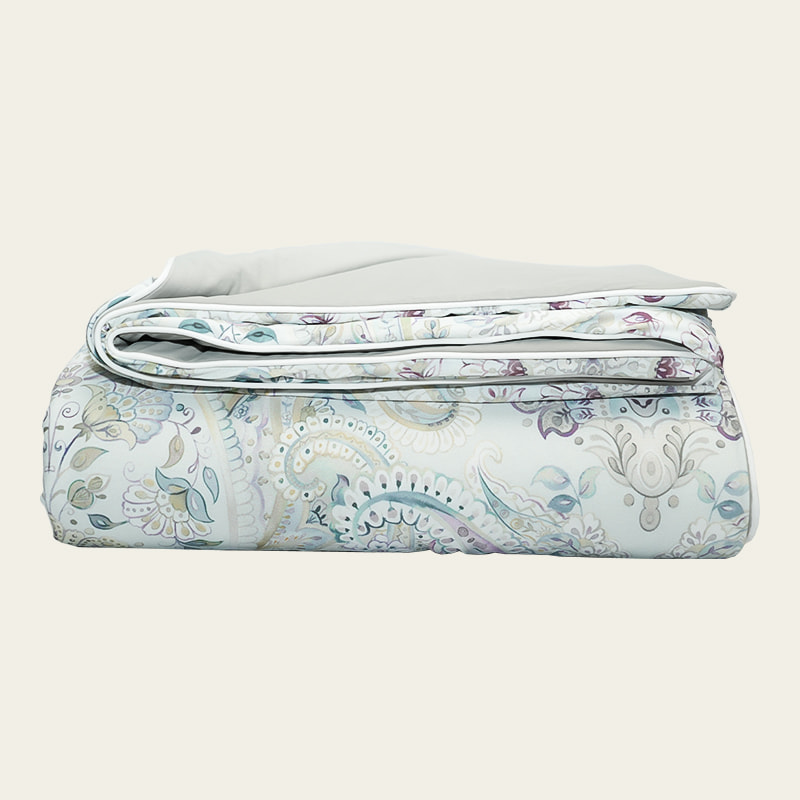
A Printed Cooling Quilt applies pattern and color through a printing process on top of a base fabric that already carries a cool-feel finish, which means the visual design does not need to interfere with the underlying thermal performance of the quilt core. Print methods used on cooling bedding fabrics are generally selected to avoid heavily coating the fiber surface, since a thick print layer can reduce the smoothness that supports fast heat transfer. Buyers who want both a decorative bedding option and a functional cool-feel surface commonly choose printed cooling quilts because they allow seasonal or room-specific design choices without sacrificing the base fabric's cooling characteristics. This combination of function and appearance is one reason printed cooling quilts are frequently positioned alongside solid-color nylon-ammonia and polyester-ammonia options within the same summer bedding collection.
Instant cool feel is only one part of overall sleep comfort. Breathability, how well a fabric allows air to pass through and support evaporation, and moisture wicking, how effectively a fabric moves perspiration away from the skin, both influence how comfortable a quilt feels over a full night of sleep rather than just at the moment of first contact. The radar chart below compares nylon-ammonia, polyester-ammonia, and printed cooling quilt options across four general comfort dimensions on an illustrative 1-to-5 scale: instant cool feel, breathability, softness, and moisture wicking.
As the chart shows, nylon-ammonia quilt cores tend to score well on softness and instant cool feel due to their smooth, lightweight fiber surface. Polyester-ammonia quilt cores tend to score somewhat higher on breathability and moisture wicking in many general comparisons, since polyester fiber structures are often engineered with moisture channeling properties. Printed cooling quilts generally fall in a comparable range to whichever base fiber they are built on, since the print layer itself has a limited effect on breathability when applied correctly. Readers should treat this chart as a general illustration of typical fiber behavior rather than a certified test result for any single product, since actual performance depends on yarn count, weave density, and finishing process.
Cooling quilts are generally used most heavily during late spring through early autumn, when overnight temperatures and humidity are high enough that a standard quilt can feel too warm for comfortable sleep. The area chart below presents an illustrative, general engagement pattern across a calendar year, intended to support seasonal content and merchandising planning rather than to represent measured sales data. Interest in cooling quilt products typically rises through late spring, peaks during the hottest summer months, and gradually tapers as temperatures cool into autumn. A printed cooling quilt or a lightweight nylon-ammonia option is commonly favored during the peak summer window, while heavier polyester-ammonia constructions may see steadier use across a slightly wider seasonal range due to their added durability.
The overall cooling performance of a finished quilt depends on several construction factors working together rather than any single element. The donut chart below presents an illustrative breakdown of how much each construction factor typically contributes to perceived cooling performance: fiber blend composition, fabric weave density, surface finishing treatment, and quilt fill weight. Fiber blend composition generally has the largest single influence, since it determines the base thermal conductivity of the material before any finishing is applied. Weave density and finishing treatment both play a supporting role by affecting how evenly the fabric surface contacts the skin. Fill weight matters primarily for overall warmth balance, since a cooling quilt is typically filled more lightly than a winter quilt to avoid trapping excess heat.
Proper care helps a cooling quilt retain its smooth fiber surface and, by extension, its instant cool feel over repeated use. The list below outlines general care practices commonly recommended for nylon-ammonia and polyester-ammonia cooling quilts.
Nantong Yueluo Home Furnishings Co., Ltd. was established in 2008 and has long been committed to the production and innovation of a full range of bedding products such as bedding cores, kits, and mattresses, providing comprehensive solutions. As a source factory, the company maintains complete production and testing equipment, as well as a scientific quality management system. The company is committed to creating a comfortable and healthy sleeping environment for consumers through carefully selected materials and exquisite craftsmanship, an approach reflected in its ongoing development of quilt core options such as nylon-ammonia, polyester-ammonia, and printed cooling quilt constructions for warm-weather bedding.
Q1: What makes a cooling quilt feel cool compared with a regular quilt?
A cooling quilt uses a fabric and quilt core designed for fast heat transfer on contact, which produces the instantaneous cool sensation described in the GB/T 35263 national standard for testing cool feeling in textiles.
Q2: What is the difference between a nylon-ammonia and a polyester-ammonia quilt core?
A nylon-ammonia quilt core generally offers a silky, lightweight feel with good elasticity, while a polyester-ammonia quilt core is generally valued for durability and shape retention across frequent washing.
Q3: Does the print on a printed cooling quilt reduce its cool-feel performance?
When applied with a light, well-controlled printing process, a print layer generally has a limited effect on the underlying cool-feel performance of the base fabric.
Q4: How should a cooling quilt be washed to preserve its cool feeling?
Washing in cool to lukewarm water on a gentle cycle and avoiding fabric softener generally helps preserve the smooth fiber surface that supports the instant cool sensation.
Q5: Is a cooling quilt only useful in summer?
Cooling quilts are most commonly used from late spring through early autumn, though a lighter option can also be useful in warm indoor sleeping environments at other times of year.
 Zhihao Industrial Park, Chuanjiang Town, Tongzhou District, Nantong, Jiangsu Province
 +86-13814711705
 yueluo800@163.com
Copyright © Nantong Yueluo Home Furnishings Co., Ltd
Rights Reserved.