en

Search
 English
 日本語
 한국어
 عربى
 Español
 русский
Inquiry Now
Content
A buyer comparing a full size bed with a queen size bed usually hears the same line: the queen is a bit bigger. That is accurate, but "a bit" hides most of the decisions that follow. A full mattress measures 54 by 75 inches. A queen measures 60 by 80 inches. The difference is 6 inches of width and 5 inches of length, which multiplies out to 750 square inches of extra sleeping surface, roughly 5.2 square feet.
The short answer: if two adults share the bed most nights, a queen is the safer choice, and not only for shoulder room. It also keeps the household inside the mainstream of bedding sizes, so replacing sheets, quilts and protectors stays simple and usually cheaper. A full size bed still makes sense for one sleeper, a teenager's room, a guest room, or a compact apartment where 6 extra inches of width would crowd a wardrobe or block a walkway.
The rest of this guide covers what those inches change at night, where the size gap quietly costs money in bedding and stock planning, and which details a product or sourcing team should confirm before committing to a size run. Nantong Yueluo Home Furnishings, a bedding manufacturer in Nantong, Jiangsu, has produced quilt cores, pillow cores and bedding sets for brand clients since 2008, so the notes below mix retail realities with factory-floor ones.
In the United States, "full" and "double" describe the same mattress, which causes no end of confusion in export catalogs. The nominal full measures 54 inches wide by 75 inches long, or 137 by 190.5 cm. The queen measures 60 by 80 inches, or 152 by 203 cm. Some manufacturers publish 53 inches for a full because foam and hybrid constructions finish slightly differently, but 54 remains the number most retailers and factories quote.
Multiply the figures out and the full offers about 4,050 square inches of sleeping surface, while the queen offers about 4,800. That 750-square-inch gap is close to the footprint of a large serving tray, and it works out to roughly 18.5 percent more surface area. On paper it looks modest. Under two adults, it is the difference between touching shoulders all night and not quite touching them.
| Measure | Full (Double) | Queen | Gap |
|---|---|---|---|
| Width | 54 in / 137 cm | 60 in / 152 cm | +6 in |
| Length | 75 in / 190.5 cm | 80 in / 203 cm | +5 in |
| Sleeping surface | 4,050 sq in / 2.61 sq m | 4,800 sq in / 3.10 sq m | +750 sq in (about 18.5%) |
| Width per sleeper (two people) | 27 in | 30 in | +3 in |
| Typical mattress depth | 8 to 14 in | 8 to 14 in | Same range, different cut |
| Room footprint with 24 in clearance | About 8 ft 6 in by 10 ft 3 in | About 9 ft by 10 ft 8 in | Roughly 6 in on both axes |
One more number deserves attention: mattress thickness. Deep mattresses of 12 to 14 inches are common, and a 2-inch topper pushes the stack higher. A fitted sheet cut with a 14-inch pocket will fight a 16-inch stack, and it will not behave the same way on a full and a queen because the corner geometry differs. That is why good bedding specifications list pocket depth with a tolerance rather than a single figure.
Split the width between two adults and the arithmetic becomes personal. Twenty-seven inches each on a full, thirty on a queen. Three inches per person sounds trivial until you notice that a shoulder is wider than that, and that people shift position four to six times a night without waking.
Sleeping surface is easier to see than to describe, so the bars below put full, queen and king on the same scale. King is included only as a reference point for how far the ladder continues.
Bars drawn to scale; king size shown for reference only.
For a bedding supplier, the same chart explains something about cutting rooms and shelf logic. A queen set covers noticeably more fabric than a double set, so a four-piece queen size set consumes more woven cloth, more elastic and more sewing time than its full counterpart, even when the design is identical. That gap shows up in quotations, and buyers who compare only the total price per set can miss it. It also explains why cooling ranges are often built out in queen first: the size sells in volume, and the fabric cost per set is easier to absorb.
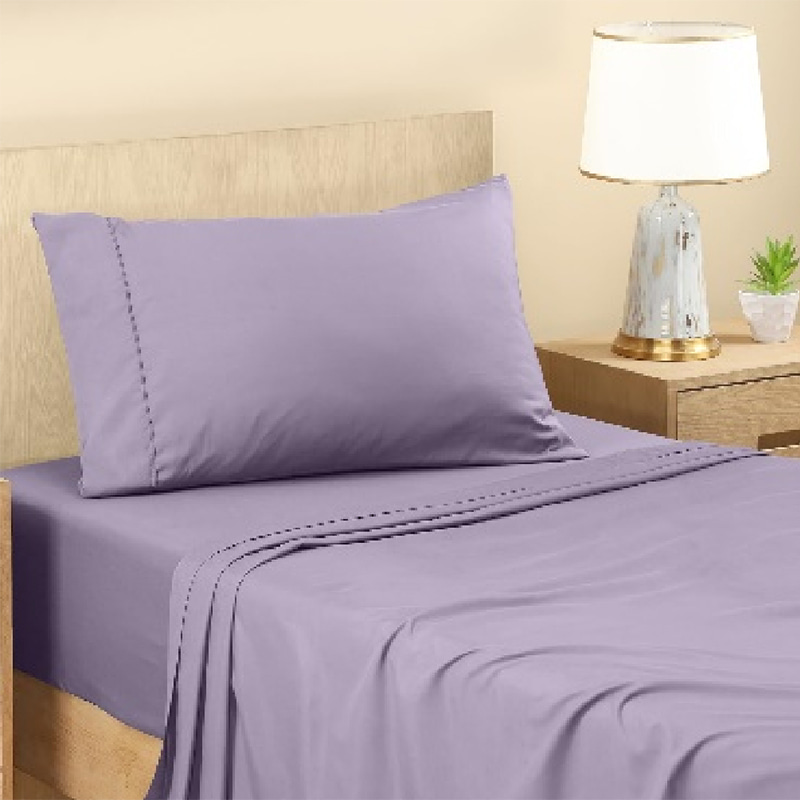 4-Piece Queen-Size Cooling Sheet SetComplete queen set with flat sheet, fitted sheet and two pillowcases, made from microfiber polyester and spandex for soft, breathable sleep.View Product →
Sleep position changes the verdict more than body weight does:
Length deserves its own note. Seventy-five inches is fine for most adults under about 6 feet 2 inches, but tall sleepers who stretch out will notice that pillows eat 8 to 10 inches at the head end. The queen's 80 inches buys real margin there, and it is the main reason tall single sleepers sometimes skip the full anyway.
A fitted sheet is cut to a footprint, not to a mood. A full fitted sheet is drafted around 54 by 75 inches plus pocket depth; a queen around 60 by 80. Pulling a full sheet onto a queen is not a tight fit, it is a failed fit, and the corners will pop the first night. The reverse is just as bad: a queen sheet on a full mattress folds into loose tucks that wrinkle under the back.
The same logic runs through the rest of the stack. Quilts, duvet covers, mattress protectors and toppers are all cut per size, and mixed-size households end up storing two sets that look almost identical in the linen closet. This is where the six-inch gap starts charging rent.
Cut and construction follow the size, which is why a small set cannot simply be stretched. A two-piece double-bed cooling set, for example, is drafted to the smaller footprint; it will not dress a queen without a visible shortfall at the corners, even if the elastic is generous.
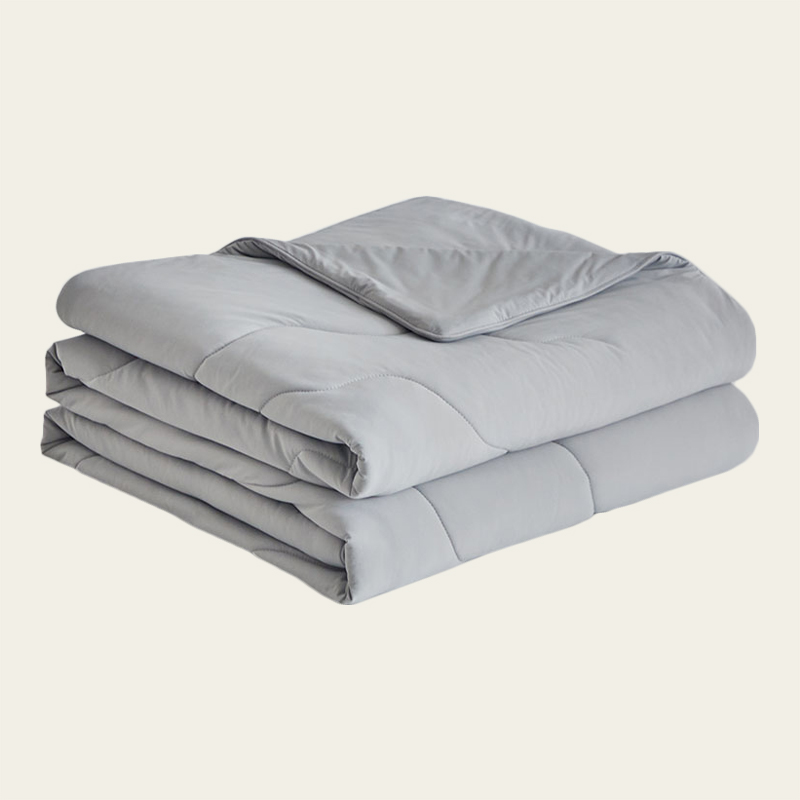
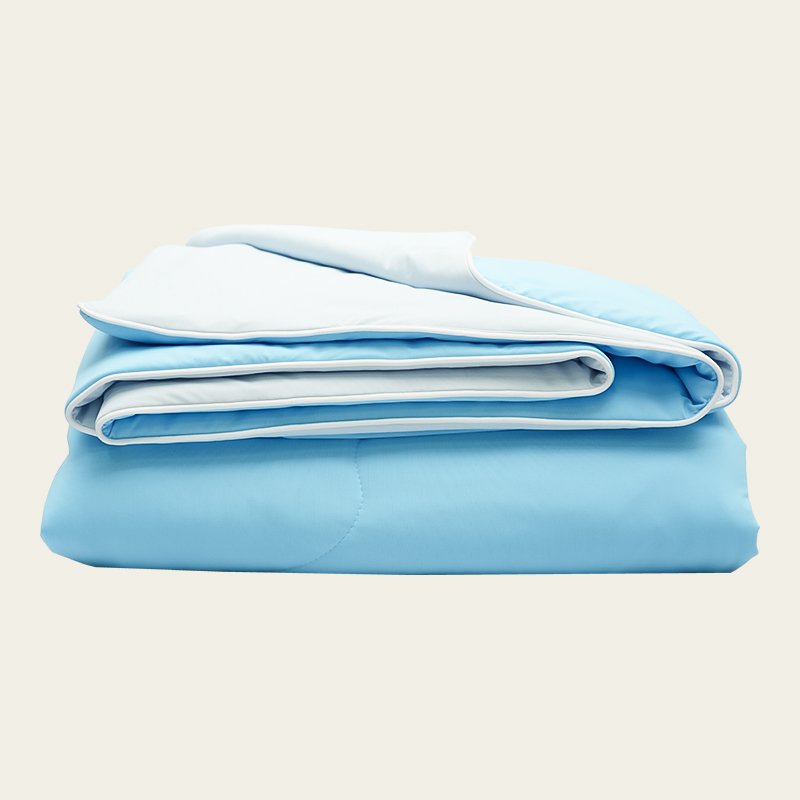
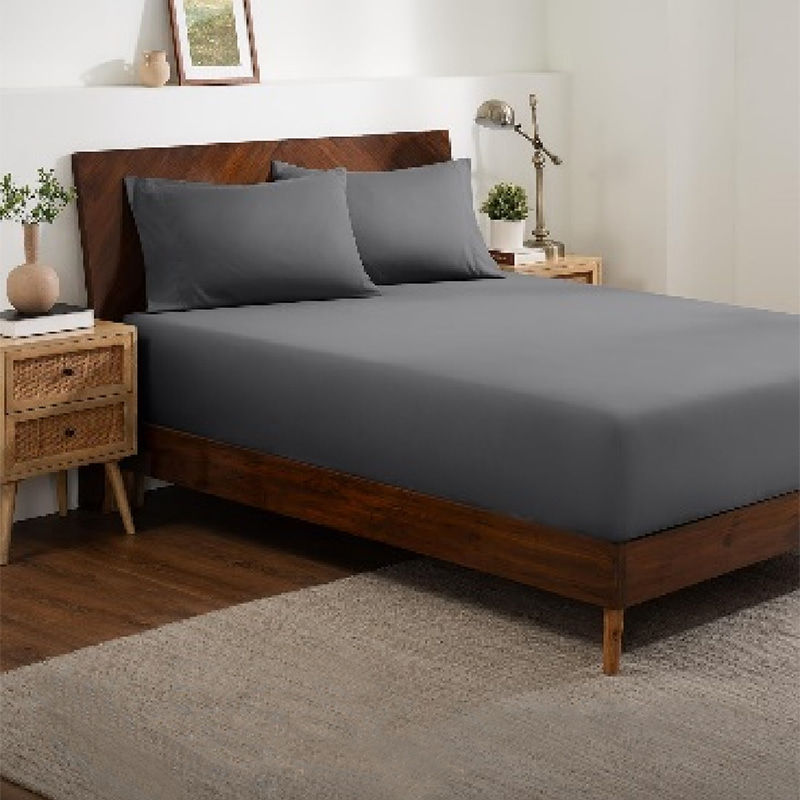 2-Piece Double Bed Cooling Bedding SetDouble-bed cooling bedding set with polyester-spandex fabric and an all-around elastic fitted sheet designed for mattresses 6–15 inches deep.View Product →
Naming conventions add a second layer of risk in international trade. In North America, full and double are synonyms at 54 by 75 inches. A UK double measures 135 by 190 cm, which is close enough that many buyers treat the two as equivalents. A European double of 140 by 200 cm is a different product again, longer and wider than a US full. Catalogs that print sizes in inches and centimeters together avoid most of these arguments before they reach a claim.
For wholesalers and brand owners, the practical cost is duplication. Two sizes mean two sets of patterns, two label runs, two barcode lines and often two minimum order quantities. Carton dimensions shift too, since a queen set folds into a larger bundle, and that affects pallet counts and container cube. Many suppliers will accept mixed-size cartons within an order to spread the risk; it is worth asking early rather than after samples are approved.
The mattress is only half the fit question. A queen mattress placed on a full frame will overhang by 3 inches on each side, which looks wrong and stresses the slats at the edges. A full mattress on a queen frame leaves a visible gap and lets the mattress slide. Headboard width usually follows the frame, so the mismatch is hard to hide later.
Room clearance is the other half. Designers commonly work to at least 24 inches of walking space at the foot or side of a bed and closer to 36 inches on the main path to a door or wardrobe. On that basis, a full wants a room around 8 feet 6 inches by 10 feet 3 inches once clearance is added, while a queen wants roughly 9 feet by 10 feet 8 inches. A 10 by 10 foot bedroom can hold a queen, but only with careful furniture placement and no wide dresser in the walking lane.
None of this is exotic, but it is routinely skipped. A buyer who measures the room and forgets the hallway ends up with a mattress that lives in the living room for a week.
A full is usually enough for a guest room, especially when the room doubles as a home office and floor space is precious. If guests are frequently couples staying several nights, a queen reduces the "we are sleeping in a hug" comment that hosts hear more often than they would like.
A full carries most teenagers comfortably through school years, and it leaves floor space for a desk and a wardrobe in a standard 10 by 11 foot bedroom. Tall teenagers and those who sprawl may prefer the queen's 80-inch length; the trade is roughly 6 inches of floor width against years of stretching room.
In a studio, the bed is furniture as much as it is a place to sleep. A full keeps the walkway to a kitchenette open and makes a sofa conversion easier. Queen beds do work in studios, but they read as the dominant object in the room and limit how the rest can be arranged.
For a couple in a room 12 by 12 feet or larger, the queen is the conventional choice and the one with the widest bedding selection. A king only enters the conversation when the room can absorb 76 inches of width plus clearance on both sides.
At retail, the mattress carries most of the price gap. A queen mattress typically costs more than the same model in full, because more foam, springs and cover fabric go into it. Bedding costs less dramatic, but a queen sheet set still uses more material and often carries a higher ticket than its full equivalent.
Availability is the quieter factor. Queen is the highest-volume adult size in many Western markets, so it gets the deepest assortment: more fabrics, more colors, more restocks. A full can be excellent value, but the choice narrows, and discontinued patterns tend to disappear in full before they disappear in queen. Anyone replacing bedding three or four years from now will feel that difference.
From the supply side, size mix is a planning decision rather than an afterthought. A wholesaler ordering for a chain of small-format stores may want a heavier full ratio, while an online brand chasing couples will lean on queen. Because queen sets are bulkier, the same container holds fewer of them; the landed cost per set shifts with the ratio, not just with the unit price. Suppliers who quote both sizes with the same construction and separate carton specs make that comparison honest.
Replacement cycles matter too. Mattress protectors and sheets wear faster than the mattress, and pillows faster still. A household that standardizes on queen across two bedrooms buys one size of everything and keeps spare linens simple. Mixed sizes cost a little more in attention every single year.
Most of the full-versus-queen debate stops at the mattress, but the quilt on top has its own sizing story. Many North American retailers sell quilts in a combined "full/queen" cut, usually around 86 by 86 inches or 90 by 90, which drapes adequately on both. Sheets are not sold that way, and neither are most protectors, so a household can end up with a quilt that fits both beds and sheets that fit only one.
Fill weight is where a factory conversation gets specific. A queen footprint is about 18.5 percent larger than a full, so the same construction at the same loft needs proportionally more fill. Two quotations that look comparable may differ simply because one is priced on a full cut. Buyers comparing down quilts should ask for fill weight per square meter alongside total grams, otherwise a queen and a full can appear to have identical fill when they do not.
The construction logic holds across fill types. A durable and breathable duck down quilt cut for a 60 by 80 inch surface uses more filling and more shell fabric than the identical build in full, and the baffle or box layout has to be redrawn for the wider panel. That is design work, not just extra material.
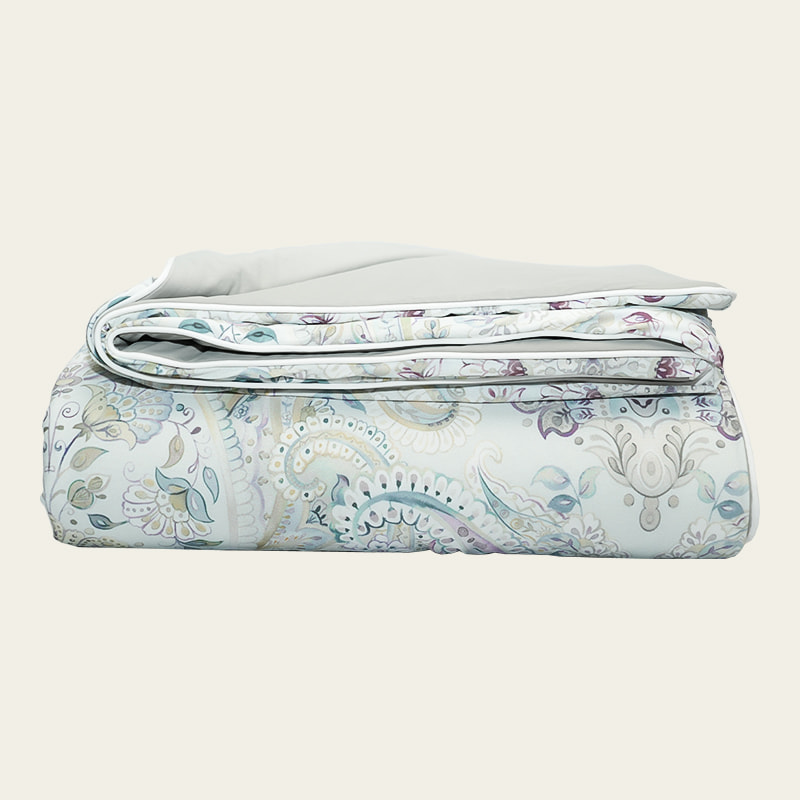
 Durable Duck Down Quilt with Baffle Box ConstructionSingle-size duck down and feather quilt with a 250gsm fill, baffle-box construction, TTC shell and eight corner buckles for secure duvet-cover use.View Product →
Toppers bring the argument back to sheets. A 2-inch topper on a 12-inch mattress creates a 14-inch stack, and on a 14-inch mattress it creates 16 inches. A fitted sheet with a 14-inch pocket will strain at the corners, and the strain is worse on the larger queen corners because there is more diagonal to cover. Specifying 18-inch pockets with a stated tolerance solves it for both sizes.
Washing changes dimensions too. Cotton shell fabrics commonly shrink a few percent after the first wash, and quilted constructions can draw in slightly more. A generous cut that looks sloppy in the sample room may be exactly right after three washes, which is why approval should happen after laundering, not before.
The following sequence keeps a size run from turning into a claim. It applies whether the order is a hundred sets for a test market or a full container for a retail chain.
Two of these steps catch most problems. Measuring the real mattress exposes the difference between a 10-inch and a 14-inch stack, and washing the sample exposes shrinkage that no drawing shows. Both are cheap to do at the sampling stage and expensive to discover after the container ships.
In the United States and Canada, yes. Full and double both refer to a mattress of about 54 by 75 inches. In the United Kingdom and Europe, "double" describes a different footprint, so always check the centimeter figures when buying across markets.
They can, and plenty do, but each sleeper gets about 27 inches of width. Couples who sleep close together or who are both light sleepers often manage well; couples who move a lot at night usually prefer the 30 inches each that a queen provides.
No, not properly. Queen sheets are cut 6 inches wider and 5 inches longer, so they will bag and wrinkle on a full mattress and the corners will not sit flat. Fitted sheets especially depend on a close match to the footprint.
It will sit on the frame, but it overhangs by about 3 inches on each side, which puts stress on the edge support and looks unbalanced against most headboards. Frames are usually built for one nominal size, so match the frame to the mattress.
Allow for the mattress plus clearance: about 9 feet by 10 feet 8 inches if you keep 24 inches of walking space on the long sides and foot. Rooms with a main walkway need closer to 36 inches on that path.
For most teenagers, yes. The 75-inch length becomes tight for anyone near 6 feet 2 inches or taller, and active sleepers may appreciate the queen's extra width once they stop sharing a room-sized budget with a desk.
A full is usually sufficient and preserves floor space, which matters in dual-purpose rooms. If couples stay often and the room allows the clearance, a queen reduces the chance that guests sleep badly and mention it.
The difference between a full size bed and a queen size bed is small in inches and large in consequences. Six inches of width and five of length decide whether two adults sleep without touching, whether the room keeps a usable walkway, and whether the household buys one size of bedding or two. A queen suits couples, tall sleepers and anyone who wants the widest choice of sheets and quilts. A full suits single sleepers, guest rooms and compact rooms where floor space is the scarce resource.
For brand owners and sourcing teams, the same conclusion appears in a different form. The size gap doubles patterns, labels and minimum order quantities, and it changes fill weight, carton cube and landed cost per set. Getting the specification right at sampling, with tolerances, pocket depth and shrinkage written down, costs far less than fixing a size run after it ships.
 Zhihao Industrial Park, Chuanjiang Town, Tongzhou District, Nantong, Jiangsu Province
 +86-13814711705
 yueluo800@163.com
Copyright © Nantong Yueluo Home Furnishings Co., Ltd
Rights Reserved.