en

Search
 English
 日本語
 한국어
 عربى
 Español
 русский
Inquiry Now
Content
If a bed linen program is meant for warm climates, hotel rooms, or a hot-sleeper collection, breathable bed linen should be specified like a performance requirement, not a mood word. A fabric can feel soft in the showroom and still sleep hot after ten washes if the yarn, weave, finish, and sewing were not chosen for airflow and moisture movement. That is why buyers who define the sleep climate and laundry cycle first usually see fewer returns, fewer complaints, and more repeat orders.
The practical answer is this: breathability is a system property. It comes from the fiber, the yarn count, the weave density, the dyeing and finishing route, the fit of the sheet, and the way the linen works with the quilt or pillow core. A label that says “cotton” or “bamboo” is only the starting point. For brand buyers, wholesalers, and private-label teams, the safer approach is to set a use case, choose a construction, and verify it with samples and simple lab data before bulk production.
Fiber choice affects how quickly moisture moves away from the skin, but it does not work alone. Cotton, for example, can absorb moisture and still feel breathable when it is spun into a fine yarn and woven with enough open space. Bamboo fiber and other regenerated cellulose fibers can feel smooth and cool at first touch, yet a dense or heavily finished fabric may still trap heat. Synthetic cooling fibers can be engineered for quick moisture spread, but the knit structure and the amount of elastane matter just as much as the fiber name.
For sourcing teams, the useful question is not “Is this 100% cotton?” but “What is the fiber specification, yarn count, fabric weight, and finish?” A 100% cotton fabric with a heavy softener and a tight sateen weave can sleep warmer than a well-built cotton percale. A bamboo blend with a low twist yarn may feel silky, but it may also pill or shrink if the finishing route is not controlled. These are commercial risks, not just technical details.
In a B2B program, fiber selection also affects cost, lead time, and test requirements. A pure cotton bedding set supplier may offer a stable, repeatable product for hospitality and retail, while a bamboo fiber bedding set manufacturer can help a brand create a softer, more differentiated story. Neither option is automatically better. The buyer needs to match the fiber to the selling season, washing regime, and price band.
Two fabrics can use the same cotton yarn and still behave differently because of the weave. Percale, a plain weave, usually has a crisp, matte surface and a more open structure. Sateen uses longer floats and feels smoother, but it can be denser and warmer depending on the yarn count and picks per inch. Twill sits between the two in many cases, with a diagonal structure that can balance drape and durability. Knits and cooling fabrics add another route because their stretch and open loops can change how air moves.
Buyers should look at the fabric structure as a set of trade-offs. A more open weave may feel airy, but it can also be weaker, shrink more, or allow fill fibers to migrate in a quilt shell. A tighter weave may be durable and down-proof, but it can reduce airflow if it is used on the sleep surface. The right choice depends on whether the fabric is a sheet, a duvet cover, a pillow shell, or a quilt shell.
| Weave or structure | Surface and airflow tendency | Typical use | Sourcing check |
|---|---|---|---|
| Plain weave, such as percale | Crisp and matte; usually more open than dense sateen | Hot-sleeper sheets, hotel bedding, summer duvet covers | Confirm yarn count, picks per inch, and shrinkage after washing |
| Twill | Diagonal structure; moderate drape and durability | Retail sheet sets, quilted covers, blended programs | Check fabric weight and pilling, especially with soft bamboo blends |
| Sateen | Smooth and fluid; can be denser and warmer | Premium hotel bedding, cooler-season collections | Do not assume a high thread count means high airflow |
| Knit or cooling blend | Stretch and open loops; quick-dry options | Summer bed kits, hot-sleeper ranges, travel bedding | Verify elastane percentage, recovery, and contact-cooling claims |
| Down-proof quilt shell | Tight enough to contain fill; airflow is secondary to containment | Down quilts, feather pillows, quilted mattress toppers | Balance fabric density with fill power and quilting pattern |
For a wholesaler or brand buyer, the weave decision should be written into the tech pack. “Cotton percale, 40s yarn, specified density, pre-shrunk, softener-free finish” is a more useful specification than “breathable cotton sheet.” The first version can be sampled, tested, and repeated. The second version leaves too much room for supplier interpretation.
Thread count is one of the most misunderstood numbers in bed linen. A higher count can mean finer yarns and a denser fabric, but it can also be reached through multi-ply yarns or marketing calculations that do not reflect the actual surface. For breathable bed linen, density matters as much as the number on the label. A tightly woven 300-thread-count sateen may allow less airflow than a well-built 200-thread-count percale if the sateen has a dense structure and a heavy finish.
Buyers should request the construction details in plain language: yarn count in Ne or English count, ends and picks per inch or per centimeter, fabric weight in grams per square meter, weave type, and finishing route. If the supplier cannot provide these details consistently, the risk of batch-to-batch variation rises. That variation shows up later as different hand feel, different shrinkage, and different sleep comfort across colors or production lots.
The commercial impact is straightforward. If a brand sells a sheet set as breathable and the bulk fabric arrives denser or more heavily softened than the approved sample, the customer may not use the word “dense.” They may simply say the bedding sleeps hot, feels sticky, or does not match the description. For a manufacturer or supplier, that is a quality and reputation risk that can be avoided with a clearer specification and a washed sample approval process.
Most buyers do not need a full laboratory program for every order, but they do need a repeatable way to compare samples and protect the product claim. Air permeability testing, moisture vapor transmission, drying rate, and dimensional stability after washing are practical checks. For cooling or quick-dry claims, a drying test and a touch-temperature evaluation can be more useful than a single fiber label. For hotel and hospitality programs, shrinkage and colorfastness after repeated laundering often matter more than a one-time showroom feel.
| Test area | What it helps indicate | Buyer action |
|---|---|---|
| Air permeability, such as ASTM D737 | How easily air moves through the fabric under test conditions | Compare construction options and approve a minimum value for the program |
| Moisture vapor transmission, such as ASTM E96 | How readily moisture vapor passes through the fabric | Use for hot-sleeper and cooling stories, not as a standalone comfort claim |
| Drying rate | How quickly the fabric releases moisture after washing or sweating | Compare blends and finishes, especially for summer and travel bedding |
| Dimensional stability after washing | Shrinkage and fit change after the agreed care cycle | Set tolerances before bulk and test each color |
| Pilling and surface change | How the surface holds up in use and laundering | Check bamboo blends, brushed fabrics, and low-twist yarns |
Test results should be tied to a specific sample and a specific care instruction. A fabric that performs well after a gentle cold wash may behave differently after a hotel wash with higher temperature and stronger chemicals. The buyer should decide which laundering route represents the real product life, then ask the supplier to test that route. This is especially important for breathable bed linen sold to hospitality buyers, because the linen may be washed dozens of times per year.
Cotton remains the most practical base for many breathable bed linen programs because it offers a familiar story, good moisture absorption, and a wide range of constructions. For hot sleepers, a cotton percale sheet set with a crisp hand feel and a moderate density is often easier to position than a heavy sateen. For hospitality, the priority shifts toward durability, shrinkage control, and colorfastness under commercial laundering. The same cotton fiber can serve both markets, but the specification should not be identical.
A good cotton program starts with the yarn. Combed or combed compact yarn can reduce hairiness and improve the surface, while a well-controlled plain weave can keep the fabric open enough for airflow. The finishing route should be kept as light as the hand feel allows. Heavy softeners may make the first sample feel luxurious, but they can also fill the spaces between yarns and reduce the dry, airy hand feel that buyers expect from breathable bed linen.
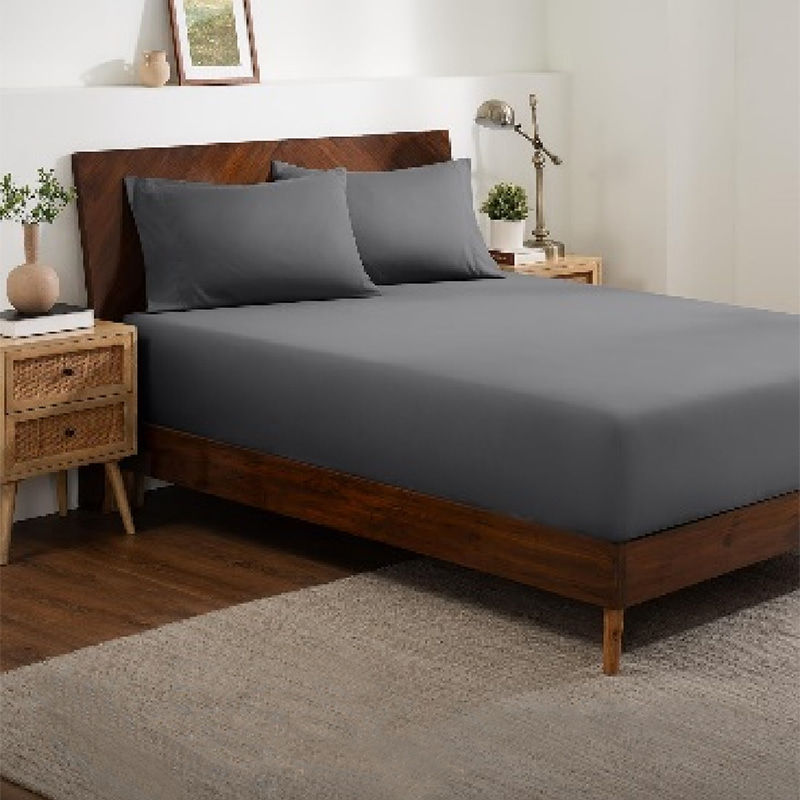
For buyers building a cotton program, the pure cotton solid color double bed sheet set is a practical starting point because it can be specified in a simple, repeatable construction and scaled across colors and sizes. The product page can be used as a reference point for fabric weight, set composition, and customization discussions.
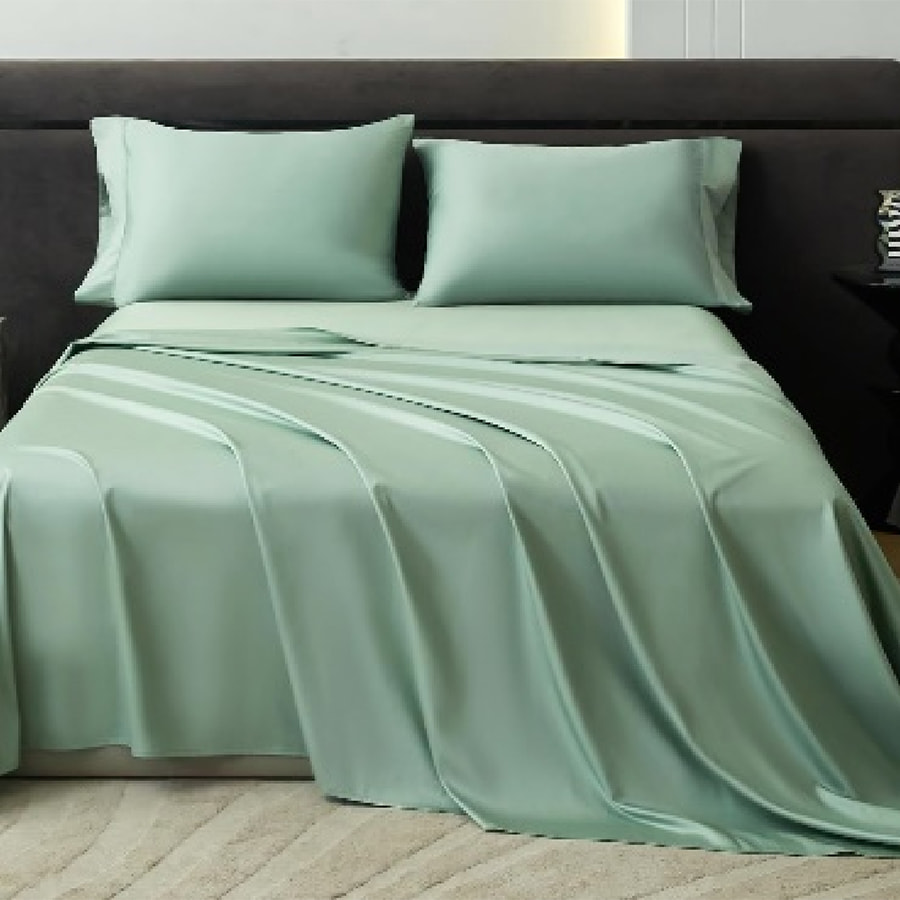 Pure Cotton Solid Color Double Bed Sheet SetA simple repeatable pure cotton set for buyers comparing washed samples, color consistency, shrinkage, and hand feel before scaling a program.View Product →
When comparing cotton suppliers, ask for a washed sample in the final color, not only a white swatch. Dyeing and finishing can change the hand feel, and the difference is often more visible after one or two home washes. A supplier that can show consistent shrinkage, colorfastness, and hand feel across colors is usually a safer partner for a repeat program.
Bamboo fiber bedding sets occupy a useful space in the market because they can offer a smooth, cool-to-the-touch hand feel and a strong moisture-management story. For brands selling online or through specialty retail, that combination can be a clear point of difference from standard cotton. The sourcing risk is that “bamboo” can describe different fiber routes and blend ratios, and the finished fabric can vary widely in shrinkage, pilling, and durability.
Buyers should ask for the exact fiber composition, the yarn or filament specification, the fabric weight, and the recommended care route. A bamboo blend with a small amount of elastane may feel stretchy and cool, but it may also recover poorly or pill in high-friction areas. A 100% bamboo viscose sateen may drape beautifully, but it may need a gentler wash instruction and a more careful quality check. None of these issues makes bamboo a bad choice; they simply need to be specified and tested.
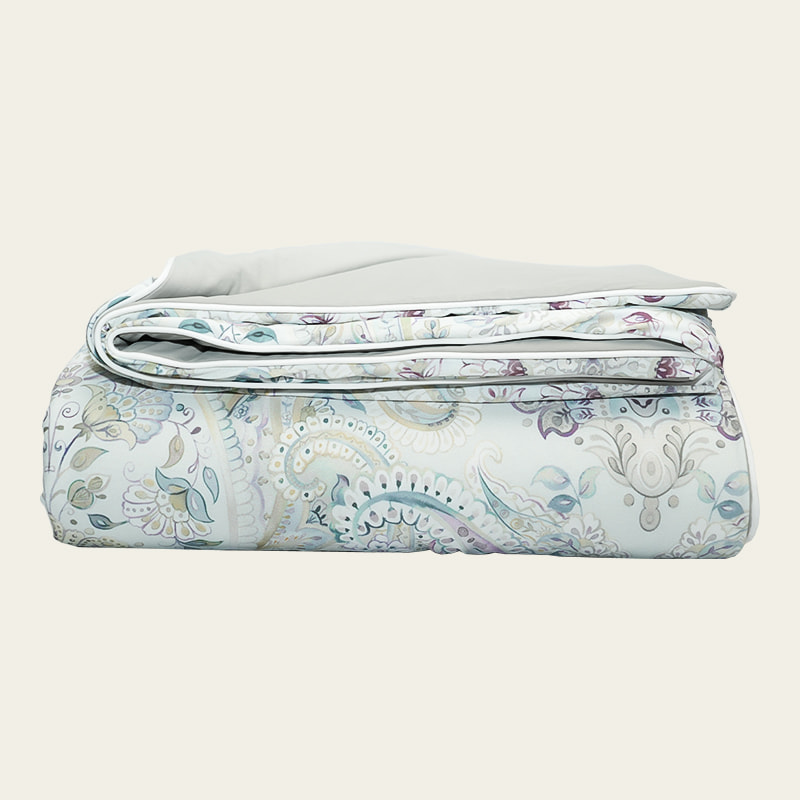
For a differentiated summer or all-season collection, the 4-piece queen-size bamboo fiber set can be reviewed as a base option for fabric hand feel, set composition, and private-label potential. It is useful to compare it side by side with a cotton percale sample so the buyer can judge the difference in drape, surface temperature at first touch, and expected care behavior.
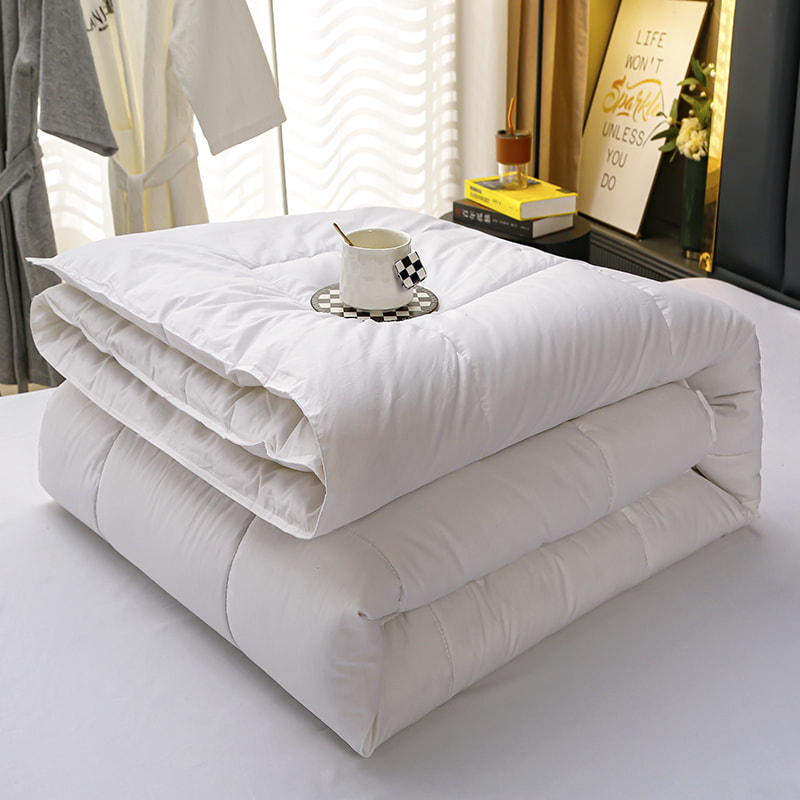 4-Piece Queen-Size Bamboo Fiber Bedding SetOEKO-TEX certified bamboo viscose four-piece set for comparing hand feel, set composition, and private-label potential against cotton percale.View Product →
Retail positioning should stay honest. Bamboo fiber can feel cool and smooth, but it should not be presented as a guarantee that every sleeper will stay dry all night. The stronger claim is that the fabric has been selected for moisture uptake, smooth hand feel, and a construction that supports airflow. Supporting that statement with fiber content, fabric weight, and wash testing is more credible than a broad comfort promise.
Cooling bed kits are usually built around a different brief from standard cotton or bamboo bedding. The target customer may be a hot sleeper, a summer-season buyer, or a retailer looking for a seasonal promotion. The fabric may use nylon-spandex, polyester-ammonia, or another engineered blend to create a cool touch and quick-dry behavior. The construction is often a knit or a lightweight woven, and the set may include a fitted sheet, flat sheet, and pillowcases in a coordinated package.
The key sourcing question is whether the cooling claim is supported by the fabric and the test method. A cool-to-the-touch sensation can be measured and described, but it is not the same as air permeability. A fabric can feel cool at first touch and still sleep warm if it does not move moisture or allow airflow. Buyers should separate three claims: contact coolness, moisture management, and breathability. Each one needs its own evidence.
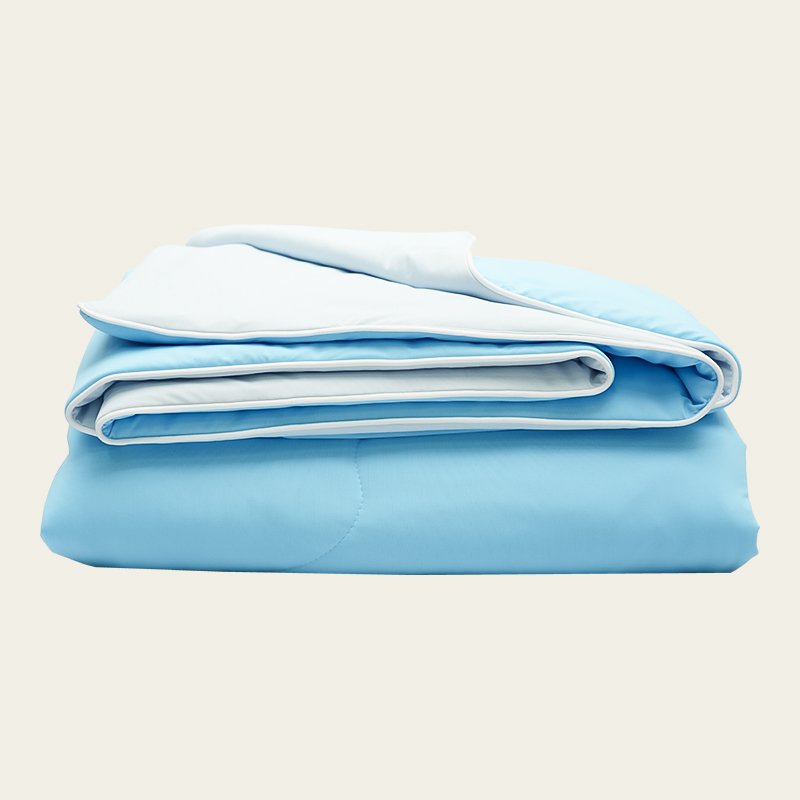
For summer programs, the 4-piece queen-size cooling sheet set can be evaluated as a ready-to-develop base for a seasonal bed kit. Buyers can review the fabric composition, set configuration, and color options, then decide whether the program needs a lighter knit, a different elastane percentage, or a more open structure for the target climate.
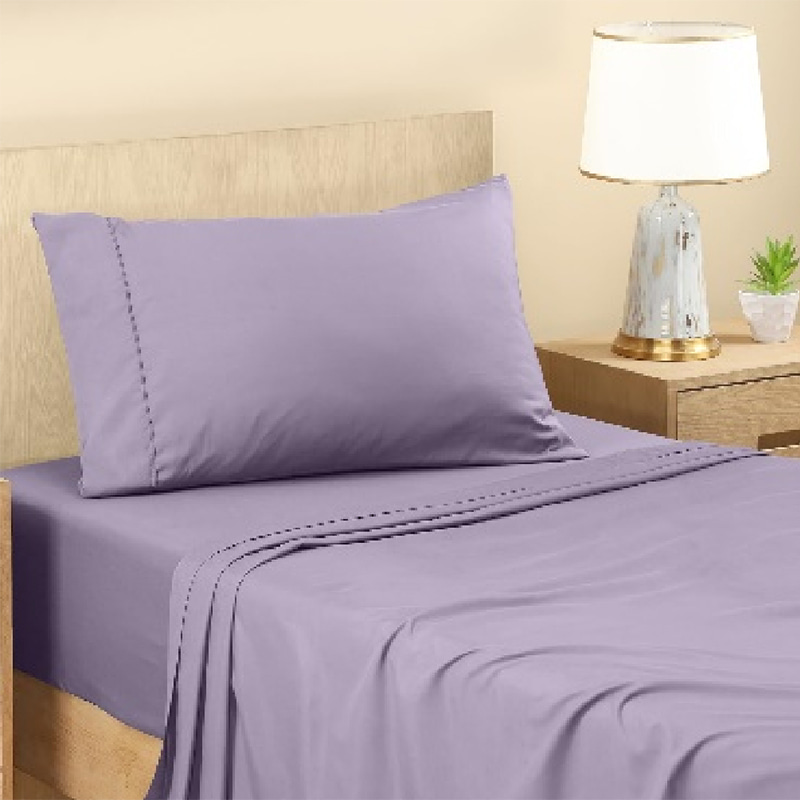 4-Piece Queen-Size Cooling Sheet SetPolyester-spandex microfiber cooling set for seasonal bed kits, with cold-wash care guidance and solid-color options for modern bedroom programs.View Product →
Packaging and care instructions matter more than usual in this category. A cooling kit that is washed in hot water and dried on high heat may lose some of its hand feel, and a customer may blame the product rather than the care route. Clear wash labels, a realistic drying instruction, and a sample that has been tested after the recommended care cycle can reduce returns and protect the brand story.
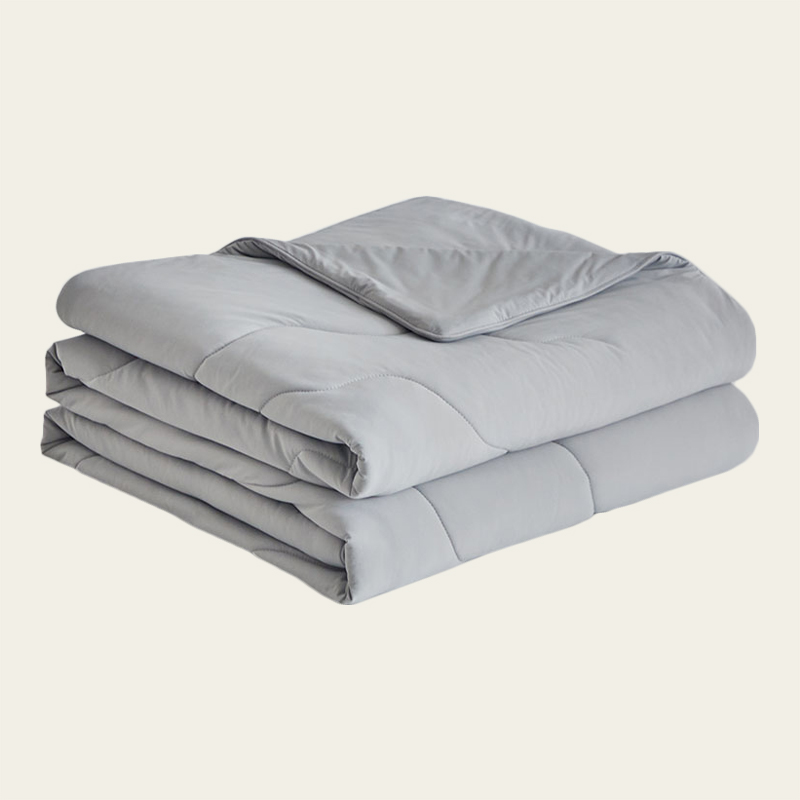
Breathability does not stop at the sheet. A breathable bed linen system also depends on the quilt and pillow core. A down quilt with a tightly woven down-proof shell may limit airflow more than a lightweight quilt with a more open shell. A synthetic fiber pillow may feel airy at first but compress over time and change the sleep climate. Buyers who source sheets and cores together can create a more coherent story than buyers who treat each item as a separate commodity.
For down and feather products, the shell fabric has to balance two jobs: keeping the fill inside and allowing moisture vapor to escape. A shell that is too tight may feel warm and stiff; a shell that is too open may allow feather leakage. Quilting pattern, stitch density, and fill distribution also affect how air moves and how the quilt drapes. For pillows, the cover fabric, fill blend, and chamber design all influence support and heat buildup.
This is where a factory with both quilt and pillow core experience can help. The same buyer may need a breathable cotton sheet set, a down quilt, and a pillow core that work together as a sleep system. Reviewing the core constructions alongside the linen gives the buyer a more realistic picture of the finished sleep experience. It also reduces the risk of a sheet being blamed for heat buildup caused by an overly dense quilt shell or a poorly ventilated pillow.
The chart below uses a relative airflow index from an internal comparison of common bedding constructions. It is intended to help buyers compare the direction of airflow, not to replace laboratory testing or a washed sample trial. The values will move with yarn count, density, finishing, and the exact fabric weight used in a program.
The chart shows why a single word such as “breathable” can mislead a buying team. The cotton percale and bamboo twill samples sit higher on relative airflow than the denser sateen and down-proof shell samples, but that does not mean every cotton percale or bamboo twill will perform the same way. A heavier bamboo twill with a dense finish may drop below a lighter cotton percale. A cooling knit may score well on airflow and still need a separate check for contact coolness and drying speed.
For product development, the chart is most useful as a starting filter. A brand planning a hot-sleeper sheet set can use it to shortlist more open constructions, then request washed samples and a small test plan. A wholesaler building a summer bed kit can compare a cooling knit against a cotton percale before committing to a story. A buyer sourcing quilt shells can see why a down-proof shell should be judged mainly on containment and durability, with airflow treated as a secondary property.
Our own product range follows this logic: cotton bedding sets for stable everyday programs, bamboo fiber sets for a smoother cool-touch story, and cooling bed kits for seasonal hot-sleeper ranges. The buyer should not choose a construction from the chart alone. The better decision combines the chart direction with the target retail price, the care route, the packaging claim, and the factory’s ability to repeat the approved sample.
Once the construction is shortlisted, the sourcing decision moves to the supplier. A breathable bed linen program needs a manufacturer that can control yarn, fabric, dyeing, sewing, and packing consistently. The first step is to ask for the actual fabric specification and a washed sample in the final color. The second step is to confirm the factory’s quality control route for incoming fabric, cutting, sewing, and final inspection. The third step is to agree on the test plan and the acceptance tolerances before the bulk order is placed.
For international buyers, communication speed matters as much as factory capacity. A supplier that can answer technical questions clearly, provide sample photos, and confirm test reports without repeated follow-up is easier to manage across time zones. It also helps to discuss the care label early. If the label says hot wash and high tumble dry, the breathability and fit story may not survive the first few cycles. If the label says gentle wash and line dry, the retail promise and the customer expectation need to match that route.
Use these two reference pages to continue the sourcing review: one for the bedding set range and one for a technical note on down pillow core softness.
A factory visit or a video audit can confirm the basics: fabric storage, cutting tables, sewing lines, inspection stations, and packing areas. The buyer does not need a perfect factory, but the factory should be able to explain how it controls the specific risks in the order. For breathable bed linen, those risks are fabric density variation, excessive softener, inconsistent shrinkage, and size drift after washing.
Wholesalers and brand buyers rarely order a generic sheet set without some customization. They may need a specific size, color, hem finish, pillowcase closure, wash label, and retail packaging. The customization should be discussed alongside the breathability specification because each change can affect the final hand feel and performance. A heavier embroidery or a tight packaging fold may not change airflow, but a different dyeing route or a heavier softener can.
For a custom bed linen supplier, the most useful buyer is one who provides a clear tech pack and a realistic target price. That allows the factory to recommend the right fabric and construction instead of forcing a premium construction into a low price band. A bamboo fiber bedding set with a specific blend and a soft hand feel may need a different dyeing and finishing route from a cotton percale set. The buyer should expect different MOQs and lead times for different constructions.
It also helps to plan the collection as a small family rather than a list of unrelated items. A cotton sheet set, a bamboo blend set, and a cooling kit can share packaging language and color direction while keeping different fabric specifications. That approach gives the wholesaler a coherent range for different climates and price points without confusing the customer with too many technical claims.
Breathable bed linen is often judged after a few weeks of real use, not on the first night. Washing and drying can change the fabric surface, the fit, and the spaces between yarns. A heavy fabric softener may leave a film that reduces moisture uptake and makes the fabric feel less airy. A high-temperature dryer may shrink the sheet and tighten the weave. A hotel laundry may use stronger chemicals and a different cycle from a home laundry, so the care route should be chosen for the actual user.
Buyers should also consider the customer’s mattress and bedding system. A deep mattress with a tight fitted sheet can stretch the fabric and change the surface tension. A duvet cover that is too large may fold over and create a warmer layer. A pillowcase with a tight closure may reduce airflow around the pillow. These are small details, but they affect how the customer experiences breathable bed linen in daily use.
Most breathability problems are designed into the specification before production begins. The buyer may ask for a high thread count, a heavy softener, a dense sateen, and a deep fitted sheet in the same program, then expect the fabric to sleep cool. Each choice can be valid on its own, but together they can close the structure and reduce airflow. The fix is to prioritize the sleep climate and the care route before the marketing number.
A useful review method is to score each sample against the brief: hand feel, airflow direction, moisture behavior, shrinkage, pilling, and cost. The highest score is not always the right choice, but the review makes the trade-offs visible. A slightly lower airflow sample may be the better commercial choice if it offers much better durability or a lower price. The important point is that the decision is made with evidence rather than a single word on the label.
Breathable bed linen allows air and moisture vapor to move through the fabric more readily than a dense or coated construction. It is a combination of fiber, yarn, weave, finish, and fit, not a single material label.
Both can work well. Cotton percale is often a practical choice for hot sleepers and hospitality, while bamboo fiber can offer a smoother, cooler hand feel. The final result depends on the construction, weight, and finish rather than the fiber name alone.
Not necessarily. A higher thread count can mean a denser fabric, which may reduce airflow. Buyers should compare yarn count, density, fabric weight, weave, and washed hand feel together.
Some polyester and synthetic blends are engineered with open knits or moisture-spreading fibers, and they can perform well in specific cooling programs. The buyer still needs to check air permeability, drying rate, and care behavior rather than relying on the fiber name.
Start with a washed sample and a simple comparison of hand feel, airflow, and drying behavior. For a formal claim, request air permeability and moisture vapor transmission tests from a qualified laboratory, and tie the results to the exact sample and care route.
Breathable describes airflow and moisture vapor movement. Cooling usually refers to a cool-to-the-touch sensation or quick-dry behavior. A fabric can be cooling at first touch but still sleep warm if it does not manage moisture or allow airflow.
Plain weave, such as cotton percale, is often a good starting point because it tends to be crisper and more open than dense sateen. Lightweight twill and open cooling knits can also work. The buyer should compare washed samples rather than choose from the weave name alone.
Follow the care label, avoid overdosing detergent, and use fabric softener sparingly. Low tumble drying or line drying helps preserve the open hand feel and reduces shrinkage risk. Hospitality buyers should validate the actual commercial laundry cycle.
Ask for the fabric specification, washed final-color sample, test plan, MOQ by color and size, lead time, packing method, and the factory’s quality control points. A manufacturer that can answer these questions clearly is easier to manage in a repeat program.
Yes. Private-label bedding programs commonly include custom sizes, colors, labels, hangtags, and packaging. The customization should be agreed in the tech pack because dyeing, finishing, and sewing changes can affect the final hand feel and performance.
A successful breathable bed linen program does not begin with a slogan. It begins with a short brief: who will sleep on the linen, what climate and laundry route it will face, what price band it must hit, and which claim the brand wants to make. From there, the buyer can choose a fiber and weave, approve a washed sample, and agree on the tests that support the claim. That sequence keeps the product story honest and the production risk manageable.
For brand buyers, wholesalers, and private-label teams, the most useful supplier is one that can discuss yarn, density, finish, and care behavior in plain language and then prove the sample in production. A factory with both bedding set and core product experience can also help align the sheet, quilt, and pillow so the finished sleep system feels coherent. The goal is not to label every product “breathable.” The goal is to build a range where the breathability is visible in the construction, repeatable in bulk, and credible at the point of sale.
 Zhihao Industrial Park, Chuanjiang Town, Tongzhou District, Nantong, Jiangsu Province
 +86-13814711705
 yueluo800@163.com
Copyright © Nantong Yueluo Home Furnishings Co., Ltd
Rights Reserved.