en

Search
 English
 日本語
 한국어
 عربى
 Español
 русский
Inquiry Now
Content
A queen fitted sheet stretched over a king mattress tells you everything in about three seconds: the corners lift, the elastic gives up somewhere near the third corner, and someone has to go back and order the right size. The size difference between a queen and a king size bed is not a rounding error you can fix with a tight tuck.
Here is the short answer first. In the US standard system, a king bed is 76 inches wide and a queen is 60 inches, so the king is 16 inches wider, or roughly 41 cm. Both are 80 inches long. That is the whole difference: sixteen inches of width, no extra length, no different height, no hidden variable.
Those 16 inches work out to about 27 percent more sleeping surface. A queen offers 4,800 square inches; a king offers 6,080. In human terms, it is the difference between two adults sharing 30 inches each and two adults sharing 38 inches each, which is why couples who call themselves light sleepers tend to notice the change within the first week rather than the first month.
But width is only the headline. The same 16 inches change what your fitted sheets need to measure, how much walkway your bedroom has left, what a duvet insert has to be, and how much a full bedding refresh costs at wholesale. We manufacture quilt cores, pillow cores and bedding sets for brand clients, so most of our working day is spent on the consequences of that number rather than the number itself. What follows is the practical version.
Start with the raw figures, because most confusion comes from mixing up categories. A "king" in a showroom is not automatically the widest option, and a "queen" in one market is not the same as a queen in another. The table below sets out the four sizes that most buyers shortlist, using US standard dimensions as the baseline.
| Size | Width | Length | Sleeping surface | Typical buyer |
|---|---|---|---|---|
| Full / Double | 54 in / 137 cm | 75 in / 190 cm | 4,050 sq in / 2.61 m² | Single adults, small guest rooms |
| Queen | 60 in / 152 cm | 80 in / 203 cm | 4,800 sq in / 3.10 m² | Couples in standard bedrooms |
| California King | 72 in / 183 cm | 84 in / 213 cm | 6,048 sq in / 3.90 m² | Taller sleepers, long rooms |
| King | 76 in / 193 cm | 80 in / 203 cm | 6,080 sq in / 3.92 m² | Couples wanting separate space |
Two numbers in that table surprise people. The first is that a California king is narrower than a standard king by 4 inches, even though it is often marketed as the larger option. The second is that the queen and the king share the same 80-inch length, so a tall sleeper gains nothing at all by moving from queen to king. Length only changes when you move to California king, and even then you trade width for it.
Width is therefore the only dimension that separates a queen from a king in the US system, which is why it deserves a chart of its own. The bars below compare standard mattress widths across the sizes most buyers shortlist, and the jump between queen and king is the largest single step in the whole range.
Read the chart from the middle outward. A queen sits at 152 cm, a king at 193 cm, and a California king lands between them at 183 cm but adds four inches of length instead. That ordering matters for buyers who assume California king is simply the biggest option on the floor; it is the longest, not the widest, and it is 10 cm narrower than a standard king. For a retail listing or a specification sheet, showing width and length as separate columns prevents the argument before it starts. In our own product pages we publish dimensions on both axes for exactly this reason, because a buyer who is told only "king" has been told almost nothing.
A king is 16 inches wider than a queen and exactly the same length, so every other difference between the two sizes follows from that one measurement.
Sixteen inches sounds abstract until you divide it between two people. A queen gives each sleeper 30 inches of width, and a king gives each 38 inches. For context, an average adult shoulder width sits somewhere between 17 and 20 inches, so both sizes technically fit two people. The difference is what happens after the first hour, when arms move, shoulders roll forward, and someone turns over.
Thirty inches per person leaves very little margin. If one sleeper is a back-sleeper who spreads their elbows and the other rolls side to side, 30 inches each means regular contact through the night. Thirty-eight inches each is generous enough that a couple can move independently without a negotiated settlement at 3 a.m. This is the single most common reason people upgrade, and it has nothing to do with the comfort of the mattress itself.
A queen bed with one medium-sized dog is functionally a single bed. A king with the same dog is still a couple's bed. If a child climbs in most mornings, or if two cats claim the foot of the bed every night, the practical capacity difference between the two sizes is more dramatic than the 27 percent surface area suggests, because the usable centre strip is what matters.
Pillow sizing follows bed width directly. Standard queen pillowcases are built around a 20 by 30 inch pillow, and a queen bed takes two comfortably with a small gap in the middle. A king bed takes two king pillows at 20 by 36 inches, or three standard pillows across. Buyers often forget this line item: moving from queen to king usually means replacing the pillow set as well, not just the sheets.
Extra width does not help with motion transfer from a partner who gets up at night, and it does not help couples who simply sleep at different temperatures. Those are mattress construction and bedding material questions. What width buys is personal space, and personal space is the thing most couples are actually shopping for when they walk into a store and lie down on a king for the first time.
The real upgrade from queen to king is 8 extra inches per sleeper, which is the difference between sharing a bed and sharing a mattress.
Because both sizes are 80 inches long, a 6 foot 3 inch sleeper gains nothing at all in length by moving from queen to king. If height is the actual problem, the answer is either a California king at 84 inches or a mattress with a softer, more forgiving foot end. This trips up buyers constantly: they upgrade to a king expecting more room head to toe, and discover they have simply gained width they may not have needed.
Length also controls the bedding maths. A fitted sheet built for an 80 inch mattress will not grip an 84 inch California king properly no matter how deep the pockets are, and a flat sheet that was generous on a queen becomes short on a king even though the length is identical, because the extra width eats into the drape at the sides. When we cut flat sheets for a client's king programme, the width allowance is usually the number that gets revised, not the length.
Tall sleepers should also check mattress height rather than just surface length. A deep mattress of 14 inches or more changes how a fitted sheet behaves at the corners, and it changes the visual proportion of the bed in a room. Two mattresses with identical footprints can look completely different once one sits 4 inches higher.
If length is your problem, a king will not solve it, because it is the same 80 inches as a queen; only a California king adds length.
Export buyers run into this within the first week. The word king is not standardised across countries, and in some markets a "king" is actually narrower than a US queen. The table below shows the common cases we see in purchase enquiries.
| Market | Label | Width x Length |
|---|---|---|
| United States | Queen | 152 x 203 cm |
| United States | King | 193 x 203 cm |
| United States | California King | 183 x 213 cm |
| United Kingdom | King | 150 x 200 cm |
| United Kingdom | Super King | 180 x 200 cm |
| Continental Europe | King / Double | 160 x 200 cm or 180 x 200 cm |
| Australia | King | 183 x 203 cm |
The most useful line in that table is the UK king at 150 by 200 cm. It is roughly the same footprint as a US queen. A British buyer asking for king-size bedding and an American buyer asking for king-size bedding are describing two different products that differ by more than 40 cm in width. If a purchase order arrives with the word king and no measurements, it is worth pausing before the cutting table starts.
A second trap sits in continental European sizing, where 160 by 200 cm is frequently sold as a king or a large double depending on the retailer. That size falls almost exactly halfway between a US queen and a US king, which makes it awkward for anyone building a single bedding range for multiple markets. The usual commercial answer is to develop two size blocks rather than trying to split the difference.
A UK king is almost identical to a US queen, so the label "king" on an order tells you nothing until the centimetres are confirmed.
Once the mattress is chosen, the bedding has to match it, and this is where most returns originate. A fitted sheet is defined by three numbers: the footprint it covers, the pocket depth it accepts, and the shrinkage it will experience after five washes. Get any one of them wrong and the sheet either will not stay on or will not come off without a fight.
Queen and king mattresses are commonly 8 to 14 inches thick, and deep mattresses push past that. A fitted sheet with a 14 inch pocket on a 10 inch mattress will bunch under the body; a 10 inch pocket on a 14 inch mattress will pop off at the corners. The safe rule for retail is to state the pocket depth in centimetres on the packaging and to allow a 2 to 3 cm margin above the stated mattress height.
Flat sheet sizing is driven by drape rather than by the mattress footprint alone. Because a king is 16 inches wider, the same flat sheet that hangs generously on a queen will sit almost flat on a king. Most textile suppliers allow roughly 20 to 25 cm of drop per side; anything less looks mean on a wide bed.
Duvet inserts are usually specified slightly wider than the mattress so the sides actually cover the sleepers. A queen insert commonly sits around 220 by 240 cm, while a king insert runs closer to 240 by 260 cm. Buyers who try to use a queen insert on a king bed end up with exposed mattress on both sides, which is the most visible failure mode in a hotel or a staged showroom.
Shrinkage is the quiet variable. Cotton bedding sets can lose 3 to 5 percent of their length in the first few washes if the fabric has not been pre-shrunk, which on a 203 cm mattress is up to 10 cm of lost length. For a brand programme, the fix is either pre-shrunk fabric or a pattern that builds the allowance in before cutting. We publish the finished dimensions after washing rather than the greige dimensions for this reason.
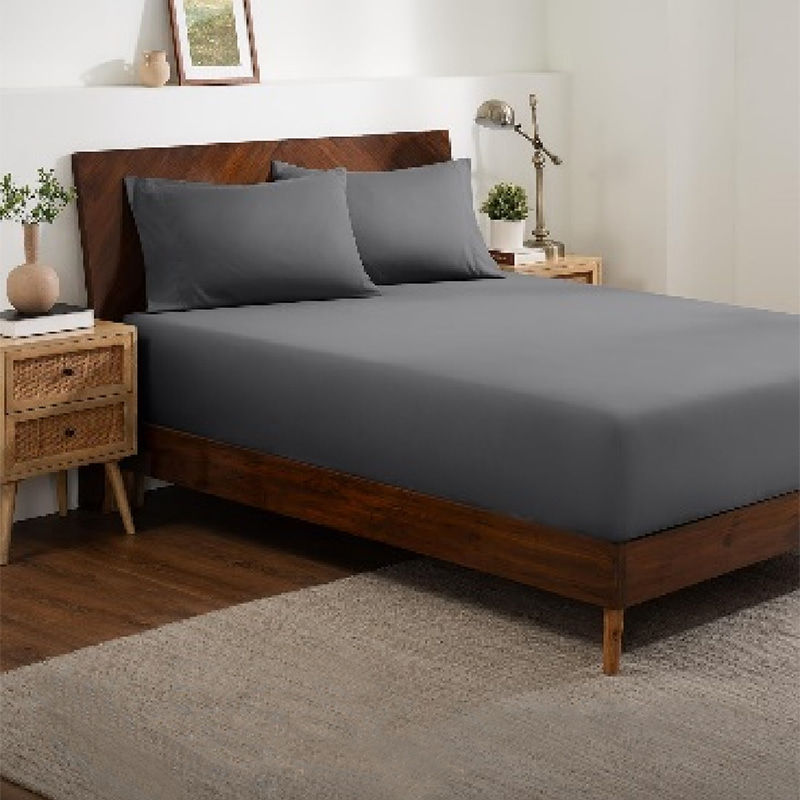
For buyers assembling a full queen or king package, the sensible approach is to source the sheet set and the quilt core as one coordinated size block. Our four-piece queen-size cooling sheet set is built around the 152 cm footprint, and the four-piece queen-size bamboo fiber set follows the same size logic in a different material, so a buyer can offer two fabric stories without rebuilding the pattern.
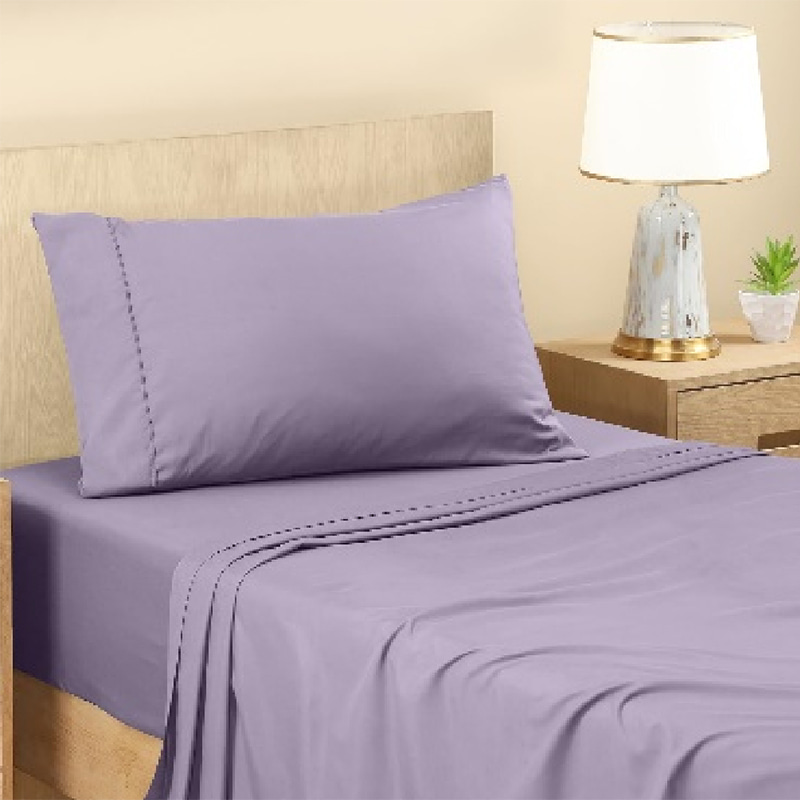 4-Piece Queen Cooling Sheet SetComplete queen sheet set with flat and fitted sheets plus two pillowcases, offering ultra-soft breathability and shrink- and fade-resistant microfiber polyester.View Product →
 Queen Bamboo Fiber Sheet SetFour-piece bamboo viscose queen set with OEKO-TEX certification, envelope pillowcases, deep elastic pockets, temperature regulation and moisture-wicking breathability.View Product →
Always specify bedding by finished measurements after washing, pocket depth and insert width, never by the word queen or king alone.
A king needs 193 cm of clear wall. That is not a large number until you subtract it from a bedroom and look at what remains. Walkways are the first casualty, and a 30 cm gap between the bed and the wardrobe is not a walkway, it is a shuffle.
The usual guidance for residential bedrooms is 60 cm of clearance on the sides you actually use, and 75 to 90 cm for the main path from door to bed. A queen in a 3.3 by 3.6 metre room leaves workable space on both sides. A king in the same room leaves one usable side and one side you climb over. That trade is real and buyers underestimate it constantly, because the showroom floor has no wardrobe.
The delivery point is worth flagging separately. A king mattress is wide and rigid, and a stairwell with a tight turn will stop it regardless of what the bedroom can hold. Some buyers choose a split or roll-packed construction specifically because access is the limiting factor, and that decision is best made before the order rather than on the delivery day.
Measure the delivery route as carefully as the bedroom wall, because a king that cannot reach the room is a king you do not own.
Comparing retail prices across markets is not especially useful, but the shape of the cost difference is consistent. Moving from queen to king raises the cost of four things: the mattress, the bed frame, the bedding package, and the laundry.
The bedding line item is where buyers most often try to save money, and it is also where saving money most often backfires. A cheap king sheet set with a short pocket will fail at the corners within a month, and the replacement cost erases the saving. For a brand programme, the reverse logic applies: specifying the correct pocket depth and the correct finished width costs very little at the manufacturing stage and prevents an entire category of returns.
The king premium is not the mattress alone; the bedding package and the laundry load usually cost more over five years than the extra width does up front.
If you are sourcing bedding rather than buying a single bed, the queen versus king question becomes a specification question rather than a comfort question. A manufacturer, supplier or wholesaler working with a brand client needs three things settled before sampling: the size grid, the tolerance, and the material story.
A workable grid for the US market is full, queen, king and California king, with each size defined by finished width, finished length, pocket depth and shrink allowance. For the European market the grid usually runs 140 by 200, 160 by 200, 180 by 200 and 200 by 200 cm. Trying to serve both markets from one pattern almost always produces a fitted sheet that is slightly wrong everywhere.
Textile dimensions move. A sensible specification states a tolerance, commonly plus or minus 2 cm on width and length and plus or minus 1 cm on pocket depth, plus a stated shrinkage allowance. Without that, a buyer receiving a container can reject a shipment over a 3 cm difference that nobody agreed on in advance.
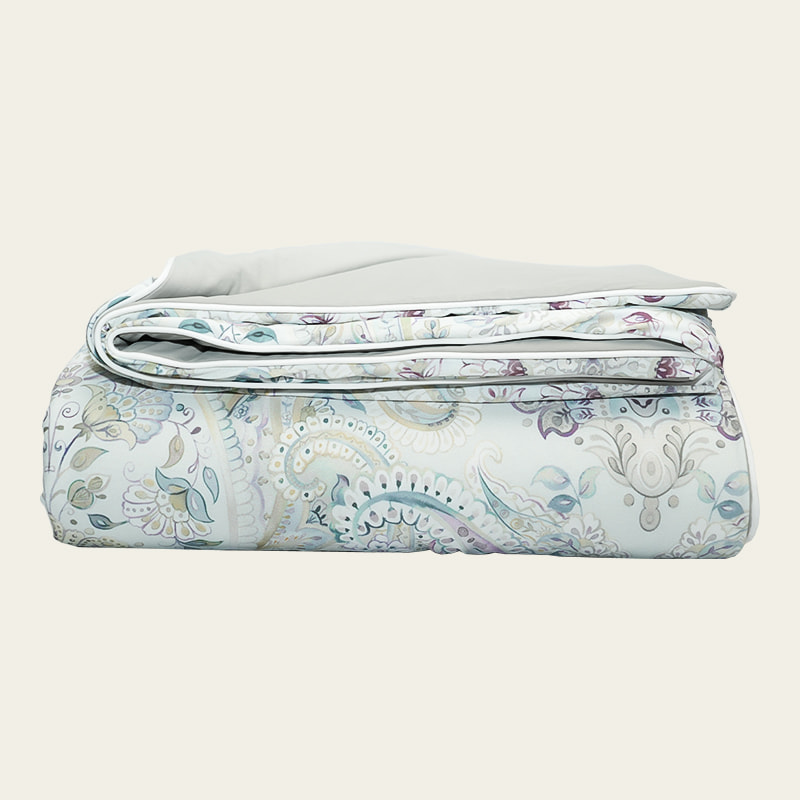
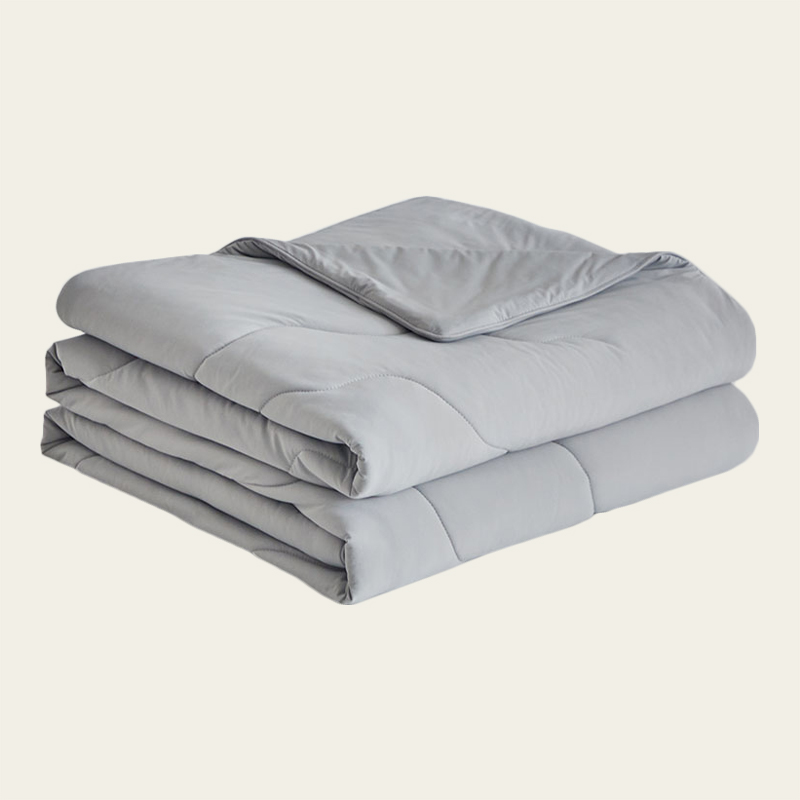
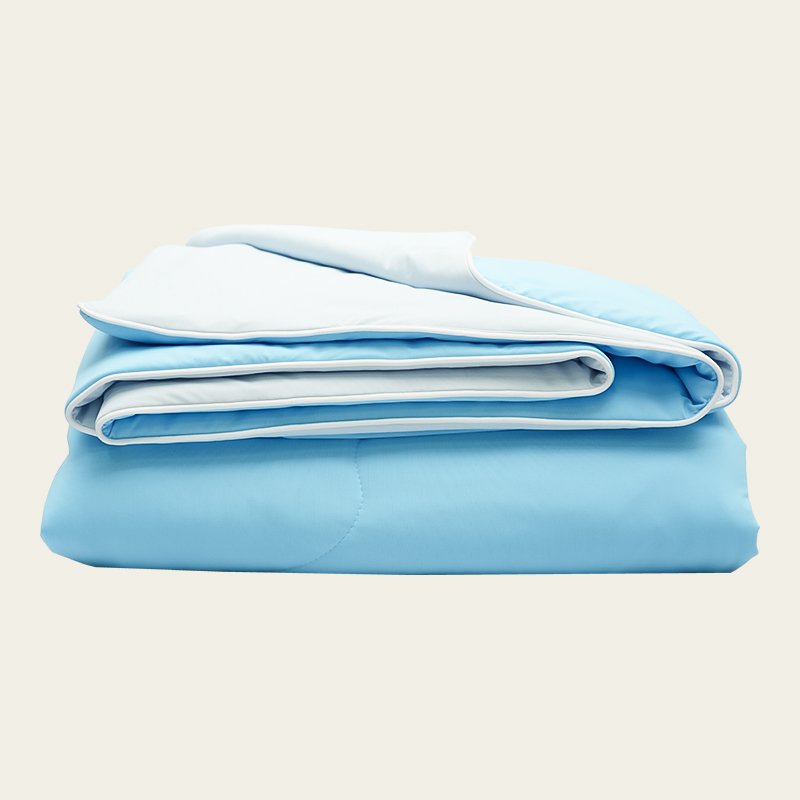
A bedding programme is only as good as the core underneath it. Quilt cores and pillow cores determine how the finished bed looks and how the cover behaves after washing. For cooler-weather ranges, down quilts give the loft that makes a wide king look properly filled rather than flat. Our own production starts at the core and works outward, which is why sizing decisions get made at the same table as fill weight decisions.
Ask for a pre-production sample in the largest size in your grid, not the smallest. Problems with width and drape only appear at king scale. Once the sample is approved, confirm the packing dimensions as well, because a compressed king set ships very differently from a queen set and freight calculations depend on it.
For importers assembling a cotton-led programme alongside a technical fabric programme, our dye-finished pure cotton bed set is a useful reference point for construction and finishing detail, and it follows the same size grid as the performance ranges.
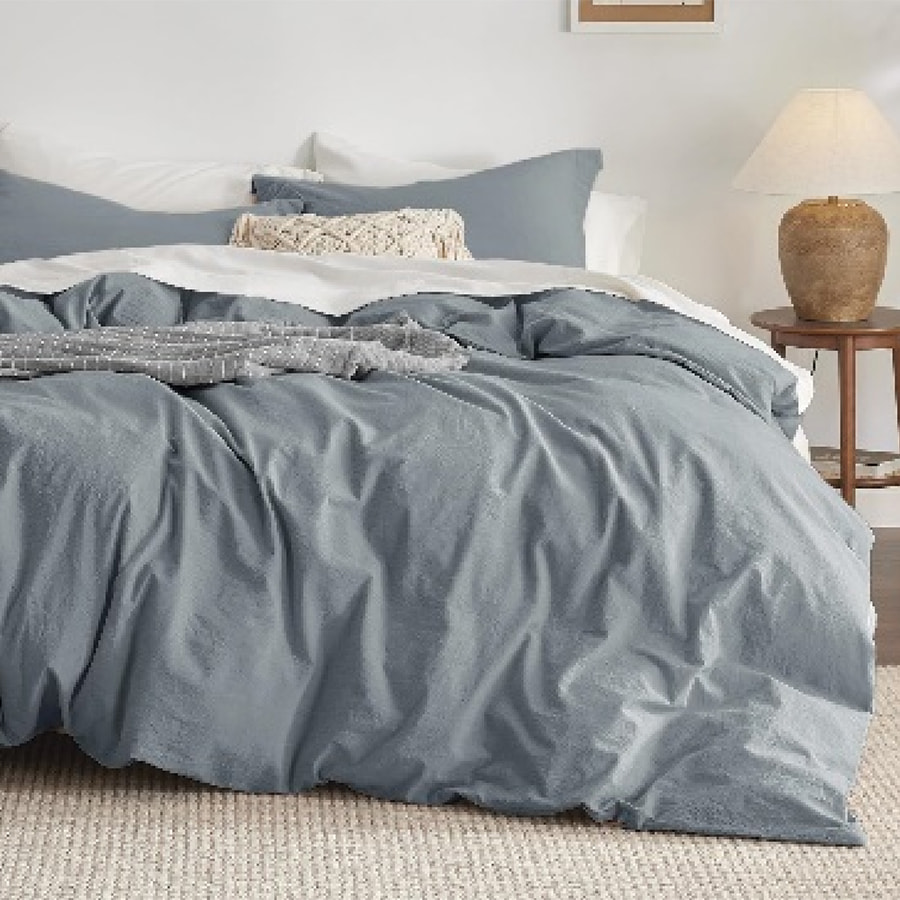 Dyed Pure Cotton Four-Piece Bed SetFour-piece yarn-dyed pure cotton set with duvet cover, fitted sheet and two pillowcases; pre-washed softness, corner ties and zipper closure for cotton programme reference.View Product →
Approve your sample in the largest size in the grid, because a queen sample will never reveal a king problem.
Work through these in order and the choice usually makes itself.
Decide width or length first, then measure the room, then choose the size; most regret comes from doing those three steps in the wrong order.
Two references that come up most often when buyers ask about sizing and material decisions.
Fabric selection for a four-piece set: how thread choice affects fit, drape and shrinkage once a set reaches king width. Read the fabric guide
Quilt core construction: how fill choice changes insulating behaviour when the same core has to serve several bed sizes. Read the core comparison
Material decisions and size decisions are linked, so review them together before the specification is signed off.
A king is 16 inches (about 41 cm) wider than a queen, and both are 80 inches (203 cm) long in US sizing. That works out to roughly 27 percent more sleeping surface area, or 1,280 additional square inches.
You can, but the fit will be loose and the flat sheet will drape to the floor. A king fitted sheet on a queen mattress will gather rather than grip, which looks untidy and creases quickly. Going the other way, queen sheets on a king mattress will not reach the corners at all.
Yes, and it remains the most common couple's size worldwide. The honest caveat is that a queen gives each sleeper about 30 inches of width, so restless sleepers and light sleepers often find a king noticeably easier.
A standard king is 76 by 80 inches, while a California king is 72 by 84 inches. The California king is 4 inches narrower but 4 inches longer, so it suits tall sleepers rather than couples who want more separation.
Usually yes, but only just. A king takes 76 inches of a 144 inch wall, leaving 68 inches split between two sides. That works out to roughly 34 inches per side before furniture, which is below the 60 cm clearance most design guidance recommends for a main walkway.
Queen duvet inserts commonly sit around 220 by 240 cm, and king inserts around 240 by 260 cm. Buying up a size gives more drape on the sides, which many hotel and showroom buyers prefer for a fuller look.
Very nearly. A UK king measures 150 by 200 cm and a US queen measures 152 by 203 cm, a difference of about 2 to 3 cm. A US king at 193 cm wide is closer to a UK super king at 180 cm, and still wider than it.
It affects bedding more than footprint. A 14 inch deep mattress needs a fitted sheet with a deeper pocket, and the same pocket depth must be specified in every size in your grid, including the widest ones.
Sixteen inches of extra width is the whole story, so if width is not your problem, a king is not your answer.
The queen and king decision rarely comes down to preference alone. It comes down to a wall measurement, a doorway, a delivery route, and an honest answer about whether you need space or length. When those four things are settled, the choice is straightforward, and the bedding specification that follows is straightforward too.
For brand clients and importers, the useful habit is to treat size as a manufacturing variable rather than a label. Define the finished dimensions, write down the tolerance, approve the largest size in the grid, and match the core to the cover. Do that and the 16 inches stops being a source of returns and starts being a line item you can plan around.
 Zhihao Industrial Park, Chuanjiang Town, Tongzhou District, Nantong, Jiangsu Province
 +86-13814711705
 yueluo800@163.com
Copyright © Nantong Yueluo Home Furnishings Co., Ltd
Rights Reserved.