en

Search
 English
 日本語
 한국어
 عربى
 Español
 русский
Inquiry Now
Content
If you are asking about the biggest bed size, queen or king, the answer is king. A standard king mattress is 76 inches wide and 80 inches long, while a queen is 60 inches wide and 80 inches long. The length is the same; the width gap is 16 inches. That sounds simple, but for a bedding manufacturer, supplier, or wholesaler, the choice affects shell sizing, fill weight, sheet drop, packaging, and how many SKUs a brand can carry without confusion.
This guide answers the size question first, then explains what the difference means for bulk bedding programs. It also covers where oversized beds fit, because some buyers use "biggest" to mean the largest bed on the market, not just the larger of queen and king.
A king bed is wider than a queen by 16 inches, and that changes the usable sleep surface. A queen gives 60 by 80 inches, or 4,800 square inches. A king gives 76 by 80 inches, or 6,080 square inches. The difference is 1,280 square inches, which is not a small rounding error when a couple shares the bed or when a brand sells fitted sheets, flat sheets, duvet covers, and quilts as a set.
California king is another common comparison point. It is 72 by 84 inches, so it is wider than a queen but narrower than a standard king, and it is 4 inches longer. A standard king remains wider. Alaskan king and other oversized beds can be much larger, but they are not the normal benchmark for retail bedding ranges. For most bulk bedding programs, queen and king are the two volume sizes, and king is the bigger of the two.
| Bed size | Width by length, inches | Width by length, cm | Width difference vs queen | Typical buyer check |
|---|---|---|---|---|
| Queen | 60 by 80 | 152 by 203 | Baseline | Fitted sheet drop, pocket depth, carton size |
| King | 76 by 80 | 193 by 203 | 16 inches wider | Flat sheet width, quilt shell, pillowcase count |
| California king | 72 by 84 | 183 by 213 | 12 inches wider, 4 inches longer | Frame compatibility, market demand |
| Alaskan king | 108 by 108 | 274 by 274 | 48 inches wider | Custom bedding, freight, washing capacity |
A chart makes the width gap easier to discuss with buyers. The numbers below are nominal mattress widths, not finished bedding widths.
Nominal bed widths in inches
On a queen frame, a four piece queen size cooling sheet set can be specified with the right drop and pocket depth, while a king frame needs wider flat sheets and often two pillowcases. For quilt programs, a king order usually needs a wider shell and more fill to keep the same loft per square inch; otherwise the quilt feels thinner than the queen sample. Our team builds size sets around the target market, because a label that says king in one country may not match a king frame in another.
In sourcing, "biggest" can mean three different things. It can mean the larger of queen and king, the largest standard-named size in a retail range, or the largest bed a customer can order. Those are not the same question. A U.S. king is 76 by 80 inches, but a UK king is often 150 by 200 cm, which is close to a U.S. queen in width. If a supplier quotes from a size label without a market spec, a buyer can approve a sample that fails at retail.
For a bedding manufacturer, the practical answer is to lock the market, the frame, and the finished product size before quoting. A queen program may be the core volume item, while a king program is an extension for couples, guest rooms, and premium sets. A wholesaler may need both sizes in the same fabric and color to protect shelf presentation. An OEM buyer may need a queen base sample and a king sample with adjusted shell width, fill weight, and packaging before placing a bulk order.
The mattress size is only the starting point. A fitted sheet needs pocket depth for the mattress, plus a margin for shrinkage and sewing. A flat sheet needs enough width to tuck or drape. A quilt or duvet cover needs a shell that matches the bed width and the desired overhang. A pillowcase order may change from one pillow per sleeper to two pillows on a king setup. These details decide whether a bulk bedding set feels generous or tight after the first wash.
For queen cooling sheet programs, the starting point is the finished sheet size and pocket depth, not the mattress label. A tight queen fitted sheet can fail on a deep mattress even though the label says queen. For king programs, the wider shell and higher fabric consumption change the cost sheet, the carton cube, and the minimum order planning. If the same fabric is used for both sizes, the supplier should show separate finished measurements for queen and king, not one size scaled by eye.
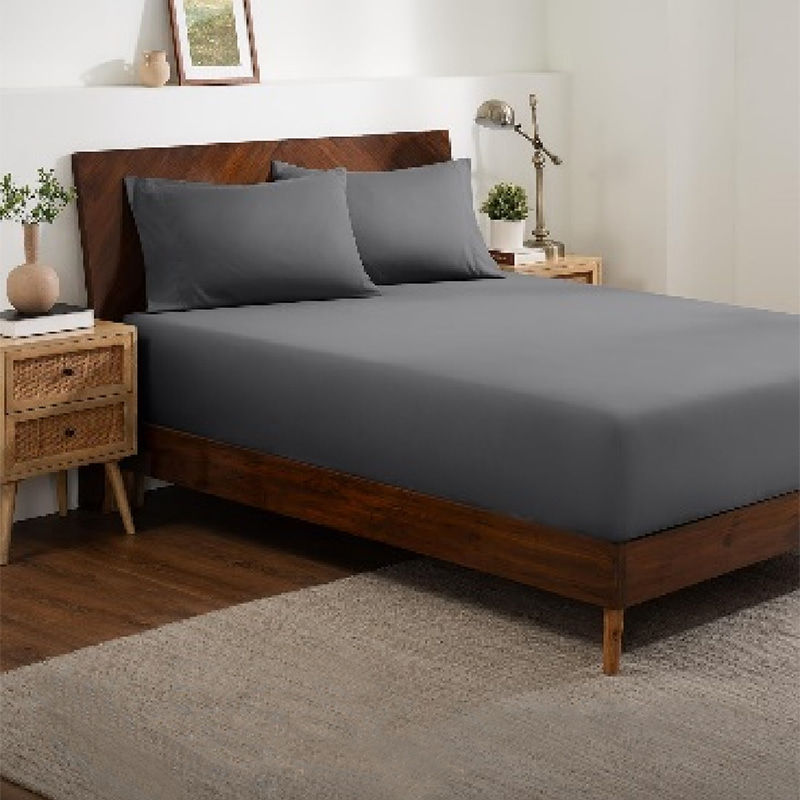
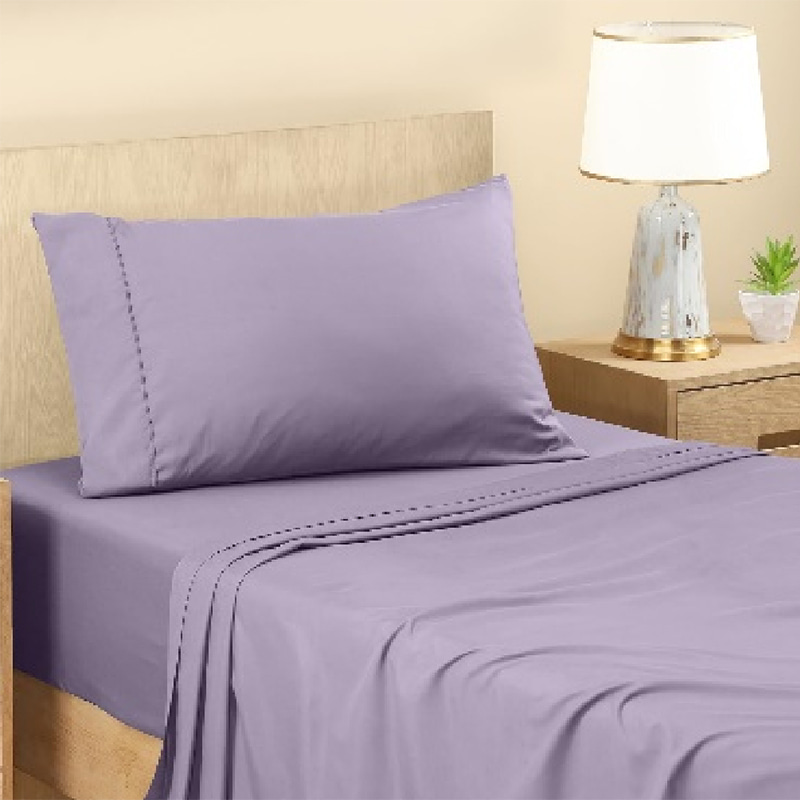 4-Piece Queen Cooling Sheet Set with Fitted Sheet and PillowcasesFour-piece queen set with flat sheet, fitted sheet, and two pillowcases; useful for comparing finished measurements, pocket depth, and care instructions in queen programs.View Product →
Shrinkage and tolerance should be written into the spec. A small percentage change on a 60 inch sheet is manageable; the same percentage on a 108 inch flat sheet or oversized quilt is a larger physical gap. Buyers should ask for washed and unwashed measurements, seam allowance, and packing dimensions. For private label programs, the care label, size label, and retail packaging should all use the same size language so the product does not create returns.
For couples, a king gives more shoulder and hip room, which is why it often wins when space and budget allow. A queen can be the better fit for smaller rooms, guest beds, and entry price points. For a brand, the decision is not only comfort. It is SKU count, fabric consumption, MOQ, warehouse space, and how many sizes a retailer can display without splitting attention. Many ranges use queen as the core size and king as the upgrade size, with shared fabric and color stories but separate spec sheets.
Room size and movability also matter. A king frame needs more clearance for walking and wardrobe access. A queen is easier to move through narrow stairs and smaller doorways. For hospitality and rental projects, a wholesaler may prefer queen for standard rooms and king for suites. For direct-to-consumer brands, the supplier should quote both sizes together so the buyer can compare landed cost, not just unit price. Fill weight, shell width, and packaging often make the king cost more than the simple width difference suggests.
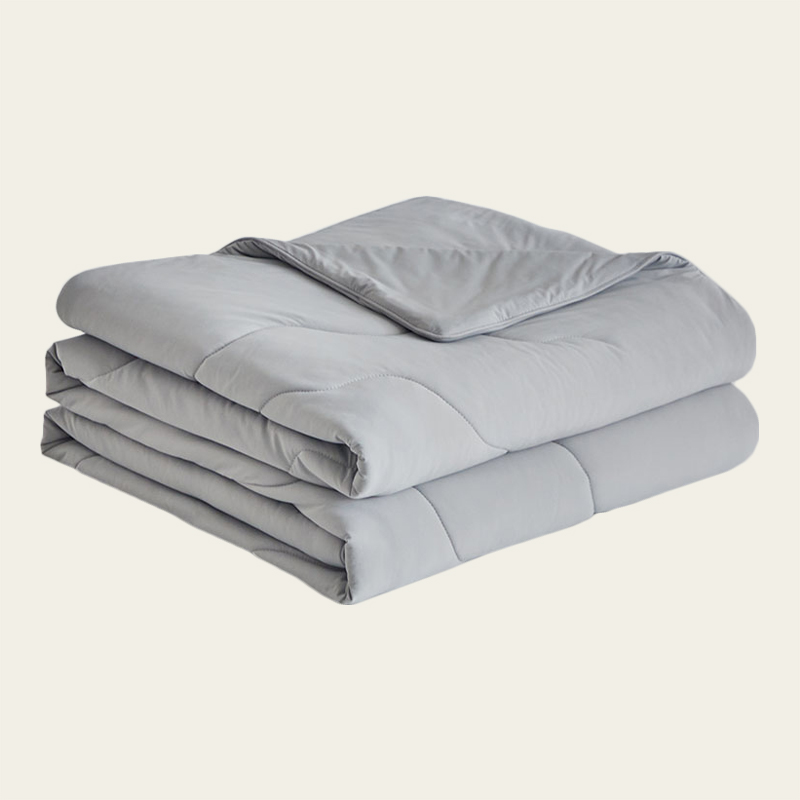
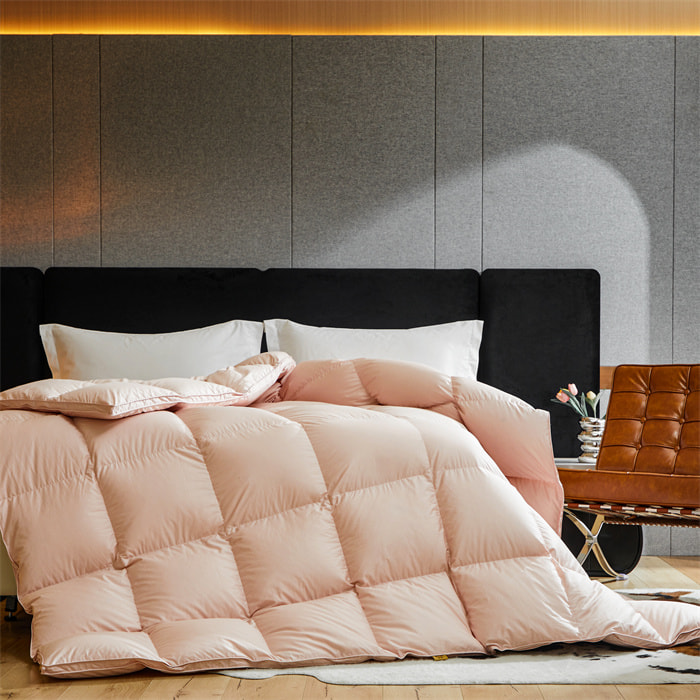 Luxury Goose Down Quilt with Cotton Shell and 800+ Fill PowerCotton-shell goose down quilt with 800+ fill power and 3D box construction; relevant for comparing loft, fill weight, and shell dimensions across quilt sizes.View Product →
Quilt and duvet programs need extra attention because loft changes the visual size. A king quilt with the same fill weight as a queen sample can look flatter on a larger bed. The fill weight per size should be reviewed with the shell dimensions and the target warmth level. Buyers can compare this with our note on quilt core material and insulation before approving a king sample.
Before a bulk order, the buyer and supplier should agree on a short but clear checklist. This prevents a sample that looks right from turning into a shipment that fails at retail. The list below is useful for a bedding manufacturer, supplier, or wholesaler working with brand clients and private label programs.
For cotton set programs, the same size logic applies to duvet cover width, sheet drop, and pillowcase length. A buyer may approve a queen set quickly and then discover that the king set needs a different flat sheet fold or a larger poly bag. Those details affect packing lines and freight. A supplier with a full bedding set range can often solve this earlier by matching fabric, construction, and packaging across sizes.
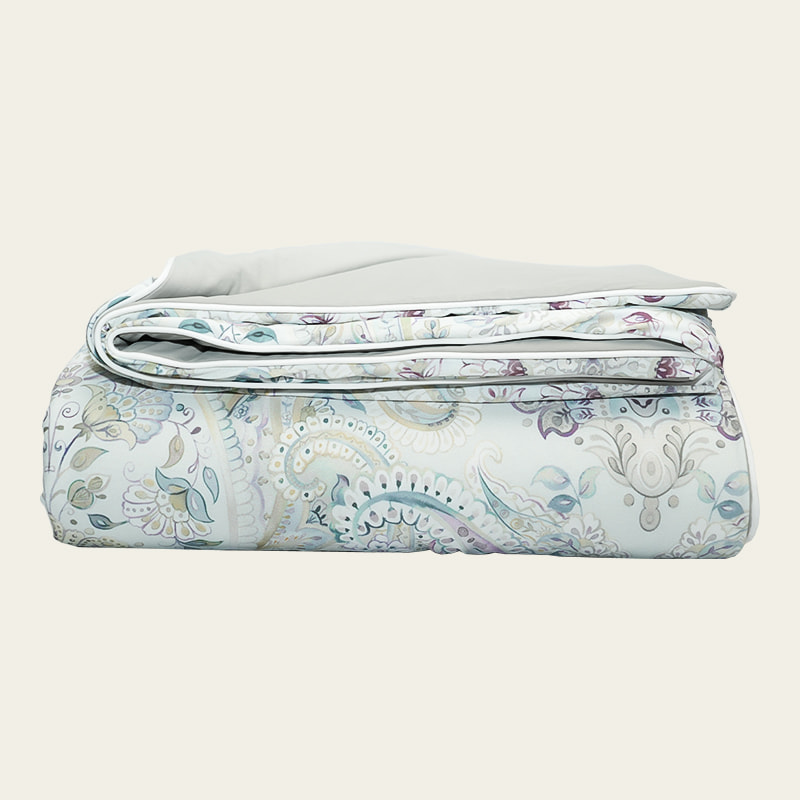
 Dyed Pure Cotton Four-Piece Bed Set with Duvet CoverFour-piece washed cotton bedding set with duvet cover, fitted sheet, and two pillowcases; helpful for reviewing duvet cover width, sheet drop, and packing across sizes.View Product →
Our factory in Nantong works with brand clients on quilt cores, pillow cores, and bedding sets, including custom development from drawings or samples. For queen and king programs, the most useful first step is a size matrix with target market, finished dimensions, and packing requirements. That gives the buyer a clear comparison before the quotation stage.
Yes. A standard king is 76 by 80 inches, and a queen is 60 by 80 inches. The king is 16 inches wider and has 1,280 more square inches of sleep surface, while the length is the same.
No. King is the larger of queen and king, but oversized beds such as Alaskan king can be much larger. Those sizes are niche and usually need custom bedding, special freight, and washing checks.
A king gives more width for two sleepers, especially if either person moves a lot. A queen can work for smaller rooms, shorter sleepers, or budget-focused ranges. The room and frame size should be checked before the bedding spec is approved.
No. Fitted sheets, flat sheets, duvet covers, and quilts need different finished dimensions. A king flat sheet is wider, and a king quilt needs a wider shell and often more fill to keep the same loft.
They confirm the market standard, mattress depth, finished dimensions, shrinkage tolerance, and packing size. They also approve a queen sample and a king sample before bulk cutting, not just one size.
The supplier should confirm the target market, size label, finished measurements, fabric, fill weight, MOQ, packaging, and delivery schedule. A clear spec sheet reduces rework and protects the bulk order timeline.
If you are building a queen and king range, the size question is only the first step. The next step is to review construction, fill, fabric, and packing as one program. Our team can help compare options across quilt cores, pillow cores, and bedding sets before a sample is made.
Review quilt core material and insulation when setting king quilt fill weight, and compare bedding set categories when planning queen and king assortments.
For brand clients, the most efficient path is to send the target market, size matrix, fabric preference, and estimated order quantity. That lets the factory quote a realistic program instead of a single size in isolation. The answer to "queen or king" may be king, but the better bulk order is the one that fits the frame, the market, and the packing plan.
 Zhihao Industrial Park, Chuanjiang Town, Tongzhou District, Nantong, Jiangsu Province
 +86-13814711705
 yueluo800@163.com
Copyright © Nantong Yueluo Home Furnishings Co., Ltd
Rights Reserved.