en

Search
 English
 日本語
日本語 한국어
한국어 عربى
عربى Español
 русский
Inquiry Now
Content
In the third week of March, a brand buyer in Munich opens a sample carton and lifts out four quilt shells in the same pale grey. The spec sheets look identical: 100 percent nylon-spandex face, 90 gsm shell weight, 220 x 240 cm finished size. Two of them feel instantly cool against the wrist and stay cool for several seconds. The other two feel like ordinary bedding that has spent the night in a cold room. By the time the buyer reaches the price column, the gap between the two groups has widened even further, and that gap, not the catalogue copy, is what a search for the best cooling bedding really comes down to.
The best cooling bedding for a brand program is rarely the coldest-feeling sample in the carton. It is the shell that still measures a meaningful cool-to-touch performance after twenty home launderings, at a landed cost that leaves room for a retail margin, made by a factory that can repeat the same hand feel across three consecutive seasons and six colourways. Coolness is easy to sample. Repeatable coolness is what you are actually buying.
That distinction matters more in business-to-business sourcing than it does in a consumer review. A shopper buys one quilt and forgives a small inconsistency. A brand buys twenty thousand units, places them in three markets, and answers for them in returns data, review scores and next-year reorders. If the fabric supplier changes the yarn, or the finishing line runs the calendar slightly differently, the customer notices immediately even though the purchase order said nothing changed.
This guide walks through the practical side of building a cooling bedding range: which shells hold up, how Q-Max and moisture management should be read on a test report, what a cooling quilt core looks like inside, how kits compare with single quilts, where down and down-alternative products fit into the same assortment, and which questions separate a genuine cooling bedding manufacturer from a trading company that forwards your email.
Consumers evaluate cooling bedding with their hands. Brand buyers have to evaluate it with a specification sheet, a wash test and a costed bill of materials. Those three tools point at four criteria that rarely appear in consumer-facing marketing but decide whether a program succeeds.
The first is repeatable hand feel. A cool-to-the-touch shell depends on fibre type, yarn count, weave or knit structure, and the finishing route. Change any one of them and the Q-Max reading moves. A factory that documents its knitting gauge, yarn denier and finishing parameters can reproduce the same hand feel on a reorder placed eight months later. A factory that only keeps a photo of the approved sample cannot.
The second is performance retention after laundering. Cooling fabric is normally evaluated after a defined number of home launderings, because finishes and surface structures degrade. A shell that starts at a high reading and drops sharply by wash ten is a returns problem waiting to happen. Ask for the washed readings, not just the original.
The third is dimensional and colour stability. Cooling knits have a reputation for growing slightly in the width direction. If the finished quilt is cut to nominal size and then relaxes, the customer receives a product that no longer matches the size on the care label. Pre-shrinking and adequate relaxation time between cutting and sewing cost a little more and prevent a whole category of complaints.
The fourth is the commercial structure: minimum order quantity, sampling cost and lead time. A supplier of wholesale cooling bedding who can produce a beautiful sample in three weeks but needs 5,000 units per colour is not useful to a brand testing a new market with 1,200 units.
Most cooling bedding programs are built around one of four shell families, and each one carries a different cost, feel and durability profile. The table below summarises the trade-offs as they usually appear when samples are compared side by side on the same table.
| Shell fabric | Cool-to-touch feel | Typical Q-Max band (W/cm2) | Moisture handling | Durability after washing | Best-fit program |
|---|---|---|---|---|---|
| Nylon-spandex knit | Strong, immediate coolness with a soft stretch | 0.26 - 0.32 | Fast wicking, quick drying | Good, provided relaxation and heat setting are controlled | Premium summer quilts and flagship cooling kits |
| Polyester-ammonia woven or knit | Noticeably cool but slightly drier hand | 0.20 - 0.25 | Good wicking, moderate drying speed | Very good shape retention if heat set properly | Mid-tier summer quilts and volume programs |
| Bamboo viscose blend | Soft, cool and smooth rather than sharply cold | 0.15 - 0.19 | Absorbs well, dries more slowly than synthetics | Moderate; prone to pilling if fibre length is short | Natural-fibre story, sheet sets, gift and hotel channels |
| Combed cotton percale | Neutral; cool only through breathability | 0.10 - 0.13 | Absorbs well, feels dry at the surface | Excellent with good yarn quality | All-season basics and cotton-led brand lines |
Reading the table from a sourcing perspective, the spread between the top and bottom rows is roughly three times. That is why two suppliers can both honestly describe a product as "cooling" while delivering very different customer experiences. The phrase itself carries no measurable meaning, and any cooling bedding manufacturer who will not name the shell and the Q-Max target is leaving the definition of the product to whoever reads the purchase order next.
Nylon-spandex remains the reference point for cool-to-touch performance, and it is the shell most often specified for flagship summer quilts. Its weakness is process sensitivity. The spandex content that gives the fabric its stretch also makes the knit dimensionally restless, so controlled relaxation after knitting and a well-managed stenter route are not optional extras. Buyers who push hard on unit price in this category usually end up paying for it in shrinkage claims.
Polyester-ammonia occupies a useful middle position: it is easier to process consistently, holds its dimensions well and still delivers a clear cooling sensation. For a brand entering the category for the first time, or for a wholesale cooling bedding line that has to sit at an accessible price point, it is often the more sensible starting shell.
Bamboo viscose and cotton tell a different story. They sell on natural-fibre appeal rather than on a cold touch, and they belong in a range because customers ask for them, not because they win a Q-Max contest. Blending bamboo with a small amount of synthetic fibre can improve durability without losing the story.
Q-Max is the peak value of heat flow measured when a warm plate touches a fabric surface. In plain terms, it describes how quickly the fabric pulls heat away from your skin at the moment of contact. It is the closest thing the industry has to a single number for cool-to-touch, and it is far more useful in a sourcing conversation than adjectives. If two suppliers describe their product as cooling, Q-Max is what lets you decide which claim is stronger.
The chart below shows typical performance bands for the four shell families discussed above, with the values plotted so the differences between categories are visible at a glance.
Indicative cool-to-touch performance by shell fabric (Q-Max, W/cm2)
Bands are indicative and depend on yarn count, structure and finishing. Request test data for the exact construction you intend to buy.
The pattern in the chart explains why two quilts of the same weight and the same measurements can feel completely different. Coolness comes from the fibre surface and how tightly it contacts the skin, not from how much filling sits underneath. A heavier quilt built on a cotton shell will feel warmer and heavier in the hand without offering any of the contact cooling that a lighter nylon-spandex core provides.
That has a direct commercial consequence for anyone assembling a cooling quilt range. It is tempting to differentiate products by fill weight, because weight is easy to cost and easy to describe. But fill weight mainly affects how warm the product feels once you are under it, which is the opposite of what a summer program needs. The differentiators that customers can actually perceive are the shell, the knit structure and the finish.
Working with a cooling bedding supplier that produces its own quilt cores means the shell and the fill can be tuned together rather than sourced separately. A cooling quilt core built on a cool-to-the-touch face with a light, breathable fill delivers the cooling message at the top surface and still feels comfortable across a warm night, which is a more balanced result than simply chasing the highest possible Q-Max number on a single layer.
One caution when comparing reports: always confirm the test standard, the conditioning time and whether the sample was washed. A number produced on a conditioned lab sample and a number produced after ten home launderings are not comparable, even when both appear on the same style of certificate.
A cooling quilt core is a three-part decision: the shell construction, the fill choice and the quilting pattern that holds the two together. Get the first two right and the third becomes a design detail. Get the first two wrong and no amount of quilting refinement will rescue the hand feel.
Cooling knits are usually described by gauge and denier rather than by thread count, which is a cotton-era measure that does not translate well. What matters practically is the density of contact points between the fabric surface and the skin. Finer yarns and a tighter knit generally raise the cooling reading, but they also reduce air permeability, which is why the highest Q-Max construction is not automatically the best finished product. A shell that reads slightly lower on the test bench but breathes better overnight can outperform a stronger-reading competitor in customer reviews.
Summer cores are typically built with light synthetic fills, often in the 150 to 250 gsm range, sometimes with a small amount of down or feather blend if the brand wants a natural story. The fill should be chosen to preserve drape: a cooling quilt that feels stiff folds badly on the bed and photographs poorly, which matters more than most buyers expect once the product reaches e-commerce.
Printing and dyeing are where cooling fabrics are most often damaged. Excess heat, over-stretching on the stenter or an incompatible softener can all reduce the cool-to-touch effect, sometimes by a visible margin. A printed cooling quilt therefore needs a print route that has been validated on that specific knit, not on a generic polyester. Brands planning a multi-colour range should ask for a printed sample in the exact colourway before approving the base shell.
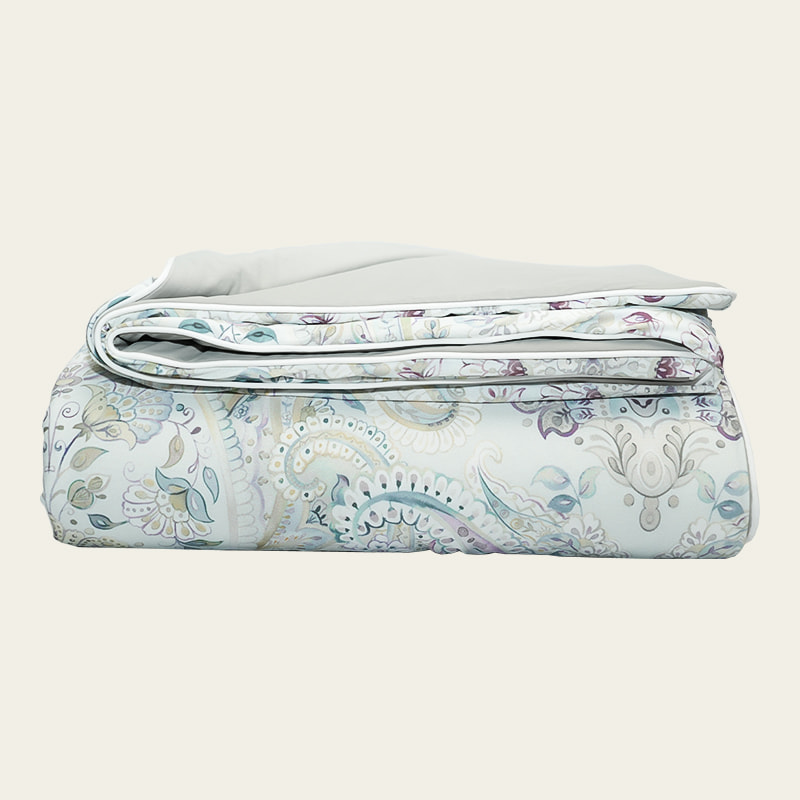
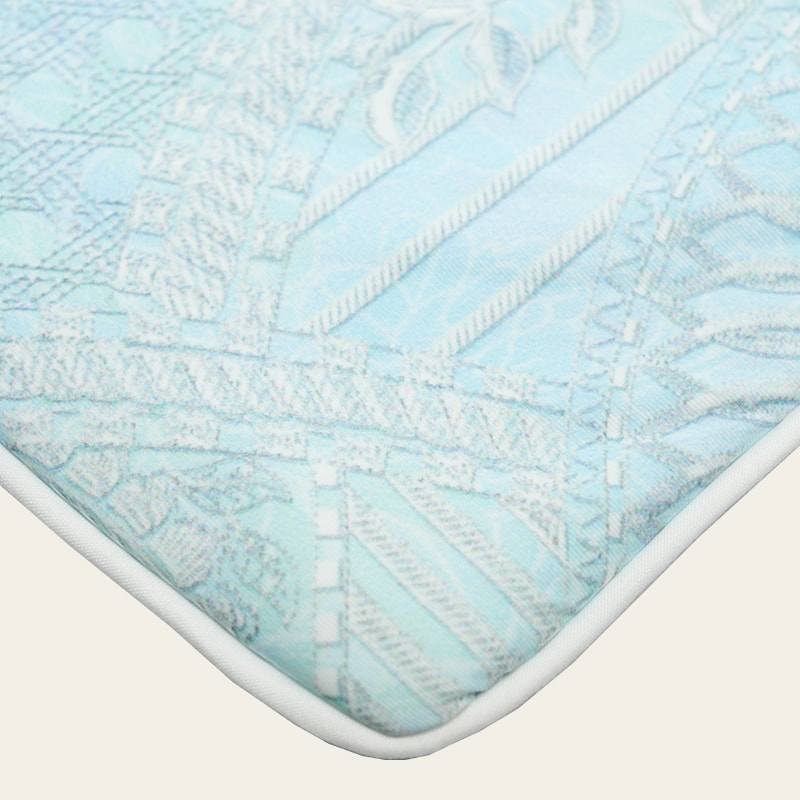 Printed Cooling Quilt【Unique Design】: This quilt is uniquely designed, printed with botanical style floral patterns and cartoon patterns. The queen size quilt is double-sided, and you can ...View Product →
For programs where surface design carries the brand story, a printed cooling quilt built on an ultrafine knit gives the design team a fabric that still reads cool under the hand while carrying a full-coverage print. It is the arrangement most often requested by brands that want a recognisable print across a whole summer collection without switching to a woven shell that sacrifices the cooling claim.
Quilting lines affect perceived coolness more than they affect measured performance, but they do influence durability. Dense quilting holds a light fill in place but creates more needle perforations, which can make a thin shell feel less smooth. Piping, binding and hem width should be specified in millimetres on the tech pack, because "standard finishing" means something different in every factory.
A cooling quilt solves one problem. A cooling bed kit solves the whole bed, and that difference shows up clearly in average order value. Buyers browsing in April and May are usually replacing an entire bed setup rather than adding a single layer, and a matched set removes the decision about whether two cooling products will look right together.
The usual formats are two-piece sets for a double bed, three-piece sets built around an oversized quilt, and four-piece queen-size sheet sets that cover the fitted sheet, flat sheet and two pillowcases, sometimes with a duvet cover. Each format suits a different channel. Two-piece sets work well in smaller apartments and in markets where double beds dominate. Four-piece queen-size configurations are the default for most English-language e-commerce listings because they photograph well and match the most common mattress size in North America.
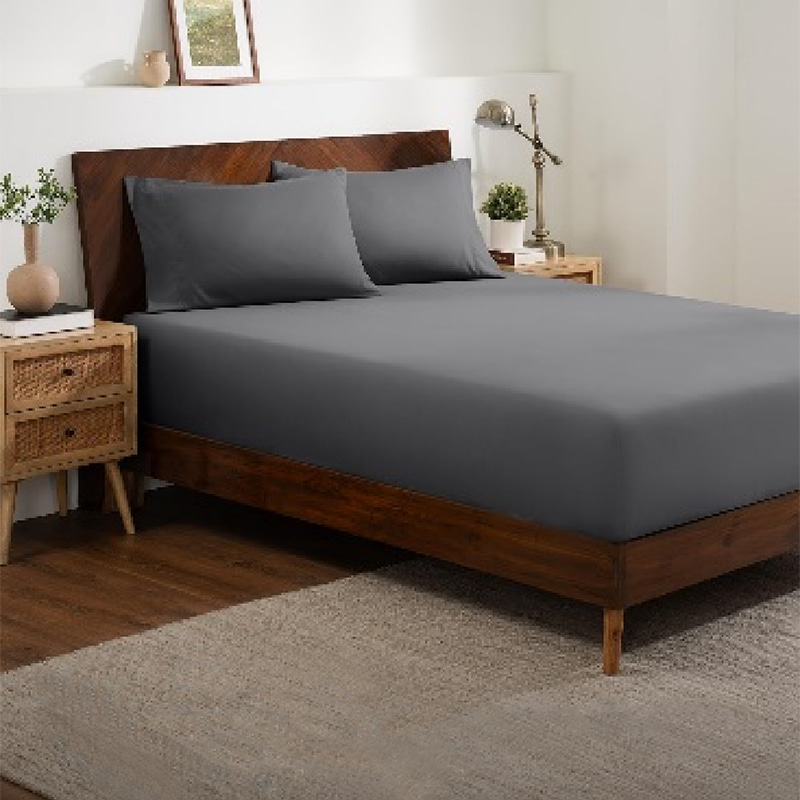
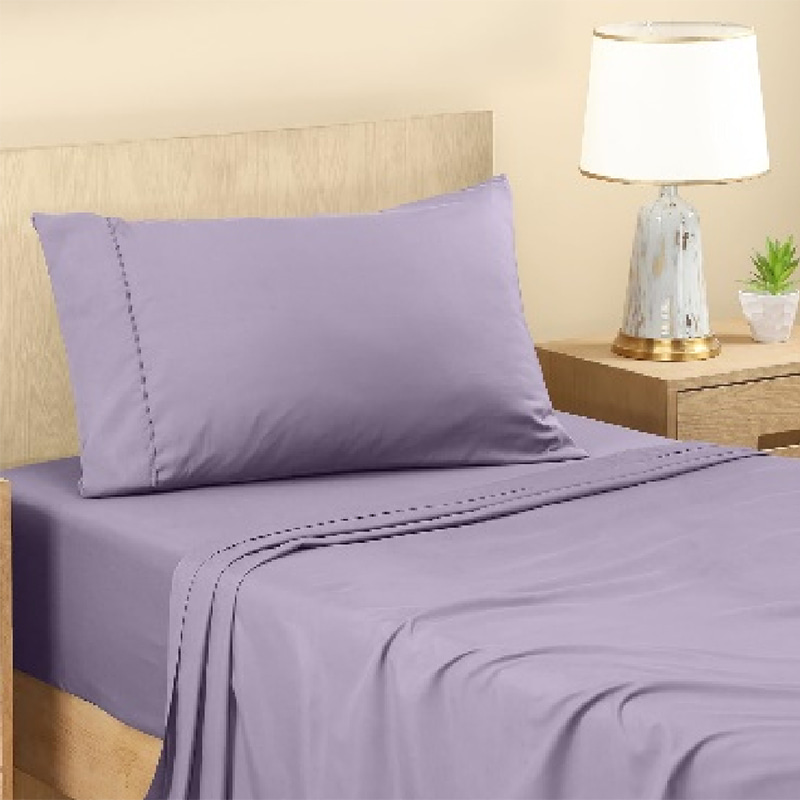 4-Piece Queen-Size Cooling Sheet SetComplete Sheet Set - 4-piece queen sheet set includes 1 Flat Sheet, 1 Fitted Sheet, 2 PillowcasesView Product →
Sourcing kits rather than single quilts changes the negotiation in a useful way. Because a kit combines several components, the buyer can shift cost between them: a slightly simpler pillowcase construction can fund a better sheet fabric, or the quilt can be specified at a lighter weight while the sheets carry the cooling story. This flexibility is difficult to achieve when each item is bought from a separate supplier, and it is one of the practical advantages of working with a cooling bedding manufacturer that runs both core products and bedding sets under one roof.
For brands running a seasonal summer drop, kits also simplify photography and content. One shoot produces images for four products, and the cooling message only has to be explained once. Retailers tend to list kits as a single SKU, which reduces catalogue maintenance and makes reorder forecasting simpler.
Very few brands sell cooling bedding twelve months a year. The products that carry the other half of the calendar are down quilts and down pillow cores, and they belong in the same conversation because they come from the same customer and often the same purchase order cycle. A summer cooling quilt placed in March is usually followed by a down quilt placed in July for the winter season.
The technical considerations are almost mirror images of each other. Where a cooling quilt is judged on surface heat transfer, a down quilt is judged on fill power, loft recovery, down-proof construction and the absence of quill leakage. Where a cooling shell is a fine knit, a down quilt shell is usually a tightly woven fabric with a high thread count and a calendered or coated finish to keep feathers in place.
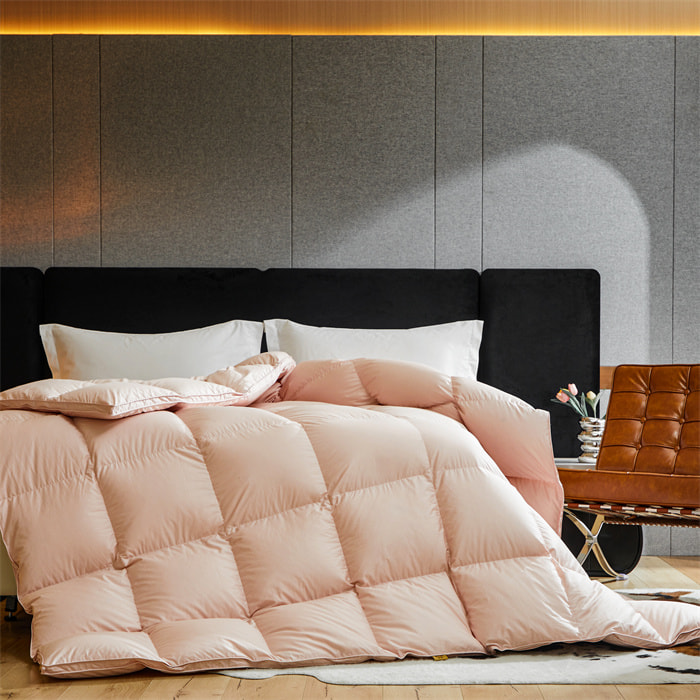 Luxury Soft Goose Down Quilt【Luxury Soft and Noise-Free Choice】: skin-friendly shell. Soft to the touch and noise-free. Let you enjoy a full night of peaceful sleepView Product →
The higher end of a down program usually relies on a large-cluster goose down fill, which gives more warmth per gram and recovers its loft quickly after compression. It suits brands selling into premium channels where the customer reads the fill specification. Mid-tier programs often do better with a duck down or blended fill that keeps the price accessible while still offering a genuine natural-fill story.
Down pillows carry an objection that down quilts rarely attract: allergy concerns. In practice, most reactions in bedding are triggered by dust mites and their residue rather than by the feather itself. A tightly woven down-proof shell combined with properly washed and classified fill substantially reduces the risk, and double-layer anti-down construction adds a second barrier that also stops quills from working through the fabric.
Three construction features are worth specifying on a down pillow core. Double-layer anti-down construction, where an inner liner sits behind the outer shell, limits leakage. A high fill ratio gives a softer, more compressible feel. A three-dimensional baffle structure holds the fill in place so the pillow keeps its height through the night instead of collapsing into a flat pocket. Buyers who want to test how much these details matter can order a single sample of each construction and compare them after a month of use.
For a brand, the strategic value of running both categories with the same supplier is consistency of service. The relationship, the payment terms, the quality documentation and the packaging standards stay the same even though the product changes completely. That is a meaningful reduction in administrative overhead for a small buying team.
Size mismatches are one of the most common reasons a bedding order is rejected at inspection, and they are almost always caused by an incomplete tech pack rather than by poor sewing. The table below lists the formats most frequently requested by brands, together with the market they usually serve.
| Format | Common finished size | Typical contents | Channel it usually serves |
|---|---|---|---|
| 2-piece double bed cooling set | Quilt approx. 200 x 200 cm | One cooling quilt, one pillowcase | Apartment living, entry price points, European double beds |
| 3-piece super cool quilt set | Quilt approx. 220 x 240 cm | One oversized cooling quilt, two pillowcases | Mid-tier e-commerce, warm-climate markets |
| 4-piece queen-size cooling sheet set | Fitted sheet approx. 152 x 203 cm plus depth | Fitted sheet, flat sheet, two pillowcases | North American e-commerce, marketplace listings |
| Single cooling quilt | 200 x 230 cm or 220 x 240 cm | One quilt only | Add-on sales, replacement purchases, hotel supply |
A complete tech pack for cooling bedding should state the shell composition with a tolerance, the knit gauge or yarn denier, the fill type and weight per square metre, the finished dimensions with a plus or minus tolerance, the quilting pattern with a spacing figure, the edge treatment in millimetres, the colour reference under a named light source, the care label wording, and the wash test protocol the factory will follow. It should also state the acceptable colour difference between pieces within a single kit.
Two numbers cause more disputes than any others. The first is the dimension tolerance. A tolerance of plus or minus two percent sounds generous until you apply it to a 240 cm quilt, where it becomes nearly five centimetres. The second is the fill weight tolerance. If the tech pack says 200 gsm without a band, you may receive anything from 180 to 220 gsm depending on who is measuring and when.
The distinction is not about size. It is about who controls the variables that determine whether the second order matches the first. A cooling bedding supplier working through third parties can still deliver a good first shipment; the question is what happens when the knit mill changes a yarn supplier or when a finishing line is fully booked in the month your reorder is due.
In-house control over knitting, filling, cutting, sewing and finishing means the specification lives inside the building. That matters for cooling fabrics in particular, because the cool-to-touch effect is created across several stages and can be lost at any of them. When one party owns every stage, a change in one process can be compensated elsewhere. When five parties each optimise their own margin, nobody is responsible for the final hand feel.
Equally important is design capability. A factory that only copies samples will struggle when your design team asks for a construction that has not been made before. The ability to develop a new quilt core from a brief, propose two or three shell and fill combinations, and cost each option is what turns a supplier into a development partner. This is the point at which many brands stop shopping on price per unit and start evaluating total cost of ownership across a three-year product line.
Location also plays a role that is easy to underestimate. A cluster with a mature textile supply chain gives access to specialised knitting, dyeing and finishing within a short drive, which shortens sampling cycles and makes it practical to fix a problem mid-production rather than remaking the order. That proximity is a genuine advantage when a seasonal window is only eight weeks wide.
Minimum order quantity is the number most buyers ask about first and the one that matters least on its own. What matters is the combination of MOQ, colour-run flexibility, sampling cost and lead time, because together they determine how quickly you can respond to a market signal.
A typical arrangement runs the MOQ per colourway rather than per style, which is why a five-colour summer quilt program can require five times the volume of a single-colour one. Buyers who want to test several colours without committing to full runs often negotiate a mixed-colour first order, sometimes with a modest surcharge, then commit to single-colour runs on reorder. It is worth asking directly, because many factories will agree to this for a first order and almost none advertise it.
There is a difference between a photo sample and a production-representative sample. A production-representative sample is made on the same machines, from the same fabric batch and with the same finishing route as the bulk order. It costs more and takes longer, and it is worth it every time. Photographic samples in a slightly different knit can look perfect and then arrive in bulk with a hand feel nobody approved.
Ask for three pieces where possible: the original sample, the washed sample and a production-representative piece. Comparing the three side by side tells you more about a supplier than any certificate pack, because it shows whether the factory understands which variables actually change the product.
A realistic timeline for a first cooling bedding order usually runs as follows. Specification and costing take one to two weeks. Sampling and revision take two to three weeks, longer if a new print is involved. Raw material procurement for special yarns can add one to three weeks. Bulk production for a mid-sized order typically runs three to five weeks, and sea freight to Europe or North America adds a further four to six weeks. Working backwards from a retail launch date, a first order needs roughly three to four months of runway, and a reorder needs less because the specification is already fixed.
The single most useful thing a buyer can do is lock the specification early. Every week spent revising the shell after sampling has started pushes the whole schedule, and cooling fabrics are unforgiving of late changes because the finishing route depends on the exact construction.
Most cooling bedding programs that disappoint do so for reasons that were visible before the purchase order was signed. These six recur often enough to be worth checking against any new supplier.
There is a seventh, subtler mistake that is worth adding: treating the cooling claim as a marketing decision rather than an engineering one. A brand can write any copy it likes, but the fabric either pulls heat away from the skin at a measurable rate or it does not, and customers work that out within the first night. The sensible sequence is to choose the construction first, verify the performance second, and write the copy third.
Two short technical reads answer the questions buyers ask most often during the sampling stage. Both are worth ten minutes before you send a specification to any supplier.
Both pages are technical rather than promotional, which makes them useful when you need to explain a specification decision to a colleague who is not a textile specialist. If your question is not covered, the fastest route is usually to describe the end use and the target retail price and ask for two or three construction proposals with costs attached.
For most summer programs, the strongest combination is a cool-to-the-touch knit shell such as nylon-spandex or polyester-ammonia paired with a light synthetic fill in the 150 to 250 gsm range. The shell determines whether the product feels cool on contact, and the fill determines how it behaves overnight. A heavy fill will make a quilt feel warmer regardless of how good the shell is, so the two decisions should be made together rather than sequentially.
Ask each one for three things: the exact shell composition with a tolerance, the Q-Max figure with the test standard named, and the same figure after a stated number of home launderings. Suppliers who have this information will usually share it immediately. Suppliers who do not will respond with adjectives, which is itself the answer to your question.
Not for every customer. Nylon-spandex wins on measured cool-to-touch performance and is the right choice for a flagship summer quilt. Bamboo and cotton win on natural-fibre appeal, on breathability in humid conditions and on price positioning. Many successful ranges carry both: a nylon-spandex hero product for the cooling claim and a cotton or bamboo option for customers who want a natural shell.
It depends on the colour count more than on the style. A single-colour first order at a few hundred pieces is often possible, while a five-colour program may need several times that volume in total. Ask specifically whether a mixed-colour first order is acceptable, and whether the sampling charge is credited against the bulk order. Both are common and neither is usually advertised.
A straightforward sample in an existing shell and fill typically takes two to three weeks including shipping. A new print or a new knit construction can take five to six weeks because the fabric has to be developed and finished before it can be sewn. If a supplier quotes three days for a brand-new construction, ask which parts were already in stock.
If the brand sells bedding year-round, yes. Down quilts and down pillow cores carry the winter season, and they come from the same customer base, often from the same buying team. Sourcing both categories from one manufacturer keeps quality standards, packaging and payment terms consistent, which reduces the administrative load considerably for a small procurement function.
The cooling bedding category rewards buyers who treat it as a fabric engineering problem rather than a marketing one. The shell, the knit structure, the finishing route and the washed performance are what the customer experiences on a warm night, and they are also what determines whether the second order is as good as the first. Everything else, including the label, is downstream of those decisions.
Starting with a clear brief is the fastest route to a sensible quotation. Describe the market, the target retail price, the season you are selling into and the number of colourways you want to test. A manufacturer with its own knitting, filling and finishing capacity can then come back with two or three realistic construction proposals instead of a single price for a single sample, and you can compare options that are genuinely different rather than variations on the same idea.
If you are building a cooling bedding program for the coming season, the practical first step is a conversation about end use and price point. Samples follow quickly once those two things are settled, and the specification almost always falls into place around them.
 Zhihao Industrial Park, Chuanjiang Town, Tongzhou District, Nantong, Jiangsu Province
 +86-13814711705
 yueluo800@163.com
Copyright © Nantong Yueluo Home Furnishings Co., Ltd
Rights Reserved.