en

Search
 English
 日本語
日本語 한국어
한국어 عربى
عربى Español
 русский
Inquiry Now
Content
The fastest way to avoid a bedding size dispute is to start with the mattress, not the retail label. A bedding dimensions chart only becomes useful when it connects mattress width, length, and depth to the actual cut sizes of fitted sheets, flat sheets, duvet covers, and pillowcases. For a home textiles manufacturer or supplier, that connection is the difference between a repeat order and a costly return.
This guide explains how to read a bedding dimensions chart, where tolerances matter, and how to match standard US, UK, and EU sizes to real product specifications. It is written for brand owners, sourcing teams, and wholesalers who need a practical reference rather than a catalog of vague size names.
A bedding dimensions chart is only reliable when mattress depth, fabric shrinkage, and finished cut size are treated as one specification, not three separate promises.
Retail bedding is often sold by names such as twin, full, queen, king, and California king. Those names are useful, but they do not tell the full story. A queen mattress is commonly 60 inches wide and 80 inches long in the US, yet a queen fitted sheet from one supplier may feel loose on a 12-inch mattress and another may barely fit a 14-inch mattress. The mattress depth changes the pocket requirement, and the pocket requirement changes the pattern.
For a bedding manufacturer, the practical starting point is a three-column measurement: mattress width, mattress length, and mattress depth. Width and length determine the sheet surface. Depth determines the fitted sheet wall and elastic placement. If any one of those numbers is missing, the size chart is incomplete.
This is also why B2B buyers should ask for a tech pack rather than a simple size name. A tech pack should state finished measurements, tolerance range, fabric content, shrinkage allowance, and packaging size. For a wholesaler, those details reduce the risk of mixed reviews and size-related returns.
Measure the mattress first, then match the bedding dimensions chart to the finished sheet, not to the marketing size name.
The table below is a working reference for common US bedding dimensions. It is not a substitute for your own measurement, because mattress brands and regional standards vary. Use it to compare baseline sizes before you confirm a custom order with a supplier.
| Bed Size | Mattress W x L (in) | Fitted Sheet Pocket (in) | Flat Sheet (in) | Duvet Cover (in) |
|---|---|---|---|---|
| Twin | 38 x 75 | 9-15 | 66 x 96 | 68 x 88 |
| Twin XL | 38 x 80 | 9-15 | 66 x 102 | 68 x 90 |
| Full | 54 x 75 | 9-15 | 81 x 96 | 88 x 90 |
| Queen | 60 x 80 | 9-18 | 90 x 102 | 90 x 90 |
| King | 76 x 80 | 9-18 | 108 x 102 | 104 x 90 |
| California King | 72 x 84 | 9-18 | 102 x 108 | 104 x 94 |
The numbers in this chart are starting points. A fitted sheet pocket of 15 inches may fit a deep mattress, but it can look baggy on a 10-inch mattress. A flat sheet needs enough width to tuck under both sides, and a duvet cover needs enough drop to cover the mattress and the sleepers without dragging on the floor. Those are design choices, not universal truths.
For buyers sourcing from a bedding supplier, the most useful question is not “What size is a queen?” but “What finished measurements do you use for a queen fitted sheet with a 14-inch pocket?” The answer should include cut size, sewn size, and tolerance.
A standard bedding size chart gives you a baseline, but the approved tech pack gives you the actual production target.
Fitted sheets are the most common source of size complaints because they must fit three dimensions at once. The pocket depth is the vertical wall from the seam to the elastic edge. If the pocket is too shallow, the sheet pops off the corners. If it is too deep, the fabric folds under the mattress and feels loose.
Most adult mattresses today range from 8 to 16 inches deep, with many premium mattresses between 12 and 15 inches. A bedding dimensions chart that lists only one pocket depth for a queen size is not enough. A manufacturer may offer 9-12 inches, 12-15 inches, and 15-18 inches as separate specs. For a wholesaler, carrying two or three pocket options can reduce returns more effectively than adding another color.
Elastic quality also matters. All-around elastic is common, but the elastic width, tension, and stitch density affect how long the sheet stays in place. A 0.25-inch elastic may fail sooner than a 0.4-inch elastic, especially after repeated industrial washing. When you review a sample, pull the corner over a mattress and leave it for 24 hours. If the corner lifts, the pocket or elastic specification needs adjustment.
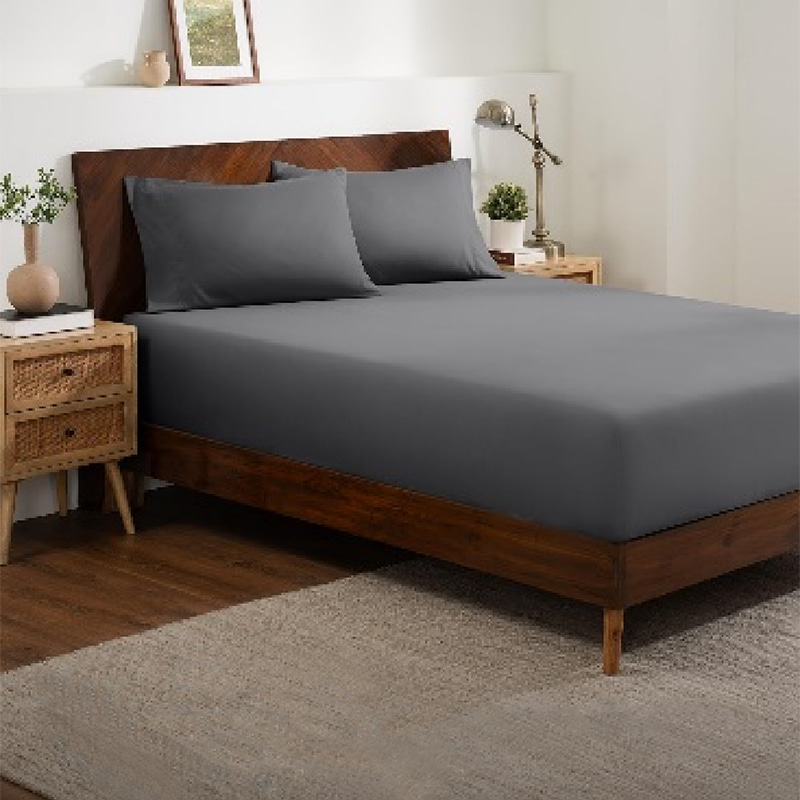
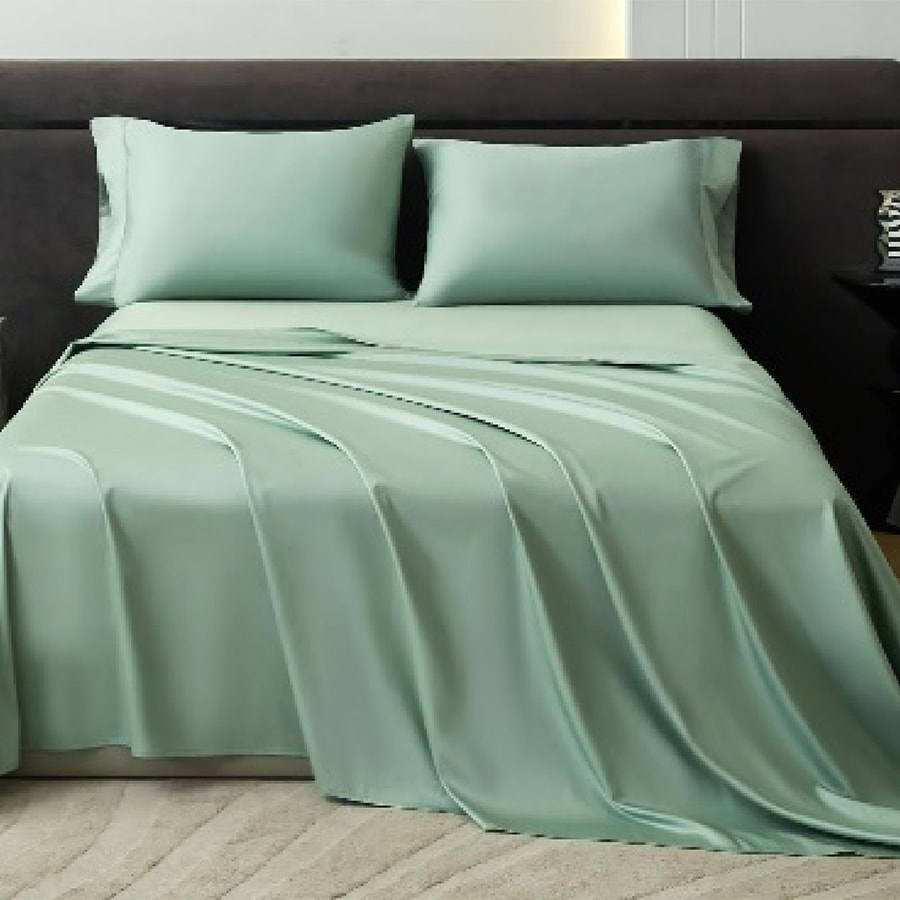 Pure Cotton Solid Color Double Bed Sheet SetCompany Profile Nantong Yueluo Home Furnishings Co., Ltd. was established in 2008 and has long been committed to the production and innovation of a full range of beddi...View Product →
Cotton and cotton-rich fitted sheets can shrink after the first wash. A pre-shrunk fabric may still lose 2-4 percent in length and width depending on the weave and finishing process. That is why a bedding dimensions chart for production should include a shrinkage allowance. If the finished sheet is cut exactly to the mattress size, it may not fit after washing.
For fitted sheets, pocket depth and shrinkage allowance are part of the dimension, not optional extras.
A duvet cover or quilt is judged by how it drapes, not only by its flat measurement. The drop length is the distance from the top of the mattress to the bottom edge of the bedding. A queen duvet cover that is 90 x 90 inches may give a different drop depending on whether the mattress is 10 inches or 15 inches deep. That difference changes the look and the warmth coverage.
The chart below compares mattress widths, which is the first number to check when you choose a duvet or quilt size. It helps buyers see why a full-size quilt can look generous on a full bed but short on a queen bed.
For a down quilt, the fill power and baffle design affect loft and warmth, but the outer dimensions determine whether the quilt stays on the bed. A luxury soft goose down quilt with a generous cut can cover a queen mattress with a 12-inch depth and still leave enough drape on the sides. A lighter summer quilt may need a different size strategy because it is often used without a top sheet.
Cooling quilts and cooling bed kits add another variable: stretch and recovery. A nylon-ammonia cooling quilt may have a soft hand and a cool touch, but its finished size can relax after use. Buyers should ask for both the flat measurement and the relaxed measurement after 24 hours. That is a more realistic way to judge fit than a single number on a chart.
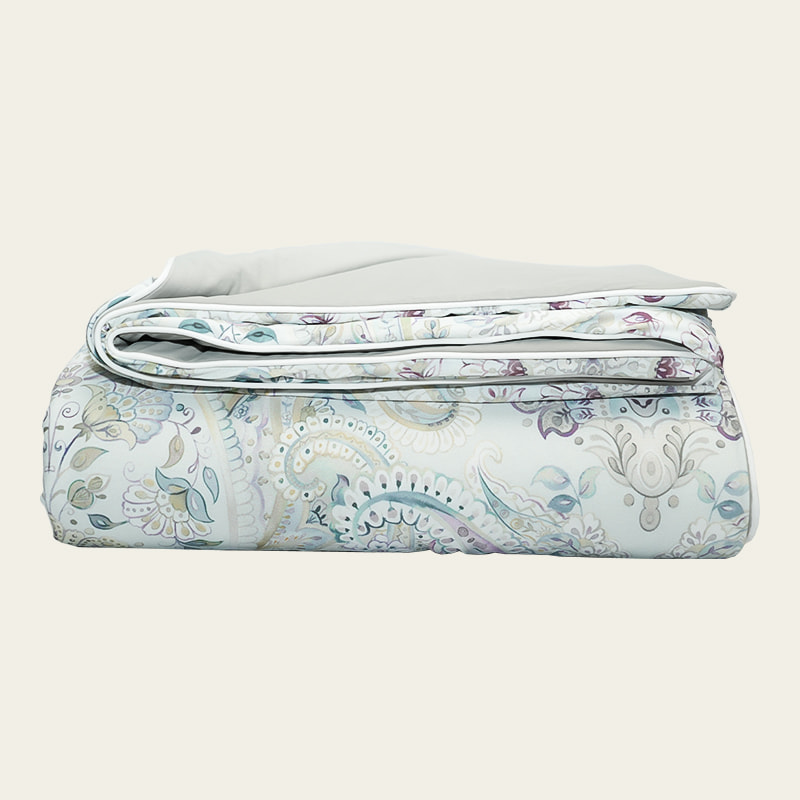
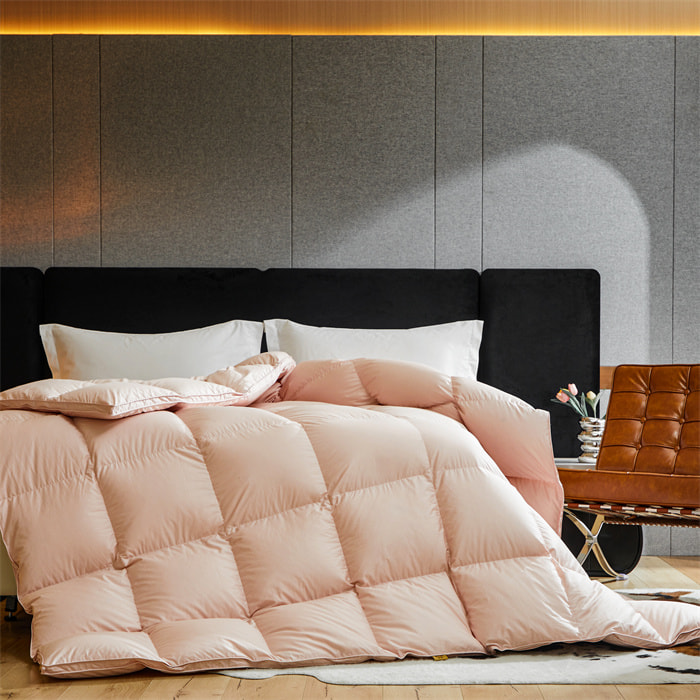 Luxury Soft Goose Down Quilt【Luxury Soft and Noise-Free Choice】: skin-friendly shell. Soft to the touch and noise-free. Let you enjoy a full night of peaceful sleepView Product →
Duvet and quilt dimensions should be checked against mattress width, mattress depth, and the intended drop, not just the bed size name.
Pillow dimensions are often treated as an afterthought, but they create some of the most noticeable fit problems. A standard US pillow is commonly 20 x 26 inches, a queen pillow is about 20 x 30 inches, and a king pillow is about 20 x 36 inches. A pillowcase that is too small will compress the pillow and stress the seams. A pillowcase that is too large will leave extra fabric and look untidy.
For down and feather pillows, the fill weight and chamber design also affect the finished shape. A high down ratio pillow core may feel softer and recover more slowly, while a double-layer anti-down pillow core may hold a firmer shape. Those differences matter when you match a pillowcase to a pillow, because a pillow that spreads more needs a slightly wider case.
When reviewing a bedding dimensions chart for pillows, look for three measurements: finished length, finished width, and corner height. The corner height tells you how much loft the pillow has after filling. If the pillowcase is sewn with a narrow seam allowance, the usable interior may be smaller than the labeled size. That is a common hidden cause of tight pillowcases.
 High Down Ratio Down Pillow CoreIMPORTANT: Upon receiving our down pillow, restore it to 5" height using a dryer and 2 tennis balls on low setting. To maintain its fluffyness, expose it to sunlight f...View Product →
Pillowcase fit depends on finished pillow loft and seam allowance, so confirm the interior size before you approve the chart.
A bedding set is often described as a 2-piece, 3-piece, or 4-piece set. The piece count usually refers to the number of items included, not the bed size. For example, a 2-piece double bed set may include one duvet cover and one pillowcase, while a 4-piece queen size set may include one duvet cover, one flat sheet, and two pillowcases. Two sets with the same name can contain different components.
That is why a bedding dimensions chart for sets should list every component separately. The duvet cover, flat sheet, fitted sheet, and pillowcase may all use different finished sizes. If a set is sold as a queen set, each piece still needs its own measurement and tolerance. For a wholesaler, this avoids the situation where the duvet cover fits but the flat sheet does not tuck in properly.
Fabric choice also affects how a set performs after washing. If you are sourcing a four-piece set, fabric choice affects drape, shrinkage, and color retention; this note on what fabric is good for a four-piece bed set explains the trade-offs between cotton, bamboo, and blended weaves. A supplier who understands those trade-offs can recommend the right construction for the target market.
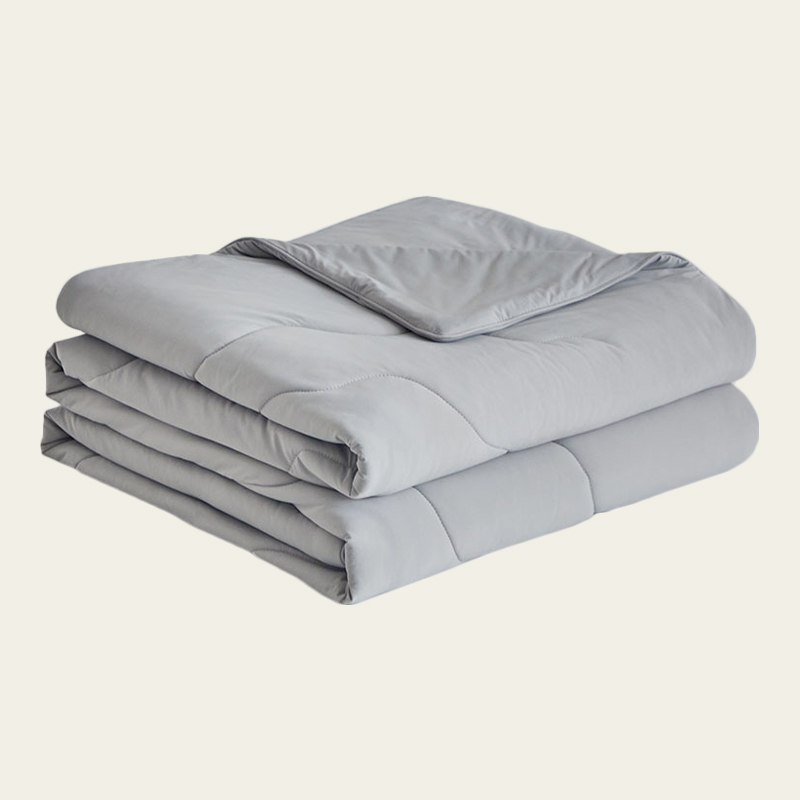
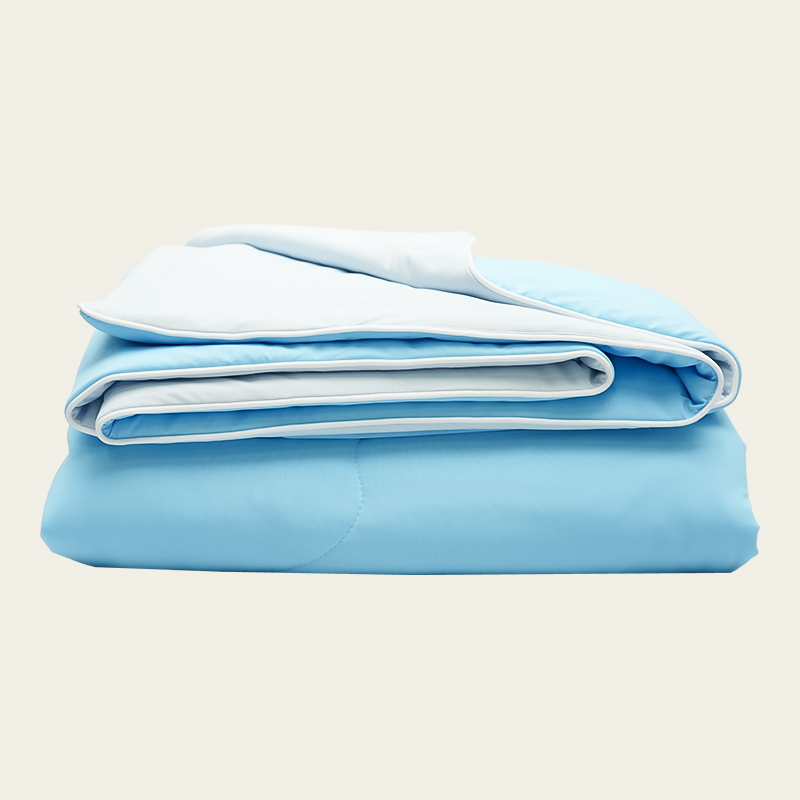
Cooling bed kits are a good example. A 3-piece super cool quilt set may include a quilt and two pillowcases, but the quilt size must still match the mattress width and drop. The cooling fabric may have different stretch behavior than cotton, so the finished dimensions should be confirmed after relaxation, not immediately after cutting.
In bedding sets, piece count is a packaging description, while each component still needs its own dimension and tolerance.
For custom and wholesale orders, a bedding dimensions chart should be a controlled document. It should include the product code, bed size, finished measurements, cut measurements, tolerance, fabric content, shrinkage allowance, and packaging dimensions. That level of detail helps a manufacturer set the pattern, helps a supplier quote accurately, and helps a wholesaler compare offers without guessing.
A practical tolerance for woven bedding is often plus or minus 0.5 to 1 inch on flat measurements, but the acceptable range depends on the fabric and the market. Knitted cooling fabrics may need a wider tolerance because they stretch and recover. Down-proof fabrics may need a tighter tolerance because the fill distribution affects the final shape. The chart should state the tolerance explicitly rather than leaving it to the factory default.
Buyers should also ask for a pre-production sample and a post-wash sample. Measure both and record the difference. If a queen fitted sheet measures 60 x 80 x 14 inches before washing and 58.5 x 78.5 x 14 inches after washing, that 1.5-inch loss is the real-world number to put in the chart. For a brand owner, that is more useful than a generic size guide.
A production-ready bedding dimensions chart records cut size, finished size, tolerance, and post-wash size in one place.
One common mistake is to treat a comforter and a duvet cover as the same product. A comforter is a finished quilted bed covering with fill, while a duvet cover is a removable shell. Their dimensions may be similar, but the fit on the bed can be very different because a comforter has its own loft and a duvet cover depends on the insert inside it.
Another mistake is to ignore mattress depth. A queen bedding dimensions chart may list a 90 x 102 inch flat sheet, but that sheet may not tuck under a 15-inch mattress on both sides. The same issue applies to fitted sheets and mattress protectors. Depth is not a minor detail.
A third mistake is to assume that all queen beds are identical. A queen mattress from one brand may be 60 x 80 inches, while another may be 60 x 79 or 61 x 80. In custom manufacturing, those small differences can affect the pattern. That is why the approved sample and the measurement sheet should be signed off before bulk production.
Most bedding size problems come from missing depth, shrinkage, or component-level measurements, not from a wrong bed name.
A bedding dimensions chart is a reference that lists mattress sizes and the matching finished sizes for fitted sheets, flat sheets, duvet covers, quilts, and pillowcases. A useful chart also includes pocket depth, tolerance, and shrinkage allowance.
No. A queen mattress is often 60 x 80 inches, but depth can range from 8 to 16 inches or more. Two queen beds may need different fitted sheet pocket depths even though they share the same width and length. Always confirm the mattress depth before choosing a size.
Measure the width, length, and depth at the center of the mattress. Then add the depth to both the width and length to estimate the sheet surface. A fitted sheet should have enough pocket depth to cover the mattress plus a few inches to tuck under. If the pocket is too tight, the corners will lift.
A common queen duvet cover size is 90 x 90 inches, but the right size depends on the mattress depth and the desired drop. For a thicker mattress or a more generous drape, a 90 x 94 or 92 x 94 inch cover may be a better fit. Confirm the insert size before you order.
You can, but the fit will be loose. A king pillowcase is usually about 20 x 36 inches, while a queen pillow is about 20 x 30 inches. The extra 6 inches can make the pillow look flat and may affect the look of the bed. For a tailored fit, match the pillowcase to the pillow size.
Many cotton and cotton-rich fabrics shrink 2-4 percent after the first wash, depending on the weave and finishing. For a queen fitted sheet, that can mean 1 to 2 inches in width or length. The safest approach is to test a pre-production sample through the intended wash process and record the result.
Use the FAQ as a checklist, but always verify the final bedding dimensions chart with a washed sample.
If you are comparing bedding dimensions across product families, it helps to start with the construction type. Quilt cores, pillow cores, and bedding sets each have different measurement priorities. Quilt cores focus on fill loft and outer dimensions. Pillow cores focus on finished loft and case fit. Bedding sets focus on component-by-component dimensions and packaging.
As a home textiles factory, Nantong Yueluo Home Furnishings works with brand clients on bedding dimensions, material selection, and production specifications. The company’s product pages list specific sizes such as 2-piece double bed, 3-piece, and 4-piece queen size, which can be used as a starting point for a custom bedding dimensions chart. For buyers who need a supplier or wholesaler partner, the most efficient next step is to send the mattress measurements and the desired component list.
Home textiles factory product lines and inquiry support can help turn a bedding dimensions chart into a production-ready specification.
Match the bedding dimensions chart to the product family first, then confirm the final measurements with a manufacturer before bulk production.
 Zhihao Industrial Park, Chuanjiang Town, Tongzhou District, Nantong, Jiangsu Province
 +86-13814711705
 yueluo800@163.com
Copyright © Nantong Yueluo Home Furnishings Co., Ltd
Rights Reserved.