en

Search
 English
 日本語
日本語 한국어
한국어 عربى
عربى Español
 русский
Inquiry Now
Content
The quilt core is the innermost "filling" layer of a comforter. If you compare a comforter to a sandwich, the outer cover is the bread, and the quilt core is the meat in the middle.
The quilt core determines the basic properties of a comforter. Whether you feel it's light or heavy, warm or breathable, 90% of it depends on this core layer. Its main function is to trap heat, forming a protective layer between the human body and the cold outside air.
Although they are all called quilt cores, the fillings inside vary greatly. Common types include:
Natural fibers: Such as cotton, silk, or wool. These materials are breathable and provide a natural, comfortable feel.
Animal feathers: Such as down, which is very lightweight and provides excellent warmth, making it the first choice for those seeking a fluffy feel.
Synthetic materials: Such as various types of fiberfill. This material is easy to care for, less susceptible to dampness, and relatively affordable.
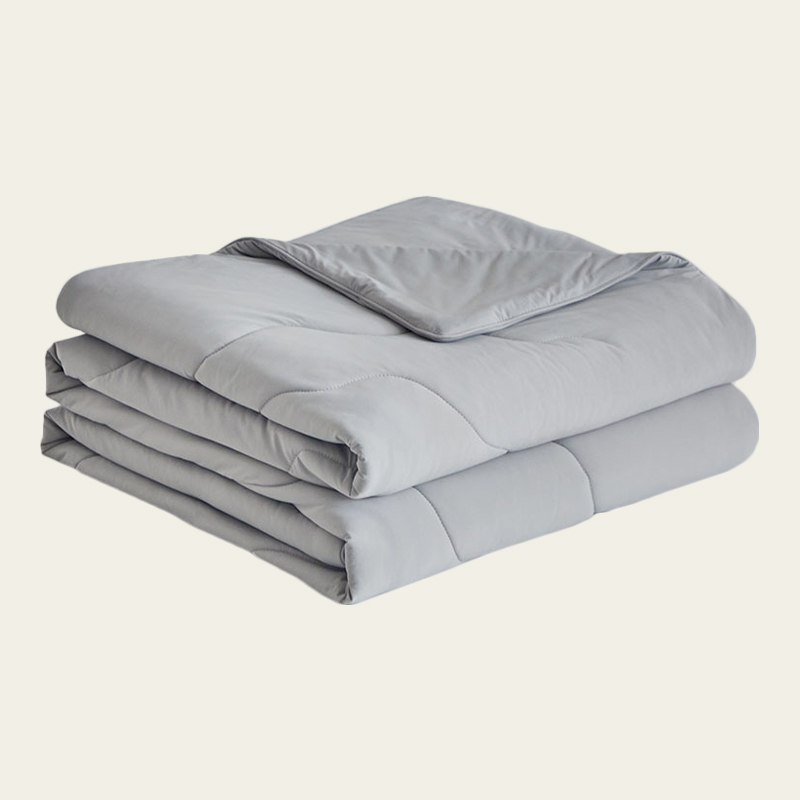
To prevent the filling from shifting (e.g., clumping together), the quilt core usually uses a special quilting process. You will see many square or wavy stitches on the surface of the comforter. These stitches fix the filling in their respective small compartments, ensuring that the entire comforter is evenly thick, preventing some areas from being too thick and others too thin.
The quilt core is not one-size-fits-all. Depending on the amount and type of filling, it is divided into thin and thick versions.
Summer versions are usually very light and thin, focusing on sweat absorption and breathability.
Winter versions prioritize fluffiness and thickness to achieve a warming effect.
Normally, we don't directly touch the quilt core; instead, we put a duvet cover on it. This protects the internal material from getting dirty and makes daily cleaning easier. Maintenance methods vary depending on the material of the quilt core; some can be washed, while others can only be air-dried or dry-cleaned.
 Zhihao Industrial Park, Chuanjiang Town, Tongzhou District, Nantong, Jiangsu Province
 +86-13814711705
 yueluo800@163.com
Copyright © Nantong Yueluo Home Furnishings Co., Ltd
Rights Reserved.