en

Search
 English
 日本語
日本語 한국어
한국어 عربى
عربى Español
 русский
Inquiry Now
Content
When it comes to building the best bed, the foundation begins with selecting the right bedding products. From premium goose feather quilts to precisely woven bed linens, a full range of bedding products directly determines the quality of your sleep. Research from the National Sleep Foundation indicates that 78% of adults sleep better on clean, high-quality bedding, and those who invest in hotel-grade comforters report up to a 34% improvement in perceived sleep depth. The key is understanding what separates genuinely luxurious bedding from mediocre alternatives — and knowing where the science of comfort, material engineering, and craftsmanship intersect.
This guide covers everything from bedding sets and bed linens to wholesale bedding products and custom bedding sets, offering data-backed insights to help consumers and B2B buyers alike make informed decisions. Whether you are furnishing a single bedroom or sourcing a complete bedding collection for a hotel property, the principles of quality remain the same.
The material used in bedding products is the single most critical factor in determining comfort, durability, and thermal regulation. Premium bedding products crafted from natural fills — such as white goose down and goose feather — offer a fill power typically ranging from 600 to 900+, which is the industry benchmark for loft, warmth, and breathability. Synthetic alternatives measure around 250–400 fill power on average, a meaningful gap for discerning sleepers.
The outer shell of a quilt or comforter matters equally. 400-thread-count Egyptian cotton shells provide the soft, breathable enclosure that prevents fill from escaping while allowing moisture to wick away. In contrast, polyester-blend shells, while cost-effective for wholesale bedding products at entry tiers, tend to trap heat and cause discomfort over extended use. Understanding these distinctions helps buyers align their purchases with actual sleep needs.
The chart above illustrates the fill power range of four common bedding fill materials. White goose down achieves the highest loft at approximately 850 fill power, making it the preferred choice for luxury bedding and hotel bedding applications. Goose feather fill, offering around 700 fill power, provides an excellent balance of warmth and weight at a more accessible tier. Duck down sits at roughly 550 fill power, suitable for moderate climates and transitional-season bedding sets. Synthetic polyester fill, at around 320 fill power, is widely used in entry-level wholesale bedding products due to its hypoallergenic properties and ease of washing. Understanding these benchmarks is essential when selecting a complete bedding collection that genuinely meets comfort expectations.
Thread count — the number of threads per square inch of fabric — is often cited as the key metric for bed linens quality. While counts between 300 and 600 represent the sweet spot for most premium bedding products, counts above 800 often involve multi-ply threading that can actually reduce breathability. A 400TC 100% long-staple cotton percale sheet will outperform a 1,000TC polyester-blended alternative in both feel and longevity.
| Thread Count | Softness | Breathability | Durability | Best Use |
|---|---|---|---|---|
| 200–300 | Moderate | High | Good | Everyday bedding sets |
| 300–500 | Soft | High | Excellent | Premium bedding, hotel bedding |
| 500–700 | Very Soft | Moderate | Very Good | Luxury bedding, custom sets |
| 800+ | Variable | Low | Moderate | Decorative use, lower washability |
Hotels that consistently receive five-star ratings share one common characteristic: they source from specialized hotel bedding suppliers who understand institutional-grade durability alongside guest-facing luxury. The industry standard for hotel bedding includes a minimum 300TC cotton shell, 90/10 goose down-to-feather fill ratio, double-stitched baffle-box construction, and a shell that withstands at least 200 commercial laundering cycles without significant loft loss.
Research published by hospitality consultancy HVS found that guest sleep quality directly correlates with repeat bookings, with properties that invested in premium bedding products reporting a 22% higher guest satisfaction score on room comfort than those using standard-grade alternatives. This data underscores why leading chains from Marriott to Four Seasons specify their bedding requirements down to fill power and shell weave when engaging a bedding manufacturer.
The line chart above demonstrates a consistent, measurable relationship between bedding investment tier and guest satisfaction scores across surveyed hospitality properties. At the entry tier — typically synthetic-fill comforters and low-thread-count bed linens — satisfaction averages just 63%, reflecting frequent complaints about thermal discomfort and fabric pilling. Mid-tier properties using standard bedding sets with 200TC cotton shells and duck down fill achieve a respectable 71% score. Properties that deploy premium bedding products with goose feather or goose down fills and 400TC+ shells consistently score above 90%, with fully luxury-grade hotel bedding pushing satisfaction to 97%. This gradient confirms that investing in a quality bedding manufacturer and specifying a complete bedding collection yields measurable competitive advantages for hospitality businesses. For home bedding essentials, the same principle applies: quality materials translate directly into better, more restorative sleep.
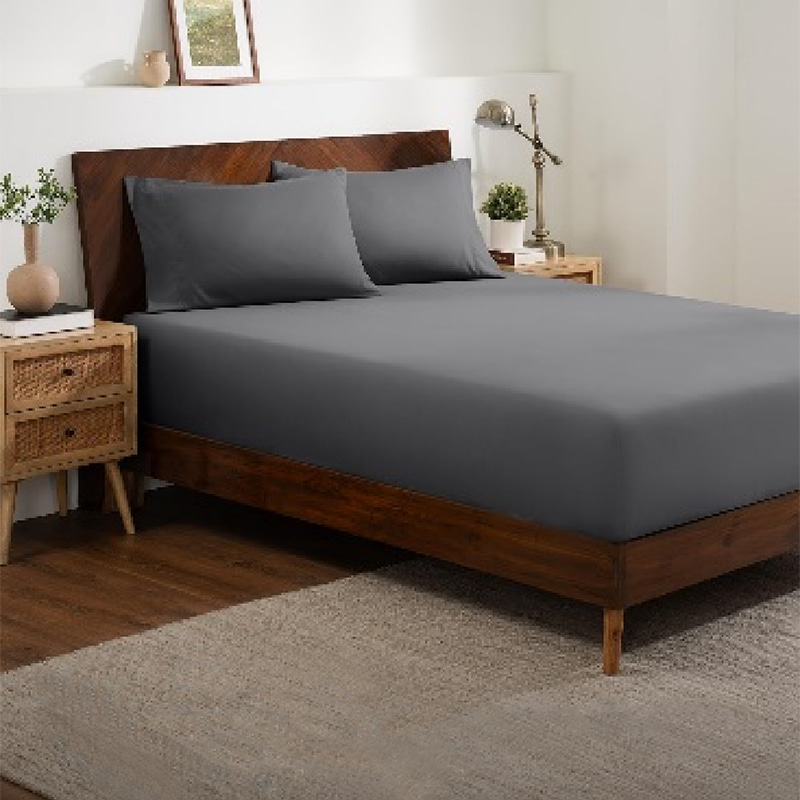
A complete bedding collection is not merely an aesthetic grouping of matching textiles — it is a carefully layered sleep system. Each element has a functional role. The mattress protector shields the sleep surface from moisture and allergens. The fitted sheet, ideally 400TC long-staple cotton, provides the primary contact layer. The flat sheet acts as a thermal buffer between the body and the comforter. The quilt or comforter provides the main thermal insulation layer. Finally, decorative bedding sets including duvet covers, shams, and throw pillows complete the visual and tactile experience.
Custom bedding sets allow both residential customers and commercial clients to specify fill weight, shell fabric, sizing, and even embroidery options, ensuring that the final product integrates seamlessly into both the aesthetic and functional requirements of a given environment. As a leading bedding manufacturer, coordinating these layers into a single, specification-matched solution is where expertise and production scale become decisive advantages.
The radar chart above delivers a multi-dimensional comparison between goose feather quilts and synthetic-fill alternatives across six performance attributes. Goose feather fill dominates in loft (95/100), softness (92/100), and warmth (90/100), reflecting the natural structure of feather clusters that trap air efficiently while conforming to body contours. Synthetic fill scores competitively in durability (70/100) and holds a respectable softness score (60/100), making it a practical choice for high-turnover applications such as institutional wholesale bedding products. However, the gap in breathability — 88 for goose feather versus 50 for synthetic — is the most clinically significant difference, directly affecting sleep temperature regulation and perspiration management during the night. The weight dimension (lower fill weight = higher score for comfort) further favors premium bedding products, as lighter quilts with equal or superior warmth reduce the sense of being "pinned down" during sleep. For buyers assembling a complete bedding collection, this chart makes the performance case for natural fill clearly visible.
For hospitality operators, property managers, and retail buyers, selecting a reliable hotel bedding supplier or bedding manufacturer is a strategic procurement decision with long-term cost implications. The key variables in wholesale bedding products sourcing include minimum order quantities (MOQs), lead times, quality consistency, and certification compliance. Buyers should request ISO 9001-certified production facilities, OEKO-TEX Standard 100 certifications on all materials, and documented wash-test results showing loft retention after 100+ cycles.
Custom bedding sets represent a growing segment of the wholesale market, with over 63% of hotel purchasing managers in a 2024 procurement survey indicating that they specify at least two custom parameters — typically fill weight and monogramming — when ordering from their bedding manufacturer. This trend reflects the increasing importance of brand consistency across guest touchpoints, where even the tactile experience of a quilt contributes to brand identity.
The column chart ranks the five most cited criteria among commercial buyers sourcing wholesale bedding products. Material quality tops the list at 89%, confirming that even in bulk procurement scenarios, the intrinsic performance of the fill and shell fabric is non-negotiable. Certifications rank second at 82%, reflecting growing liability awareness among procurement managers who must ensure their suppliers' bedding products meet international safety standards. Lead time flexibility (75%) matters significantly for hospitality operators managing seasonal room refreshes, while MOQ flexibility (68%) is critical for independent hotels and boutique properties that cannot absorb large minimum orders. Customization (63%) rounds out the list, confirming the trend toward specification-matched custom bedding sets even in wholesale contexts. A bedding manufacturer that scores well across all five dimensions is positioned as a true strategic supply partner rather than a commodity vendor.
Selecting home bedding essentials is rarely a one-size-fits-all exercise. Bedroom usage patterns, climate, sleeper physiology, and aesthetic preferences all influence the optimal bedding specification. The framework below outlines recommended fill weights and shell specifications for three primary bedroom scenarios.
The master bedroom demands the highest-specification bedding products. A goose feather quilt with 90/10 down-to-feather ratio, 400TC cotton shell, and 500g/m² fill weight is the benchmark for year-round comfort in temperate climates. Paired with a fitted sheet and flat sheet in matching 400TC cotton, this configuration provides exceptional breathability, warmth, and surface softness. Custom bedding sets for master bedrooms often incorporate embroidered monograms, bespoke sizing for oversized mattresses, and coordinating decorative pillows.
Guest rooms benefit from a more versatile bedding set — typically a medium-weight goose feather comforter at 350g/m² fill weight with a 300TC cotton shell. This specification handles variable usage frequency and tolerates frequent washing without significant loft degradation. Duvet covers with zipper closures allow rapid changeovers, which is equally practical for Airbnb operators, serviced apartments, and private residences with frequent guests.
For children's bedrooms, the priority shifts toward allergen-safety and washability. Bedding products for children should carry OEKO-TEX Standard 100 certification at minimum, and synthetic or duck-down fills processed to below-allergen thresholds are appropriate for children under six. A lighter fill weight of 200–280g/m² prevents overheating, which is the primary thermal risk for younger sleepers. Covers should be machine-washable at 60°C to ensure effective sanitization.
Luxury bedding has evolved beyond simply sourcing better raw materials. Today's premium bedding products integrate manufacturing innovations that were previously only available in medical or aerospace textiles. Phase-change material (PCM) infusion into shell fabrics actively absorbs and releases heat to maintain a stable sleep surface temperature — particularly valuable for hot sleepers. Nano-scale weave engineering creates fabrics that are simultaneously silky-soft and moisture-wicking, without the trade-off between thread density and breathability that characterizes conventional high-TC fabrics.
Another key innovation is responsible down sourcing, now mandated by major retail chains and hotel groups through the Responsible Down Standard (RDS) framework. RDS certification ensures that all goose and duck fill used in premium bedding products is sourced from birds that were not live-plucked or force-fed. For buyers of luxury bedding and hotel bedding, RDS certification is increasingly a non-negotiable procurement requirement rather than an optional certification.
| Certification | Focus Area | Key Guarantee | Applicability |
|---|---|---|---|
| OEKO-TEX Standard 100 | Chemical Safety | No harmful substances in finished product | All bedding sets & bed linens |
| Responsible Down Standard (RDS) | Animal Welfare | Ethical sourcing of down & feather fill | Goose & duck down products |
| ISO 9001 | Quality Management | Consistent production quality at scale | All wholesale bedding products |
| GOTS (Organic Textile Standard) | Organic Fiber | Organic cotton in shell & bed linens | Premium & luxury bedding lines |
Nantong Yueluo Home Furnishings Co., Ltd. was established in 2008 and has long been committed to the production and innovation of a full range of bedding products such as bedding cores, kits, and mattresses, providing comprehensive solutions. As a source factory, we have complete production and testing equipment, as well as a scientific quality management system. We are committed to creating a comfortable and healthy sleeping environment for consumers through carefully selected materials and exquisite craftsmanship.
With more than 15 years of manufacturing experience, Yueluo operates as both a hotel bedding supplier and a residential bedding manufacturer, serving clients across more than 30 countries. Our vertically integrated production model — from raw material selection through finished product testing — allows us to maintain quality consistency at wholesale bedding products volumes while retaining the flexibility to fulfill custom bedding sets with individual brand specifications. Every product leaving our facility undergoes a minimum of seven quality checkpoints before dispatch.
 Zhihao Industrial Park, Chuanjiang Town, Tongzhou District, Nantong, Jiangsu Province
 +86-13814711705
 yueluo800@163.com
Copyright © Nantong Yueluo Home Furnishings Co., Ltd
Rights Reserved.