en

Search
 English
 日本語
日本語 한국어
한국어 عربى
عربى Español
 русский
Inquiry Now
Content
Bedding sets are coordinated groups of sheets, a duvet cover or comforter, and matching pillowcases designed to work together as a single sleep system rather than as separate purchases. The right bedding set is chosen by matching fabric type to bedroom temperature, skin sensitivity, and wash frequency, rather than by pattern or color alone. Buyers sourcing in volume, including hotel groups, home textile brands, and wholesale distributors, generally evaluate three factors before placing an order: fiber content, weave or knit structure, and how the fabric performs across repeated laundering. The sections below walk through how common bedding set fabric types compare, how bedroom temperature relates to sleep quality, and what a sourcing team should confirm with a bedding set manufacturer before a bulk purchase order is placed.
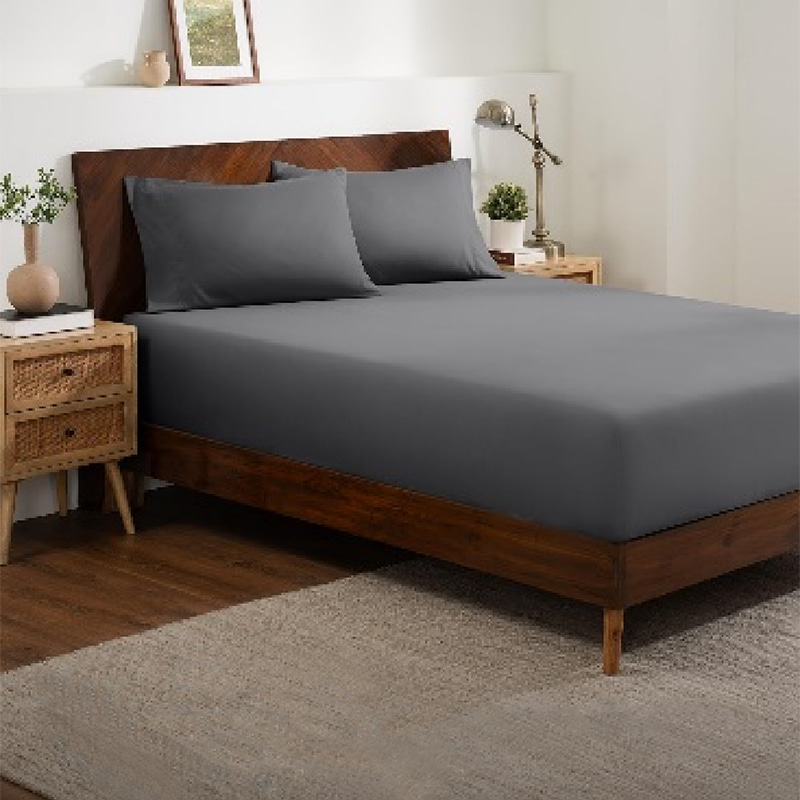
A bedding set generally refers to a coordinated package that includes a fitted sheet, a flat sheet or duvet cover, and one or more matching pillowcases, sold together so that fabric, color, and finishing match across every piece. Some bedding sets are built around a duvet cover system, where a removable cover encloses a separate insert, while others are built around a flat top sheet and coordinating blanket or comforter, depending on regional sleeping habits and climate. Fiber content and weave structure, not thread count alone, are what most directly determine how a bedding set performs night to night, which is why experienced buyers look past marketing language on thread count and ask specifically about fiber type and construction.
In wholesale and hospitality sourcing conversations, bedding sets are often requested by category rather than by brand, with cotton bedding sets, bamboo fiber bedding sets, and cooling bedding sets remaining the three most frequently ordered categories. A cotton bedding set uses one hundred percent cotton fiber across the sheets and duvet cover, a bamboo fiber bedding set uses viscose or lyocell derived from bamboo pulp, and a cooling bedding set combines lightweight, moisture wicking fabric construction with a looser weave density specifically intended to reduce heat buildup overnight. Understanding these category differences is the starting point for any sourcing conversation about a wholesale bedding set order.
Choosing among cotton, bamboo fiber, linen, and blended fabric bedding sets generally comes down to how each fiber balances breathability against durability and surface feel. Cotton bedding sets remain the most widely produced category because cotton fiber absorbs and releases moisture efficiently, which helps regulate the microclimate between the body and the fabric surface across a wide range of room temperatures. Bamboo fiber bedding sets are valued for an exceptionally smooth, silk like hand feel and efficient moisture vapor transfer, making this category a common recommendation for humid climates. Linen bedding sets offer a coarser, more textured surface with strong airflow due to linen's naturally open fiber structure, though linen generally requires more careful laundering than cotton or bamboo fiber. Blended fabric bedding sets, which combine cotton with synthetic fiber, are typically chosen for lower cost production runs and easier wrinkle resistance, though they generally trade away some of the breathability of pure natural fiber fabrics.
| Bedding Set Fabric | Feel | Typical Buyer Use Case |
|---|---|---|
| Cotton Bedding Set | Soft, breathable, durable | Year round retail and hospitality |
| Bamboo Fiber Bedding Set | Smooth, silk like, moisture wicking | Humid climates, sensitive skin |
| Linen Bedding Set | Textured, highly breathable | Warm climate, premium lines |
| Blended Fabric Bedding Set | Smoother, wrinkle resistant | Value focused product lines |
Before looking at the chart below, it is useful to understand how breathability is actually measured in bedding fabric rather than described only in marketing copy. Breathability in textiles is commonly assessed through air permeability testing, which measures how much air passes through a set area of fabric under a fixed pressure difference, and is described in the internationally recognized ISO 9237 standard for the determination of air permeability of textile fabrics. This standard measures a gas's ability to pass freely through a fabric, expressed as air permeability, and it is widely referenced across apparel, technical, and home textile testing. ISO 9237 is also referenced within other major international frameworks such as OEKO-TEX, which helps give the test outcome broader recognition across export markets. The horizontal bar chart that follows summarizes, at a conceptual level, how the four bedding set fabric categories described above generally compare on this air permeability related breathability dimension based on fiber structure and weave density.
This horizontal bar chart illustrates the general breathability ranking of four common bedding set fabric categories, from highest air permeability to comparatively lower air permeability. Linen sits at the top of this ranking largely because its fiber structure is naturally coarse and its yarns are typically spun and woven more loosely than cotton, which allows air to pass through the fabric more freely under the same test conditions. Bamboo fiber bedding sets follow closely behind, since the fine yarn produced from bamboo derived viscose or lyocell tends to create a fabric structure that still allows relatively strong airflow while remaining smooth to the touch. Cotton bedding sets sit in a solid middle position, reflecting cotton's well established reputation for balanced breathability, moisture absorption, and durability across a wide range of weave types from percale to sateen. Blended fabric bedding sets, which combine cotton with synthetic fiber content, generally show comparatively lower air permeability, since synthetic fiber content and tighter finishing treatments used to improve wrinkle resistance tend to reduce the open space within the fabric structure. It is worth noting that air permeability within any single fiber category can vary considerably depending on yarn twist, weave tightness, and finishing treatments applied during manufacturing, so this chart should be read as a general fiber level comparison rather than a fixed value for any specific fabric batch. Testing houses evaluating bedding fabric breathability commonly reference the ISO 9237 air permeability standard, since it provides a standardized method that allows results to be compared consistently across different factories and fabric lots. Buyers developing a cooling bedding set product line frequently request air permeability data specifically, since this single metric correlates closely with how a fabric will feel during warmer sleep conditions. Hospitality buyers furnishing guest rooms in warmer climates often prioritize the higher breathability categories shown toward the top of this chart, while buyers in colder climates may deliberately select a slightly less breathable fabric paired with a warmer duvet insert. This type of fiber level comparison is a useful starting point for a sourcing conversation, though requesting an actual air permeability test report from a candidate bedding set manufacturer remains the most reliable way to confirm performance for a specific fabric lot. As with fill materials in other bedding components, no single fabric category is universally superior, since the right choice depends on the climate, wash frequency, and comfort priorities of the intended end user.
Bedroom temperature and bedding set choice are closely linked, since the fabric surrounding the body at night directly affects how easily the body can maintain the internal temperature drop associated with falling and staying asleep. The best room temperature for sleep is generally considered to be around 65 degrees Fahrenheit, with most recommendations falling within a range of about 65 to 68 degrees Fahrenheit, a range commonly cited across sleep health resources. Because both temperature and humidity have a meaningful effect on sleep, cooling and moisture wicking fabrics can help keep a sleeper cool and dry throughout the night, which is one of the more practical reasons cooling bedding sets and bamboo fiber bedding sets have grown in popularity for warmer regions and transitional seasons.
The line chart below illustrates, in general conceptual terms, how surface temperature under two different bedding set fabric categories tends to trend across a typical overnight period, based on the general principle that fabrics with more open weave structures and moisture wicking properties dissipate heat more efficiently than tightly woven synthetic blends. This relationship is part of why bedroom temperature guidance and bedding set fabric selection are often discussed together in sleep health resources rather than as separate topics. Reading the chart requires understanding that a flatter curve later in the night generally indicates a fabric that continues moving heat away from the body effectively, while a steeper upward curve indicates heat accumulating closer to the skin over time. The explanation following the chart walks through what this pattern means for buyers selecting between a cooling bedding set and a standard blended fabric bedding set for a specific climate or customer base.
This line chart presents an illustrative comparison of overnight surface temperature trends under a cooling bedding set compared with a standard blended fabric bedding set across a typical sleep period. Both lines trend upward in warmth as the night progresses, which reflects the reality that body heat accumulates under any bedding to some degree, since no fabric eliminates heat transfer entirely. The navy line, representing a cooling bedding set built from moisture wicking, open weave fabric, rises more gradually across the night, indicating that heat is being carried away from the body more effectively compared with the alternative. The gold dashed line, representing a blended fabric bedding set with tighter synthetic content, rises more steeply over the same period, which is consistent with the general principle that denser fabric structures trap more heat close to the skin. Choosing a pillow or bedding set with a breathable or ventilated construction is frequently recommended for people who report sleeping hot or experiencing night sweats, and this chart is intended to visualize why that recommendation is made from a fabric structure standpoint. It is important to note that the specific temperature values and hourly points on this chart are illustrative rather than drawn from a single certified laboratory report, since actual overnight temperature depends heavily on room climate, individual body heat output, and how many bedding layers are used. For hospitality buyers furnishing rooms without strong air conditioning coverage, this general pattern helps explain why cooling bedding sets have grown in popularity for summer seasonal use and warmer climate properties. Retail buyers marketing a bedding set for colder regions may reasonably prioritize a fabric further down the breathability ranking discussed earlier, since retaining some warmth is the more relevant priority in that context. Because thermoregulation during sleep is closely tied to overall sleep quality, and a cooler room combined with breathable bedding materials generally supports the natural temperature drop associated with falling asleep, bedding set fabric selection is increasingly treated as part of a broader sleep environment strategy rather than a purely aesthetic decision. Manufacturers can influence where a given bedding set fabric sits along this general curve by adjusting fiber blend ratio, yarn twist, and finishing treatment, which is why fiber content specifications matter as much as thread count on a wholesale purchase order. This chart should be treated as a conceptual reference for understanding fabric level heat behavior rather than a performance guarantee for any individual product batch or bedroom environment.
A finished bedding set is built from several coordinated pieces rather than a single fabric application, and understanding how these pieces relate to one another helps explain why fabric weight and construction detail matter at every layer. A duvet cover style bedding set typically includes an outer cover with an internal closure, such as ties or a zipper, that secures around a separate insert, while the fitted sheet uses elasticated corners to stay in place around a mattress. The diagram below presents an isometric, labeled view of a typical duvet style bedding set layer structure to make these components easier to visualize before discussing fiber blend and certification topics in later sections.
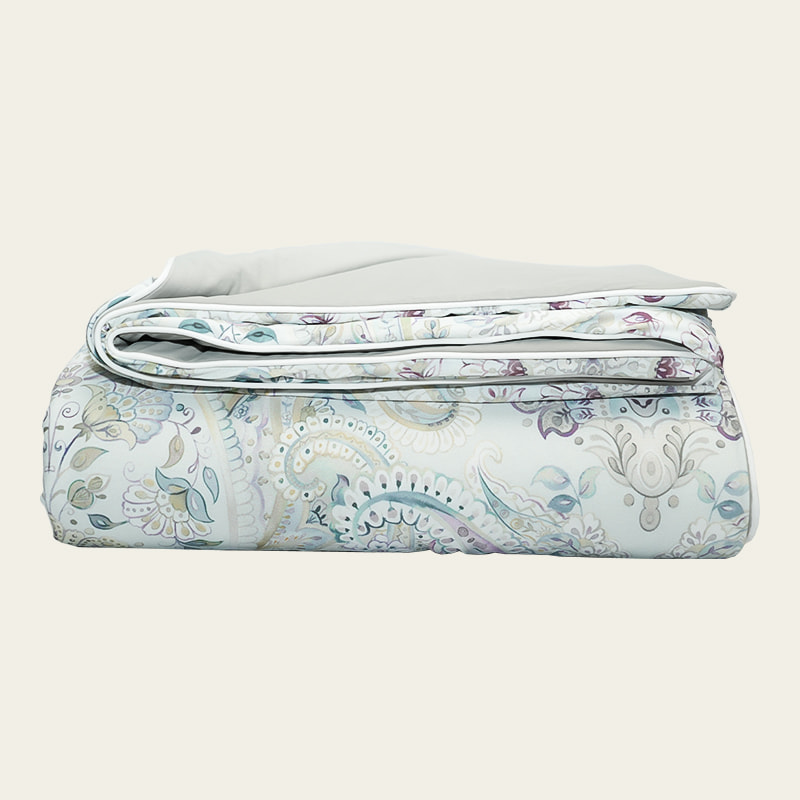
This isometric diagram illustrates the layered construction of a typical duvet style bedding set, showing how the outer cover fabric, interior closure, and insert placement zone relate to one another in three dimensions. The duvet cover fabric, shown as the outer casing on the top and front faces, is generally selected for a tighter weave than a bottom sheet since it needs to contain a bulkier insert while still allowing airflow through the surrounding room. The interior tie closure, a construction detail found along the open edge of most duvet covers, allows the insert to be secured in place so it does not shift or bunch during sleep, which is a common complaint associated with lower quality duvet cover construction. The insert placement zone, shown as the lighter panel in the center of the illustration, represents where the separate duvet insert sits inside the cover, and this two piece system is what allows a single insert to be paired with multiple different bedding set covers for seasonal changes. The reinforced hem seam, visible along the lower edge, is typically added to prevent fraying at the point of greatest stress, since hems and corners are usually the first area of a bedding set to show wear under repeated laundering. Manufacturers producing duvet style bedding sets in volume generally use reinforced double stitching at these seam points specifically to extend the usable life of the cover under commercial or frequent home laundering conditions. Quality control teams typically inspect closure alignment, seam strength, and fabric consistency as separate checkpoints before a bedding set batch is approved for shipment, since a misaligned closure is one of the more common defects reported in lower grade production. Buyers evaluating a new bedding set supplier can reasonably ask to see this construction breakdown during a factory audit or through sample photographs, since closure quality and seam reinforcement reveal more about long term durability than surface pattern or color alone. This type of layered, closure based construction is common across hospitality grade and retail grade duvet style bedding sets alike, though fabric weight and stitch density used at each layer will differ depending on the intended product tier and climate. Flat sheet based bedding sets, more common in some regions, use a similar principle of layering a top sheet over a blanket or comforter rather than a fully enclosed cover, though the reinforced hem and seam quality considerations remain equally relevant across both systems.
Personal sleep style, including whether someone tends to sleep warm or cool and how sensitive their skin is to fabric texture, is one of the more reliable indicators for choosing between a cotton bedding set and a bamboo fiber bedding set. Sleepers who report running warm at night, or who live in humid climates, generally benefit from bamboo fiber bedding sets due to their efficient moisture vapor transfer and naturally smooth surface. Sleepers who prioritize long term durability and a crisper, more classic fabric hand generally continue to favor cotton bedding sets, particularly in percale or sateen weave construction.
Comparing bedding set fabric types across multiple comfort dimensions at once is easier to visualize than to describe in a single sentence, since a fabric can score differently on softness, breathability, durability, and moisture wicking depending on the specific comparison being made. The radar chart below plots two commonly compared bedding set fabric categories, cotton and bamboo fiber, across four comfort related dimensions relevant to sleep style matching. Reading a radar chart is straightforward once the axes are understood, since a larger shaded area toward a given axis label indicates a stronger relative performance on that specific dimension. This type of side by side comparison is particularly useful for wholesale buyers deciding between two fabric categories for a single bedding set product line rather than offering both. The explanation following the chart walks through what each axis represents and how the two fabric types compare across all four dimensions.
This radar chart compares a cotton bedding set against a bamboo fiber bedding set across five dimensions relevant to sleep style matching, namely softness, moisture wicking, durability, breathability, and wash resilience. The cotton bedding set, shown in navy, scores comparatively higher on durability and wash resilience, which reflects cotton's naturally strong fiber structure and its long documented ability to withstand repeated washing cycles without significant loss of strength. This durability advantage is one of the main reasons cotton bedding sets remain the default recommendation for hospitality properties that launder linens at high frequency. The bamboo fiber bedding set, shown in gold, scores comparatively higher on softness and moisture wicking, consistent with bamboo derived fiber's fine cross section and efficient handling of moisture vapor against the skin. This moisture handling advantage is why bamboo fiber bedding sets are frequently recommended for sleepers who report waking up feeling overheated or slightly damp during humid seasons. On breathability, the two fabrics land relatively close together, since both cotton and bamboo fiber are natural or semi natural fibers with generally open structures compared with fully synthetic blends, meaning breathability alone is not always the deciding factor between the two categories. It is worth noting that this comparison reflects general fiber behavior patterns rather than a single certified comfort score, since individual manufacturing choices such as weave tightness, yarn count, and finishing treatment can shift a specific product's position on each axis. Buyers developing a bedding set collection for a specific climate, such as a dedicated warm weather line, can use this type of comparison as a starting point before requesting physical fabric swatches for hands on evaluation. Retailers marketing bedding sets to a broad customer base sometimes offer both fabric types within the same collection specifically because no single fabric type scores highest across every dimension shown here. This radar chart format is a useful tool more broadly for comparing any two bedding set fabric categories, and the same dimension structure can be reused to evaluate linen against blended fabric or any other combination relevant to a specific sourcing decision. As with the other charts in this article, the values plotted here are intended as a conceptual guide for sourcing discussions rather than a laboratory verified rating for any individual product batch.
Thread count is one of the most commonly cited bedding set specifications, yet it is frequently misunderstood, since a higher thread count does not automatically mean a softer or more breathable bedding set. Thread count simply measures the number of horizontal and vertical threads woven into one square inch of fabric, and beyond a certain point, additional thread count mainly adds weight and density rather than meaningfully improving comfort. Weave type and fiber blend generally influence feel and performance more directly than thread count alone, which is why experienced buyers request weave type and fiber percentage details rather than relying on thread count as a single specification.
Percale weaves produce a crisp, matte finish with strong airflow, while sateen weaves create a smoother, slightly heavier drape with a subtle sheen, and both remain common choices for cotton bedding sets depending on the desired hand feel. Fiber blend, meaning the ratio of natural fiber to synthetic fiber in a bedding set fabric, is another specification that directly affects both feel and durability. The donut chart below illustrates, in conceptual terms, a typical fiber blend composition used in a mid weight cotton blend bedding set fabric commonly requested in wholesale production.
This donut chart illustrates a commonly used cotton to polyester fiber ratio found in mid weight blended bedding set fabrics used across value oriented retail and hospitality product lines. The larger navy segment represents the cotton fiber content, which typically remains the majority component in a cotton blend bedding set specifically to preserve breathability and a natural fiber surface feel against the skin. The smaller gold segment represents the polyester fiber content, added primarily to reduce wrinkling, improve dimensional stability after washing, and lower overall production cost compared with a fully natural fiber alternative. This particular ratio is one of several commonly used blend levels in the bedding industry, with some product lines using a higher cotton percentage for a softer, more breathable result and others using a higher synthetic percentage for a lower cost, more wrinkle resistant fabric. Buyers should treat any single blend ratio as one point along a spectrum rather than an industry fixed standard, since a bedding set manufacturer can typically adjust this ratio to meet a specific product brief. A fully natural one hundred percent cotton bedding set sits at one end of this spectrum, offering maximum breathability and natural fiber feel at the cost of slightly more wrinkling between washes. A heavily blended bedding set sits at the other end, offering strong wrinkle resistance and easier care at some cost to breathability and natural fiber feel. Understanding where a specific fabric sits on this spectrum is more informative for a purchase decision than thread count alone, since two fabrics with identical thread count can feel very different depending on their underlying fiber blend. Buyers requesting fabric specification sheets from a bedding set supplier should specifically ask for the fiber blend percentage alongside thread count and weave type to get a complete picture of expected performance. This type of donut chart format is also commonly used more broadly in bedding and apparel sourcing discussions to represent any two or three component fiber blend, such as cotton, bamboo fiber, and elastane combinations used in some fitted sheet constructions. As with other charts in this article, the exact ratio shown here is illustrative of a common industry pattern rather than a specification tied to any single certified product batch.
Textile safety certification is an increasingly important part of bedding set sourcing, particularly for buyers supplying hospitality properties, children's bedding lines, or export markets with strict compliance requirements. OEKO-TEX Standard 100 remains one of the most widely recognized certifications applied to bedding fabrics, independently testing textile products for a broad list of substances that are restricted or monitored due to potential health impact. A bedding set carrying this certification has had its fabric components tested against these criteria, giving buyers a documented basis for confirming chemical safety compliance rather than relying on general claims alone.
Beyond chemical safety testing, manufacturers also run mechanical and dimensional quality checkpoints throughout bedding set production, covering seam strength, colorfastness, shrinkage after washing, and overall dimensional consistency across a production batch. A bedding set factory with documented, repeatable inspection processes across each of these checkpoints is generally a stronger long term sourcing partner than one relying only on a final random sample check, since catching an issue earlier in production is less costly to correct than after a batch has shipped. Buyers evaluating a new bedding set manufacturer can reasonably request documentation tied to fabric testing, seam strength checks, and colorfastness results as part of a standard supplier qualification process.
Selecting a bedding set manufacturer for a wholesale or OEM order involves more than comparing fabric samples, since production capacity, testing equipment, and clear communication around specifications all affect how consistently a bulk order is fulfilled. A source factory that manufactures its own bedding sets directly, rather than subcontracting production, generally has more direct control over fiber sourcing, weave consistency, and stitching quality across large order volumes. Buyers should also confirm whether a potential bedding set supplier maintains in house testing equipment, since this typically indicates a stronger ability to catch quality issues before goods are shipped rather than relying solely on third party inspection at the end of production.
Communication around specifications is particularly important when sourcing bedding sets across categories with different construction methods, since a bamboo fiber bedding set order requires different technical detail, such as fiber source and processing method, compared with a cotton bedding set order, which is generally specified by weave type and thread count instead. Working with a manufacturer experienced across multiple bedding set categories, including cotton, bamboo fiber, and cooling fabric lines, can simplify sourcing for buyers developing a multi tier product range rather than a single fabric type.
Regardless of fabric type, following basic care practices has a meaningful effect on how long any bedding set retains its original softness, color, and shape. Washing in cooler water and avoiding excessive dryer heat generally helps preserve fiber structure, since high heat exposure over repeated cycles is one of the more common causes of premature fabric breakdown in home textiles.
Nantong Yueluo Home Furnishings Co., Ltd. was established in 2008 and has long been committed to the production and innovation of a full range of bedding products such as bedding cores, kits, and mattresses, providing comprehensive solutions. As a source factory, the company maintains complete production and testing equipment, as well as a scientific quality management system. The company is committed to creating a comfortable and healthy sleeping environment for consumers through carefully selected materials and exquisite craftsmanship, an approach that extends across its cotton, bamboo fiber, and cooling bedding set production lines for both domestic and international business partners.
A standard bedding set typically includes a fitted sheet, a flat sheet or duvet cover, and one or more matching pillowcases, sold together so fabric and finishing match across every piece.
Warm sleepers generally benefit from bamboo fiber or cooling bedding sets, since both categories are built around moisture wicking, open weave fabric structures designed to move heat away from the body more efficiently.
Not necessarily, since weave type and fiber blend generally influence softness and breathability more directly than thread count alone, and very high thread counts mainly add fabric weight rather than comfort.
OEKO-TEX Standard 100 tests bedding set fabric components for a wide range of substances that are restricted or monitored for potential health impact, giving buyers a documented basis for chemical safety compliance.
Breathability is commonly assessed through air permeability testing described in the ISO 9237 standard, which measures how much air passes through a fixed area of fabric under a set pressure difference.
Nantong Yueluo Home Furnishings Co., Ltd. operates as a source factory with complete production and testing equipment, supporting bedding set development across cotton, bamboo fiber, and cooling fabric categories for business partners.
 Zhihao Industrial Park, Chuanjiang Town, Tongzhou District, Nantong, Jiangsu Province
 +86-13814711705
 yueluo800@163.com
Copyright © Nantong Yueluo Home Furnishings Co., Ltd
Rights Reserved.